
Interlachen Course
Interlachen Country Club


About this course
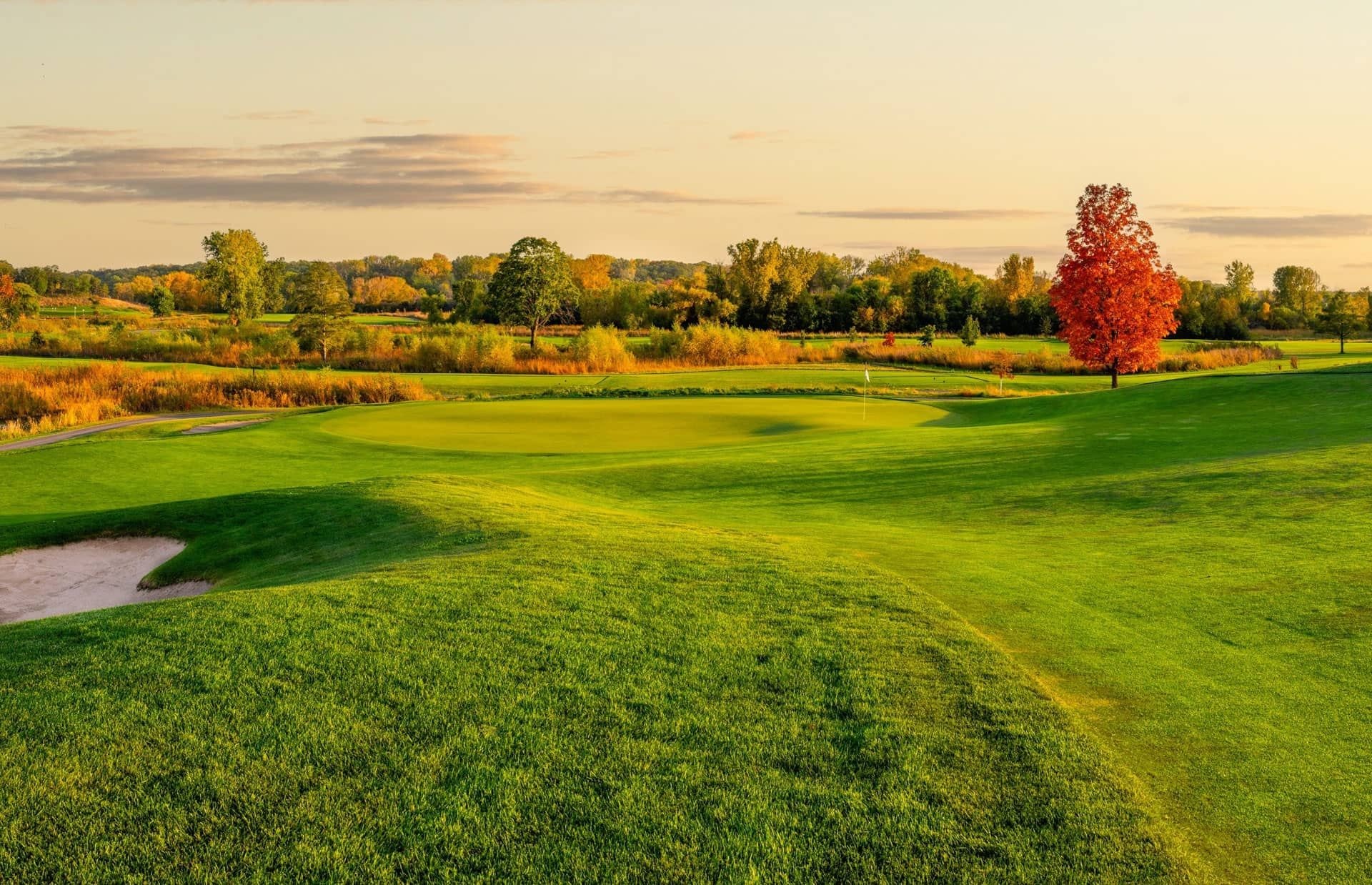
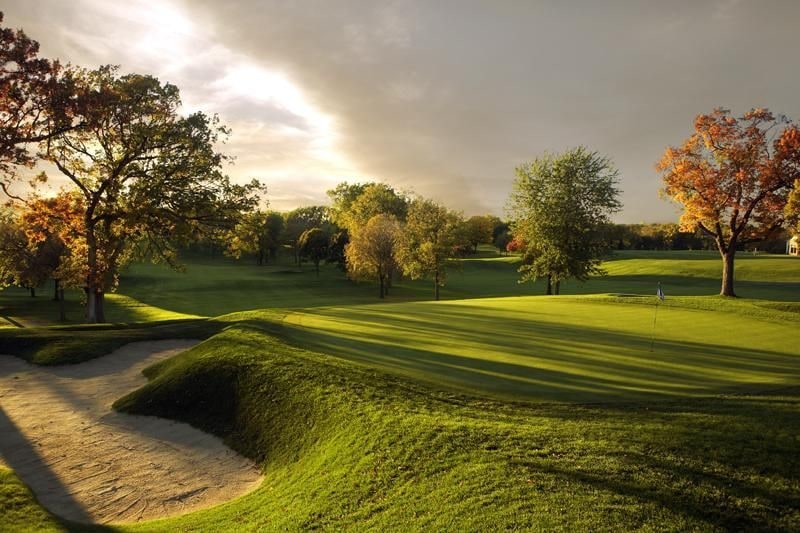
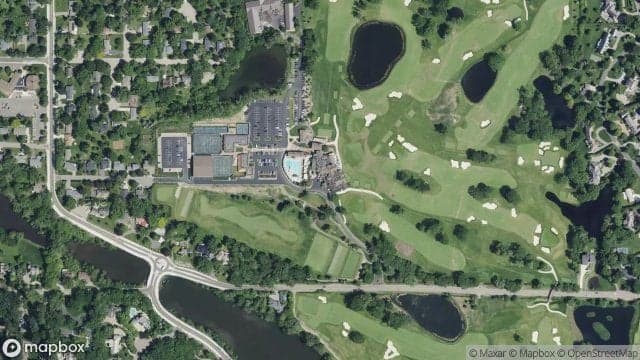
Six founding members set out to buy a farm with gold in 1909. They covered the last two miles through heavy snow to reach the farmhouse, paid $12,000 by hand for 146 acres, and then, because the farmer was nervous about carrying that much gold, they guarded the house with loaded shotguns until the banks opened in the morning. Interlachen Country Club began that way, and something of that devotion to the ground still runs through it. The farmhouse stood near what is now the 12th hole, one of the many extraordinary sections of one of the most striking pieces of land for golf in America, here in Edina, just outside Minneapolis. The ground rolls, rises and falls away beneath wide, tree-lined fairways. The Scottish architect Willie Watson laid out the first course, which opened the following year. A decade later the club brought in Donald Ross, who worked to make the most of the rolling property. He moved green pads to high points and cut bunkers into slopes, and the course reopened in 1921. Today no fewer than ten of its small, very fast greens sit elevated above the player, waiting to be reached. Willie Kid made updates before the 1930 U.S. Open, and then came the moment that gave Interlachen its permanent place in the game. On the 530-yard par five 9th, which doglegs right around a lake that sits inside the bend beside the green, Bobby Jones skimmed his ball across the water and made birdie. That birdie went a long way toward his championship, the third leg of his Grand Slam. A single skipping ball became part of the club's identity. What follows is the story of a club that kept faith. After another U.S. Open invitation arrived, Robert Trent Jones was hired in 1959, and he drew up plans for a significant overhaul. Those plans were rejected, and the modifications that came in 1960 were limited to the first and third greens. Geoffrey Cornish in the 1980s and Brian Silva in the 2000s both came with the aim of restoring Ross features. The course held the Solheim Cup in 2002 and the U.S. Women's Open in 2008, and through it all the club's respect for Ross held fairly steady. To play it is to feel the land working on the ball. The second, third, 12th and 13th climb up and then come off slopes. The fourth, sixth and 18th engage interesting landforms off the tee, so a mishit can quickly be pushed into an awkward low spot. Water comes into play at six holes. The short par fours on the front nine ask for precision if a score is to be made, and the back nine bends with a number of doglegs. The trees tell their own story. This was once a mostly treeless tract of farmland, but in time an abundance and wide variety of trees came to line the fairways. In 2024 Andrew Green completed the most extensive project the club has yet undertaken. Working from Ross's original sketches, he rebuilt every bunker, restored them to Ross styles, and pushed the greens out to the edges of their pads. The greens took on the squared-off shapes Ross drew, their edges brought closer to the bunkers, and some interesting corner pin positions returned. Playing corridors were widened. He did not clear-cut. Certain large specimen trees stayed to frame the holes, while others came down to restore sightlines and let the scale of the ground show again. Some holes changed more than others. The 1st lost its pond and gained a green built to match an earlier Ross par-3 green on the property. The 10th green moved back 50 yards. The 13th moved back closer to Mirror Lake. The 16th was opened up and given a new green, becoming an interesting drivable par four. The U.S. Women's Open returns in 2030. It will be played on a course that, more than a century after those snowbound founders guarded their gold, has been brought back toward the vision Donald Ross once drew for it.
Quick facts
- Location
- Edina, MN, USA
- Access
- Private
- Year built
- 1911
- Holes
- 18
- Designer(s)
- Donald Ross, Robert Trent Jones Sr.
- Par
- 70
- Length
- 6,981 yards
- Difficulty
- 74.2/135
- Course Vaults score
- 8.7
Getting there
Most visitors arrive via Minneapolis-St. Paul International Airport (MSP), a major Delta hub just fifteen minutes south of Interlachen Country Club. The drive north traces the Minnesota River valley before merging onto tree-lined parkways that wind through Edina's gracious residential neighborhoods, where the urban grid softens into curving lanes and generous lots. Interlachen sits tucked among these wooded streets, its discreet entrance offering little fanfare - a fitting arrival for one of the Twin Cities' most storied and private sanctuaries, where the only announcement is the quiet rustle of mature oaks and the distant murmur of members at play.
FAQ
Common questions about Interlachen
Ratings, design, and course details pulled from Course Vaults.
Interlachen has a Course Vaults score of 8.7 out of 10 based on 66 logged golfers.
Interlachen was designed by Donald Ross and Robert Trent Jones Sr..
Interlachen is listed as private on Course Vaults; guest access is typically restricted.
Par at Interlachen is 70.
Interlachen plays 6,981 yards from the back tees on Course Vaults.
The slope rating at Interlachen is 135.