

Blue Course
Congressional Country Club


About this course
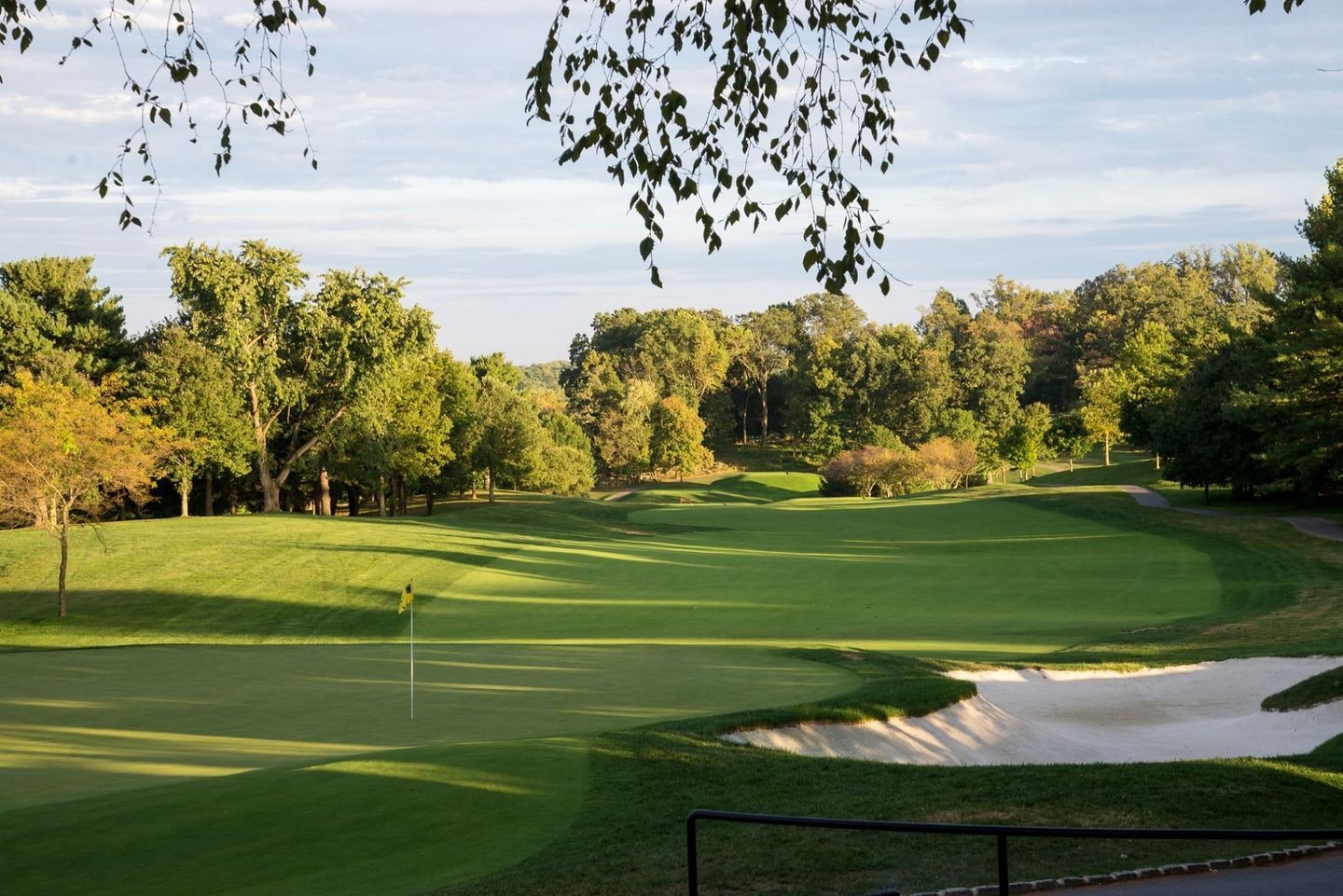
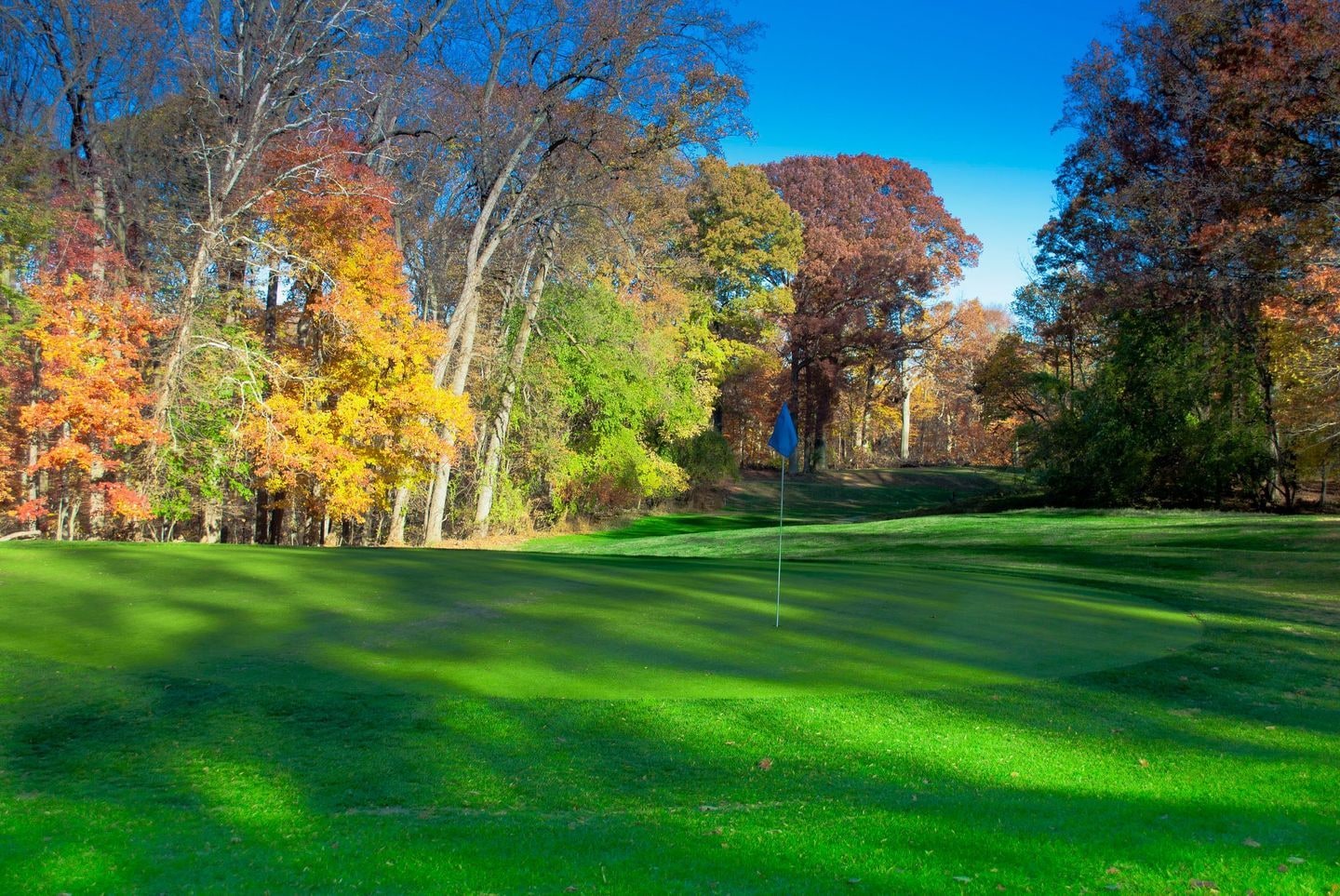
Two businessmen from Indiana founded a club in 1924 with a simple idea: a place where politicians and the well connected could meet, unconstrained by red tape. Calvin Coolidge opened it. Golf was a secondary consideration, a course laid out to meet the needs of an elite membership. Yet a century later the reason anyone drives ten miles northwest of the capital to Bethesda is the Blue course, which has rarely been left at peace for long. Devereux Emmet laid out the first eighteen across rolling, lightly treed ground. It was a straightforward course with a streak of eccentricity: two par 6s, the cross bunkers Emmet loved, and chocolate-drop mounds rising from the fairways like something left behind by a glacier with a sense of humor. Then came the war, and the club was commandeered as a training ground for spies, its grounds given over to highly secret work. In 1957 Robert Trent Jones built a third nine and joined it to a reworked version of Emmet's design, and the modern Blue was born. Seven years later it hosted the 1964 U.S. Open as the longest course the championship had ever used. The heat was baking, the humidity cruel, and Ken Venturi was sick and dangerously dehydrated. The USGA gave him special dispensation to play the final rounds with a doctor, and he won. Forty years after its founding, Congressional had burst into the golfing limelight. The course has carried a quiet question ever since. Was it truly great ground, or did its fame borrow from its address, the most fashionable club in a city that runs on prestige? Much of the argument gathered at the water south of the clubhouse. Trent Jones built a downhill par-4 17th to a peninsula green there and finished the round with a par 3 across the pond. That closing hole never sat easily. For the 1976 PGA Championship, won by Dave Stockton, organizers used two holes from the neighboring Gold course. In 1997 the entire Blue was played, and Ernie Els won by a single stroke over Colin Montgomerie, the first U.S. Open to finish on a par 3, and most likely the last. In 2009, ahead of the 2011 Open, Rees Jones reversed that old 18th into a 218-yard 10th and let the 523-yard 17th, the longest par 4 on the card, become the home hole, a brutal finish to the peninsula green. That June a 22-year-old Rory McIlroy led from the start, broke a plethora of records, and finished at 268 for his first major. Andrew Green was not the club's first choice to restore the Blue, but he was appointed in February 2019, and his course debuted in 2021. He took out trees, set medium-wide fairways, dug punitive bunkers with lumpy edges, and gave the greens internal contours that divide them into sections of varying difficulty. He eliminated Rees's 10th and built a new one from a tee on the hill near the clubhouse to a green on the site of Trent Jones's original 18th. Once undulating, wooded country, the Blue now feels brawny and modern, finely conditioned, a little artificial, and open to long views. The grandest of those views runs to Philip M. Julien's 1924 Spanish Revival clubhouse, restored and expanded over the past two decades and now the largest in the United States. The humbler one runs to the 1872 Presbyterian church behind the 16th green, built in a world where American golf did not yet exist. The Women's PGA came in 2022. Ahead lie Senior PGAs, a PGA Championship in 2030, and a Ryder Cup in 2036 or 2037, when the pond south of the clubhouse, already a striking amphitheater, may well become a madhouse. The Blue, it seems, will not be left in peace for long.
Quick facts
- Location
- Bethesda, MD, USA
- Access
- Private
- Year built
- 1921
- Holes
- 18
- Designer
- Devereux Emmet
- Par
- 72
- Length
- 7,588 yards
- Difficulty
- 76.8/141
- Course Vaults score
- 9.0
Getting there
Congressional Country Club lies just beyond the northwest edge of Washington, D.C., a short twenty-minute drive from Ronald Reagan Washington National Airport (DCA) or thirty minutes from Washington Dulles International (IAD), depending on your point of arrival. Private aviation guests often favor the discreet convenience of College Park Airport or Montgomery County Airpark, both within a quarter-hour of the club's gates. The approach follows the graceful curves of River Road through stately Bethesda neighborhoods, where embassy residences and old-growth canopies give way to the club's understated entrance - a quiet threshold to one of the capital's most storied and powerful sanctuaries.

FAQ
Common questions about Blue at Congressional Country Club
Ratings, design, and course details pulled from Course Vaults.
Blue at Congressional Country Club has a Course Vaults score of 9.0 out of 10 based on 122 logged golfers.
Blue was designed by Devereux Emmet.
Blue at Congressional Country Club is listed as private on Course Vaults; guest access is typically restricted.
Par at Blue is 72.
Blue plays 7,588 yards from the back tees on Course Vaults.
The slope rating at Blue is 141.