Start your course passport
Download Course Vaults on iOS and log the next course you play.
Download Course Vaults on iOS and log the next course you play.
Wheeling Course


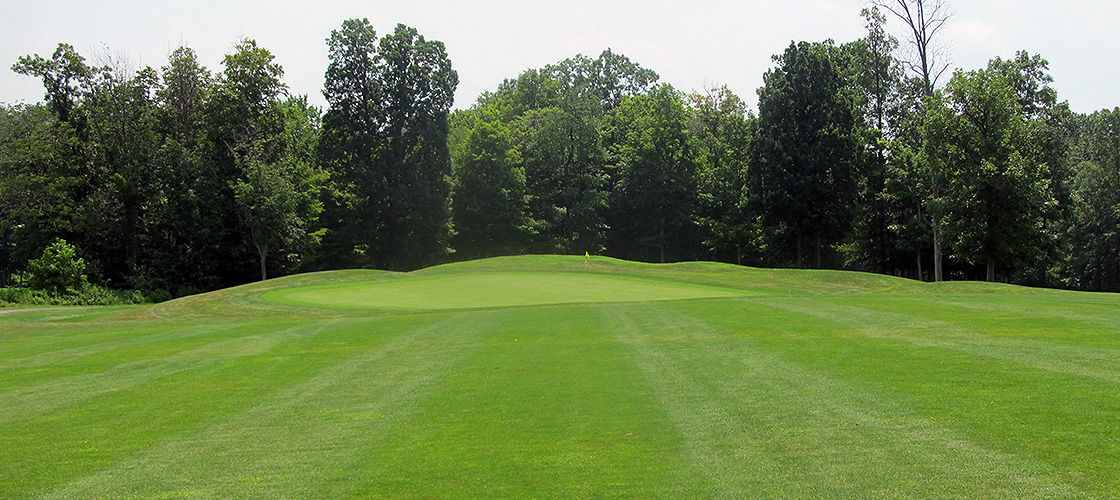
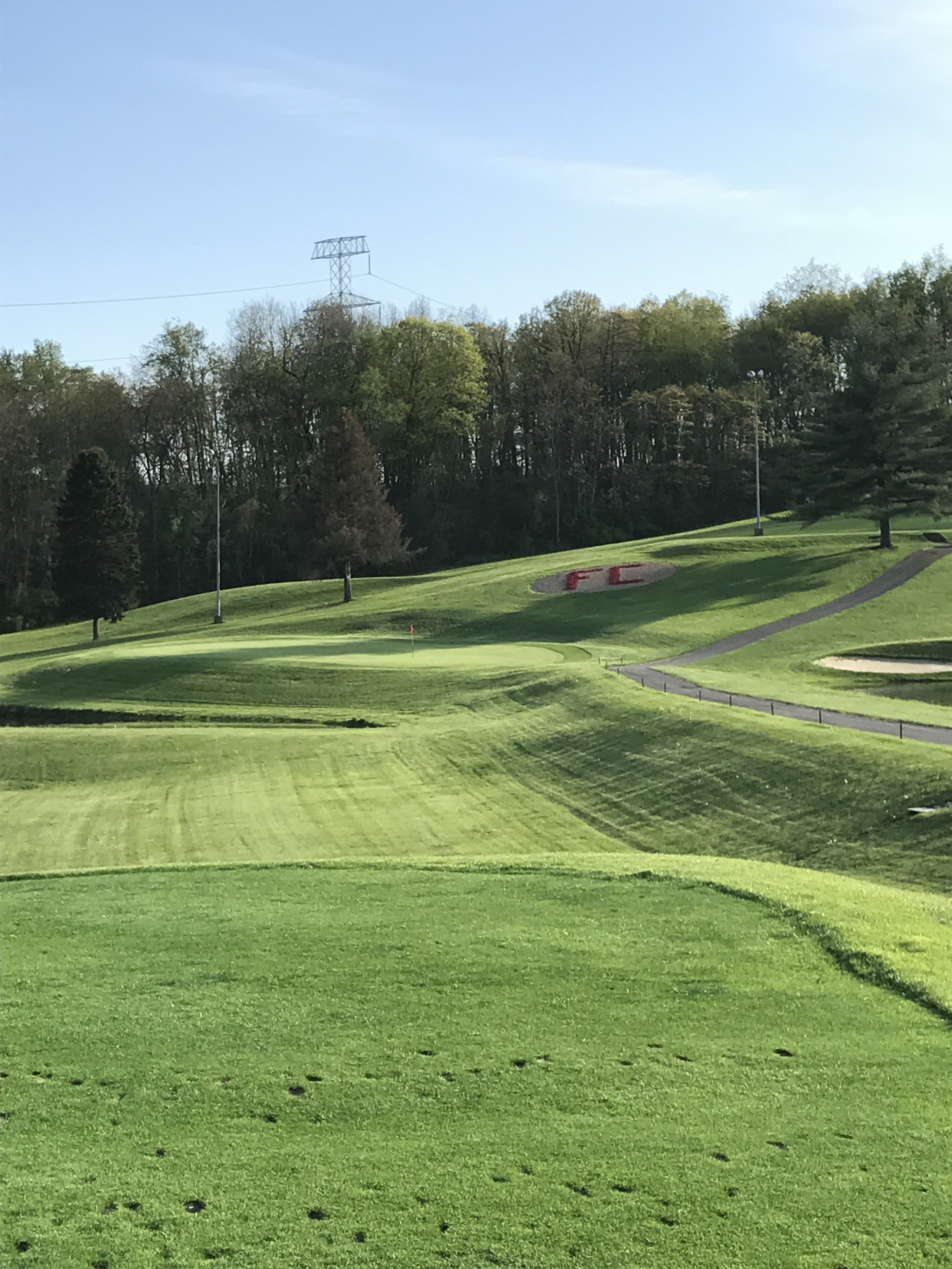
Wheeling Country Club sits in the northern panhandle of West Virginia, where the Ohio River valley shapes the region's rolling terrain. The course was designed by Devereux Emmet, a prolific architect of the early twentieth century who created layouts throughout the eastern United States during the 1920s and 1930s. Emmet's work typically emphasized strategic bunkering and greens that rewarded thoughtful approach play, characteristics that appear in many of his surviving designs from this period. The property occupies elevated ground above Wheeling, a city with deep industrial and transportation history along the river corridor. The routing likely takes advantage of natural elevation changes common to this part of the upper Ohio Valley, where ridges and hollows create varied playing angles and stances. Courses in this region often feature tree-lined fairways with mature hardwoods framing holes, and seasonal weather patterns that allow for distinct playing conditions across spring, summer, and fall. Wheeling Country Club has served as a private membership club for generations, providing a traditional country club experience for the local community. The club's longevity reflects its role as a social and recreational center in a region where private clubs have historically been important gathering places. While not widely known on the national tournament circuit, the course represents the kind of solid, member-focused design that Emmet produced throughout his career—layouts built for regular play rather than championship spectacle, emphasizing enjoyment and strategy over sheer difficulty.
FAQ
Ratings, design, and course details pulled from Course Vaults.
Wheeling was designed by Devereux Emmet.
Wheeling is listed as private on Course Vaults; guest access is typically restricted.
Par at Wheeling is 70.
Wheeling plays 6,044 yards from the back tees on Course Vaults.
The slope rating at Wheeling is 119.
Wheeling is a 18-hole course.
Wheeling Course
Wheeling Country Club sits in the northern panhandle of West Virginia, where the Ohio River valley shapes the region's rolling terrain. The course was designed by Devereux Emmet, a prolific architect of the early twentieth century who created layouts throughout the eastern United States during the 1920s and 1930s. Emmet's work typically emphasized strategic bunkering and greens that rewarded thoughtful approach play, characteristics that appear in many of his surviving designs from this period. The property occupies elevated ground above Wheeling, a city with deep industrial and transportation history along the river corridor. The routing likely takes advantage of natural elevation changes common to this part of the upper Ohio Valley, where ridges and hollows create varied playing angles and stances. Courses in this region often feature tree-lined fairways with mature hardwoods framing holes, and seasonal weather patterns that allow for distinct playing conditions across spring, summer, and fall. Wheeling Country Club has served as a private membership club for generations, providing a traditional country club experience for the local community. The club's longevity reflects its role as a social and recreational center in a region where private clubs have historically been important gathering places. While not widely known on the national tournament circuit, the course represents the kind of solid, member-focused design that Emmet produced throughout his career—layouts built for regular play rather than championship spectacle, emphasizing enjoyment and strategy over sheer difficulty.
Public courses closest to Wheeling.
FAQ
Ratings, design, and course details pulled from Course Vaults.
Wheeling was designed by Devereux Emmet.
Wheeling is listed as private on Course Vaults; guest access is typically restricted.
Par at Wheeling is 70.
Wheeling plays 6,044 yards from the back tees on Course Vaults.
The slope rating at Wheeling is 119.
Wheeling is a 18-hole course.