

Somerset Hills Course
Somerset Hills Country Club


About this course
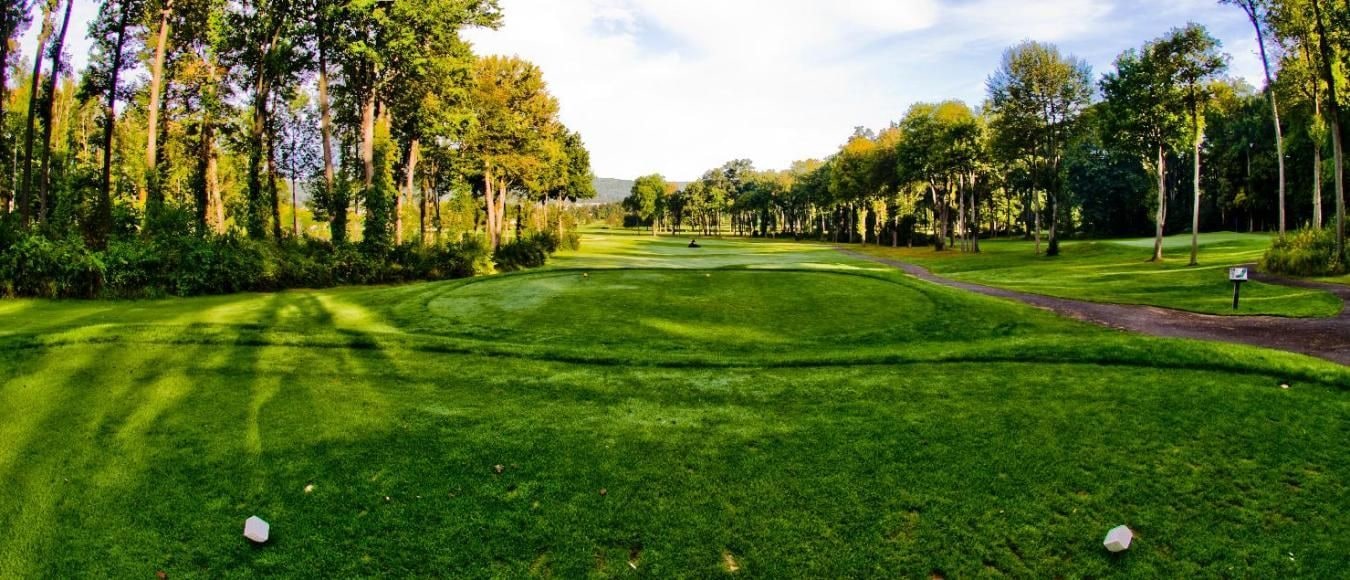
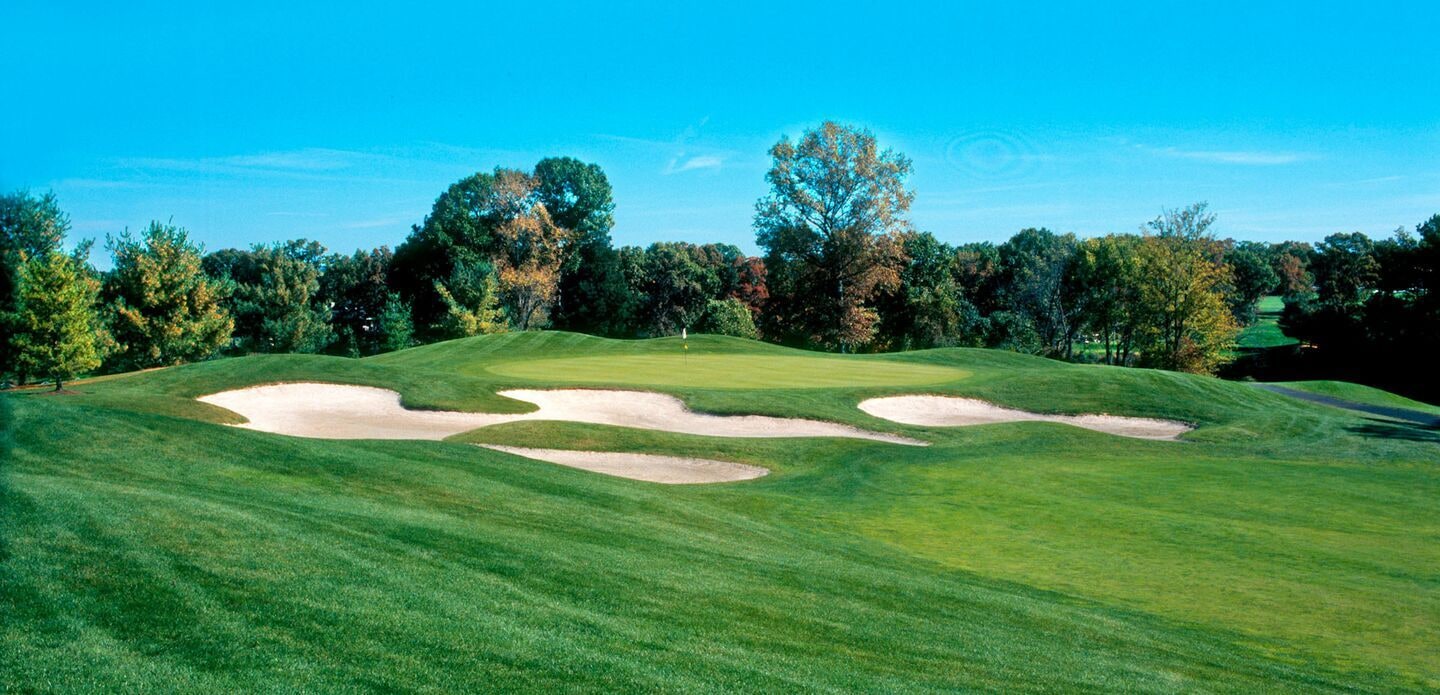
An hour west of New York City, in small-town New Jersey, Somerset Hills keeps its counsel. The club is private and understated, the kind of place you reach only through the kindness of a member, and nothing about it is brash or ostentatious. Then the ground opens, and you find an audacious A.W. Tillinghast course, perhaps one of his finest. It fits its contrasting land like a silk glove and seems built to steal your affections slowly, hole by hole. It is really two courses joined at the hip. Tillinghast's work here belongs to the 1910s, when American golf architecture was coming of age, young and fresh and full of excitement. He met two very different landscapes with two different ideas. The outward nine wanders across open, links-like ground that was once a racetrack, an open hillside where the routing interlocks. It doubles back to the same landforms and creates gathering points where holes meet and part. An apple orchard guards the first fairway, and the old racetrack earthworks come into play on the first, fifth, sixth and seventh. They are quirks, certainly, but they are the quirks that give the place its character. You are playing golf across ground where a racetrack once lay. The homeward nine is another animal entirely. It tumbles into dense woodland and runs in a more linear line, a journey into the trees and then back out again. Jekyll and Hyde, in other words, and there is a fine debate to be had about which half deserves the heart. The open nine has the history and the clever returns. The wooded nine has its intimacy. That intimacy gathers most fully at the par four 15th. Trees flank the hole, the fairway slides downhill and then doglegs to the right, and around the corner the hole reveals what may be the largest green on the course. It is a close, sheltered hole that ends in sudden expanse, and it may be the pick of them all. The greens here are something to treasure. Seventeen of them are Tillinghast's, and they are all terrific. The 10th is the exception. When the club extended that hole decades ago, Hal Purdy built a new green: elevated and straightforward, with a false front and a high back tier. It is an ordinary green, and its ordinariness throws the brilliance of Tillinghast's work into relief. About 80 yards short of it, to the right of the fairway, the outer contours of the original green are still visible, a ghost of what the hole once was. In 2017 Brian Slawnik suggested turning the par five 10th into a short par four, so that the 11th and 18th could be lengthened. In that way the hole's past and its possible future face each other down a single fairway. Other hands have touched the course over the years: William Gordon in 1946, and Hal Purdy in 1956 and 1968. Yet after the war Somerset did a better job than most clubs of its era at preserving its architecture, resisting the urge to modify holes or soften its marvelous green shapes. What it could not stop entirely was the quiet erosion that besets old courses. Mowing lines crept inward, trees grew, and playing areas were lost. Beginning around 2009 or 2010, and again in 2013, Tom Doak's Renaissance Golf Design set about undoing that drift, with Slawnik and superintendent Ryan Tuxhorn sharing the lead. They removed trees, expanded fairways and greens to their original dimensions, and brought native vegetation back outside the playing corridors. Much of Tillinghast's original plan returned. What you find now is a course natural in the truest sense, carrying design features Tillinghast rarely tried anywhere else, and still rewarding anyone lucky enough to walk it.
Quick facts
- Location
- Bernardsville, NJ, USA
- Access
- Private
- Year built
- 1918
- Holes
- 18
- Designer
- A .W. Tillinghast
- Par
- 71
- Length
- 6,784 yards
- Difficulty
- 77.8/132
- Course Vaults score
- 9.2
Getting there
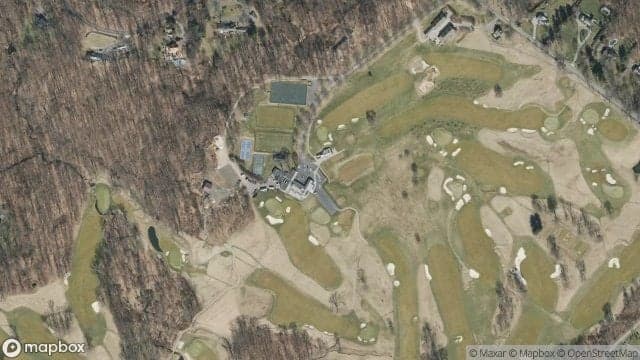
Somerset Hills Country Club lies in the rolling hills of Bernardsville, New Jersey, less than an hour's drive west from Newark Liberty International Airport through the gradually ascending terrain of the Somerset countryside. The route from Manhattan - a drive of similar duration - traces the arc of suburban sprawl giving way to horse country, where stone walls and wooded estates signal entry into one of New Jersey's most quietly patrician enclaves. Teterboro Airport serves private arrivals seeking discretion, positioned conveniently between the city and the club's secluded grounds. The final miles wind through Bernardsville's leafy center before climbing into the hills where Somerset Hills has occupied its serene, elevated perch since 1899.
FAQ
Common questions about Somerset Hills
Ratings, design, and course details pulled from Course Vaults.
Somerset Hills has a Course Vaults score of 9.2 out of 10 based on 169 logged golfers.
Somerset Hills was designed by A .W. Tillinghast.
Somerset Hills is listed as private on Course Vaults; guest access is typically restricted.
Par at Somerset Hills is 71.
Somerset Hills plays 6,784 yards from the back tees on Course Vaults.
The slope rating at Somerset Hills is 132.