

Royal St. Georges Course
The Royal St. George's Golf Club


Public: #15

Public: #9
Public: #2




About this course
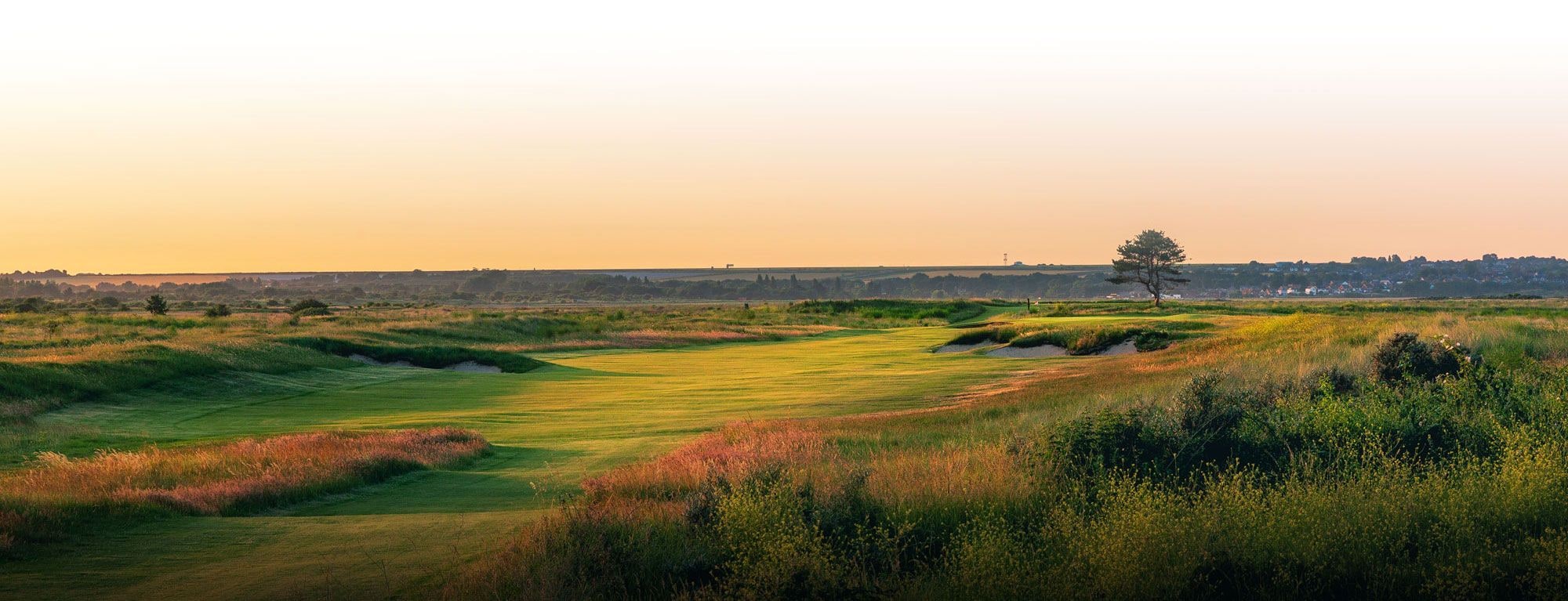
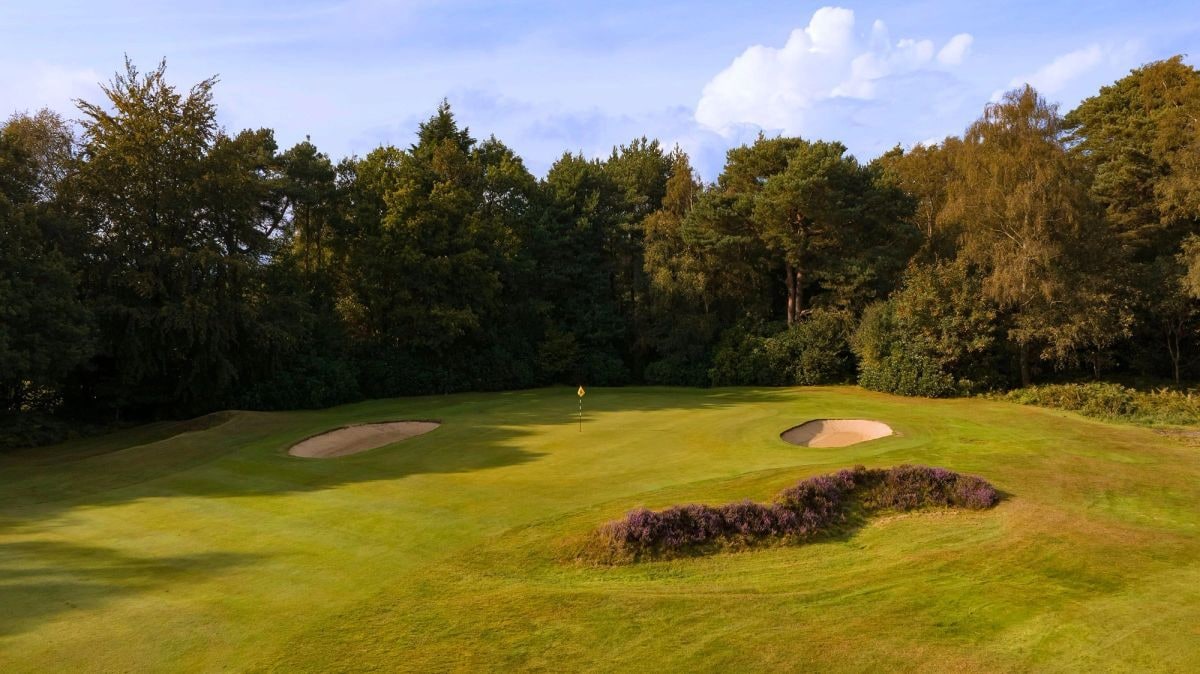
William Laidlaw Purves was a Scot, a London-based surgeon, and a scratch golfer from Royal Wimbledon, and in the late 1880s he set out to create an English St Andrews on the coast of Kent. Near the small town of Sandwich he found a spectacular stretch of undulating seaside duneland, leased a piece of it from a local earl, planned an eighteen-hole routing, and in 1887 opened St George's, named for the patron saint whose red cross still marks its flags. The course never served an apprenticeship. Bernard Darwin, who later presided over the club from 1952 to 1961, wrote that it "burst full-fledged into fame." Seven years after it opened, in 1894, it held the first Open Championship ever played outside Scotland. That first Open tells you what Purves built. J.H. Taylor won with rounds of 84, 80, 81 and 81, a total of 326 that remains the highest winning score in the championship's history. This was a Victorian course in the penal style, which Purves enthusiastically endorsed. Golfers faced blind shots, forced carries, and hazards with names like the Unknown Sahara and Hades. Just ten years later the course found itself vulnerable to the new Haskell ball. On soft ground James Braid posted the first round under 70 in Open history that morning, Taylor and Jack White repeated the feat in the afternoon, and White won on 296. Royal patronage was granted in 1902, and the Prince of Wales, later King Edward VIII, became club captain. The ground itself kept changing as golf's thinking changed. Around the First World War the club softened its hardest edges, replacing many cross bunkers with small, strategically placed pots, and the Maiden was turned so golfers no longer had to play up and over her dune. Harry Colt visited in 1914 and offered advice on the bunkering. Greens such as the 9th and 17th moved from blind hollows onto grand plateaus, perhaps by Dr MacKenzie himself. In the mid 1970s Frank Pennink built three new holes, changed the tees on two others, and did away with blind shots and forced carries at the 3rd, 8th and 11th. Many believe the course is better for it, though devout traditionalists still miss the old terrors. Plenty of wildness survives. Each nine loops in a broad circle, a loose figure of eight through the dunes. The fairways roll so severely that a good drive can finish on an upslope or downslope, leaving a long iron or fairway wood from an uneven lie. On the 470-yard 4th, a bunker cut into a huge dune, the tallest and deepest in the United Kingdom, must be carried to reach the peaceful fairway beyond, known as the Elysian Fields. The 6th is the Maiden, and Darwin sighed over her: "steep, sandy and terrible, with her face scarred and seamed with black timbers," yet golfers "hardly do more than skirt the fringe of her garment." The 14th is the Suez Canal, where "many a second shot has found a watery grave." At the 15th the fairway bunkers sit in near-perfect symmetry. Through all of it run larks, wild flowers and dune grass, with views over Pegwell Bay and the white cliffs that frame Ramsgate. Vaguely conical thatched huts dot the links. In a small shelter behind the 2nd green a young man's name is carved into the wall, and a plaque records that Piper Murdo McPherson of the Cameron Highlanders, from Lochmaddy, North Uist, stood watch there during the First World War, on a links close to the shortest crossing of the Channel. Ian Fleming was a member, and his house still stands just off the 5th tee. In Goldfinger he sent James Bond out for a $10,000 match at "Royal St Mark's," a lightly disguised portrait of his home club. Darwin put the feeling more simply: "My idea of heaven is to be attained on an earthly links." At Sandwich, the old severity and the gentler revisions still share the same ground.
Quick facts
- Location
- Sandwich, Kent, England
- Access
- Public
- Year built
- 1880
- Holes
- 18
- Designer
- William Laidlaw Purves
- Par
- 70
- Length
- 7,206 yards
- Difficulty
- 78.8/146
- Course Vaults score
- 9.3
Getting there
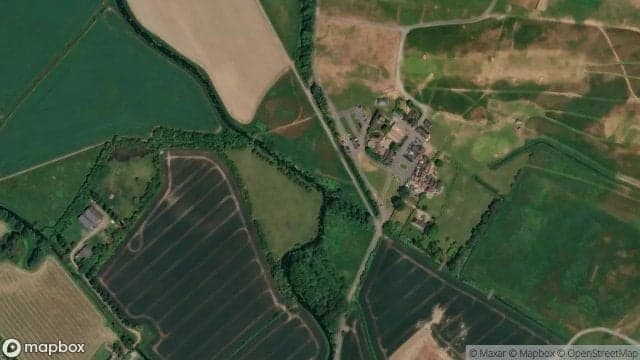
The journey to The Royal St. George's Golf Club begins at London Gatwick or London City Airport, each roughly ninety minutes by road from the Kent coast, though many visitors route through Heathrow before continuing east. The drive traces the Thames Estuary before peeling away toward the Channel, where the landscape flattens into salt marsh and the air takes on a bracing maritime edge. As the motorway yields to narrow lanes threading through Sandwich - a medieval Cinque Port town of half-timbered houses and ancient gates - the final approach reveals little until you crest a low rise and the links suddenly sprawl before you, raw and windswept, pressed against the dunes with the sea just beyond.
FAQ
Common questions about Royal St. Georges at The Royal St. George's Golf Club
Ratings, design, and course details pulled from Course Vaults.
Royal St. Georges at The Royal St. George's Golf Club has a Course Vaults score of 9.3 out of 10 based on 49 logged golfers.
Royal St. Georges was designed by William Laidlaw Purves.
Yes. Royal St. Georges at The Royal St. George's Golf Club is listed as welcoming public or guest play on Course Vaults.
Par at Royal St. Georges is 70.
Royal St. Georges plays 7,206 yards from the back tees on Course Vaults.
The slope rating at Royal St. Georges is 146.