

Old Course
Lahinch Golf Club


Public: #11
Public: #1
Public: #1


About this course
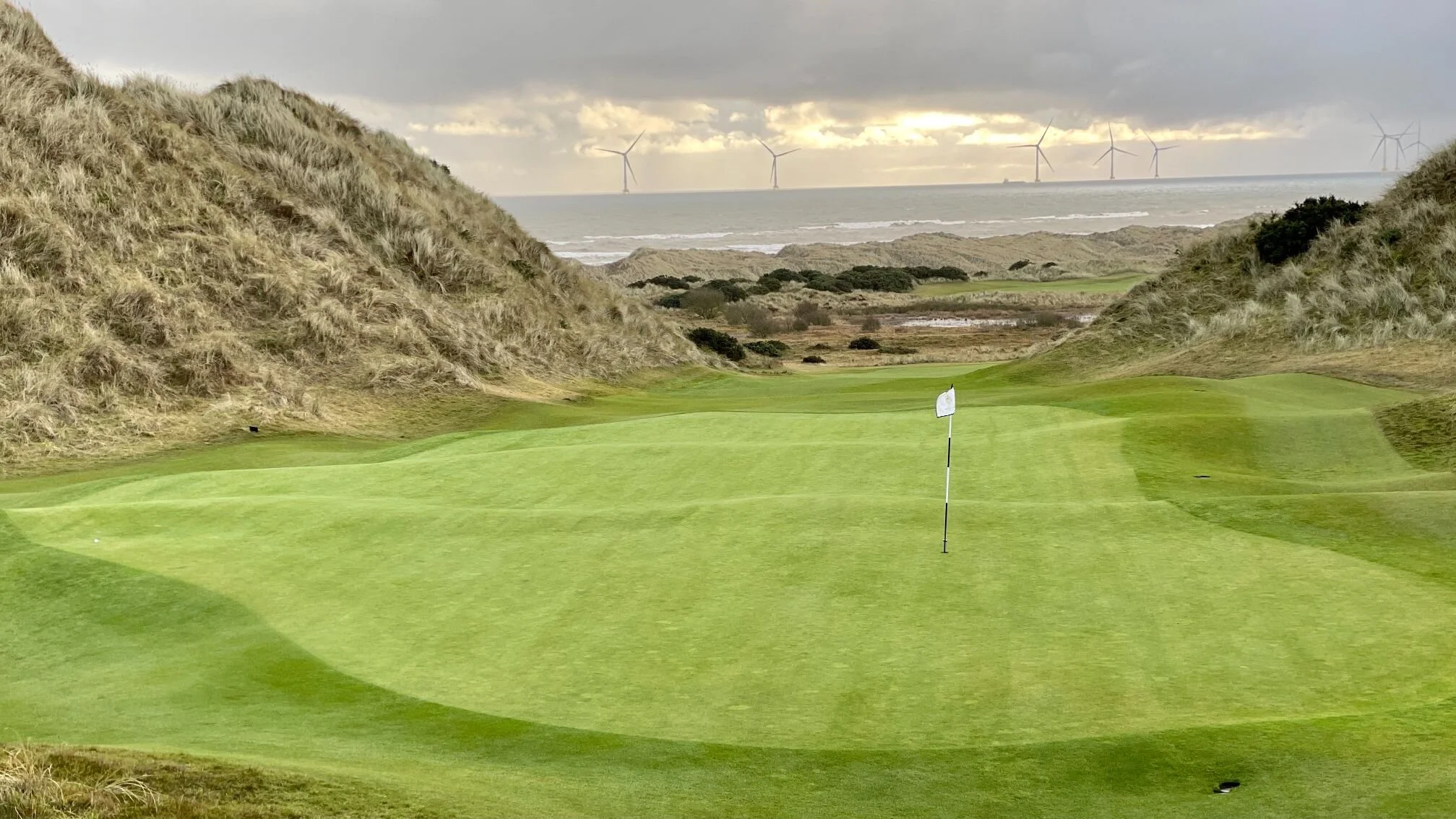
Lahinch takes its name from the old Irish Leithinsi, a half island, and the course still feels like something only partly attached to the mainland. It runs out and back beside Liscannor Bay, so close to the surfing village that town and links almost touch. Goats totter across the dunes as if they own the place. On a good summer's day it is hard to walk off the eighteenth unconverted. Golf came here on Good Friday in April 1892. The club was set up by Alexander Shaw of Limerick Golf Club, and three Limerick golfers laid out the first holes with help from officers of the Black Watch, the Scottish regiment then stationed in Limerick. It was a rudimentary affair, with ten holes on flatter ground and eight among the sandhills. In 1894 Shaw brought in Old Tom Morris, who made fine use of those giant dunes and called Lahinch the finest natural course he had seen. In the mid-1890s the West Clare Railway began delivering golfers to the new Golf Links Hotel, and the town has lived and breathed the game ever since. Old Tom's great gift to the place is Klondyke, the short par-five 4th, which he brought into being in 1897. The drive must find a narrow, rippled fairway in a valley between dunes. Then comes the blind second over Klondyke itself, a towering hill straddling the fairway some 200 yards short of the green. The 18th crosses this same ground, so a Hill man keeps players safe. The shrewd golfer crests the dune, greets him, and looks ahead to the flag on the Dell. The Dell, the blind par-three 5th, is the hole everyone remembers and the one nobody can quite pin down. It is one of the few holes still recognizable from that early layout. It may lie just as Old Tom fashioned it more than a century ago, though little proof ties it to his hand. Its narrow green hides among sand hills on every side, and a stone on top of a dune marks the hole's position from the tee. You read the wind, choose a club for the yardage, and trust a rock. The 3rd is a fitting overture, a 446-yard par four with a blind drive and an approach hidden behind a hill, but with views across the bay that lift the heart. Alister MacKenzie came in the 1920s and moved holes closer to the bay. He turned plain greens into rollicking plateaus, some of them triple-tiered, where the angle of attack and the placement of the tee shot really mattered. He built the 11th through 13th outright. William McCavery became the club's professional at that time and helped bring in the new layout, then stayed sixty years. In 1935, while MacKenzie was shaping Augusta with Bobby Jones, the committee judged his greens too severe for the average golfer and had them flattened. In 1999 Martin Hawtree restored MacKenzie's character to the links. Only a handful of MacKenzie's original greens survive erosion and continual work, and Hawtree's new par-three 11th has replaced the Doctor's, though the old one remains as an alternate. Still, MacKenzie's mind runs through the whole links. The Irish love match play, and every last week of July Lahinch stages the South of Ireland Championship, held each year since 1895. Its monarch was local man John Burke, the King of Lahinch, who won it eleven times between 1928 and 1946. He stayed out from 1932 to 1937 because his dominance was keeping others away. In 2024 Patrick Adler of Chicago became the first American to win it. The professionals came for the Irish Open in 2019. Jon Rahm won by two, and Robert Rock birdied his last six for a record 60, his eagle putt for 59 missing by inches. The Walker Cup made its first visit here in 2026. Most winters the Old Course closes for four to six weeks to rest, gathering itself for the long season to come.
Quick facts
- Location
- Lahinch, Clare, IE
- Access
- Public
- Year built
- 1892
- Holes
- 18
- Designer(s)
- Old Tom Morris, Alister Mackenzie
- Par
- 72
- Length
- 6,950 yards
- Difficulty
- 74.4/136
- Course Vaults score
- 9.3
Getting there
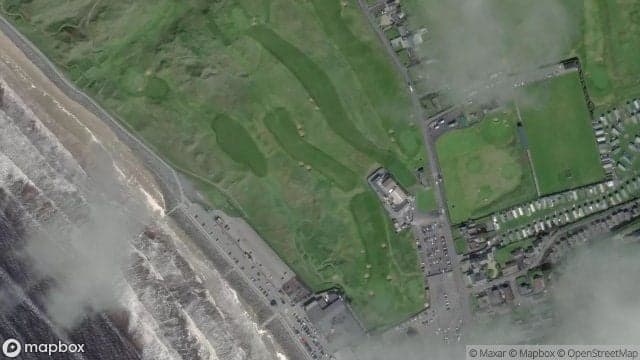
The journey to Lahinch Golf Club begins at Shannon Airport (SNN), Ireland's western gateway, situated roughly ninety minutes' drive south through the rolling farmland and limestone landscape of County Clare. The route winds from the airport through the market towns of Ennis and Ennistymon, gradually descending toward the Atlantic coast as the terrain shifts from inland pasture to windswept moorland dotted with stone walls and gorse. The final approach crests the dunes above Lahinch village, where the club's whitewashed clubhouse emerges against the dramatic sweep of Liscannor Bay - a moment that captures the raw, elemental character of links golf on Ireland's western shore. For those arriving by private aircraft, Shannon also accommodates business aviation, though the coastal drive itself becomes part of the pilgrimage to one of Ireland's most storied and uncompromising seaside courses.
FAQ
Common questions about Old at Lahinch Golf Club
Ratings, design, and course details pulled from Course Vaults.
Old at Lahinch Golf Club has a Course Vaults score of 9.3 out of 10 based on 175 logged golfers.
Old was designed by Old Tom Morris and Alister Mackenzie.
Yes. Old at Lahinch Golf Club is listed as welcoming public or guest play on Course Vaults.
Par at Old is 72.
Old plays 6,950 yards from the back tees on Course Vaults.
The slope rating at Old is 136.