
Kampen Course
Birck Boilermaker Golf Club


Public: #259
Public: #144
Public: #4




About this course
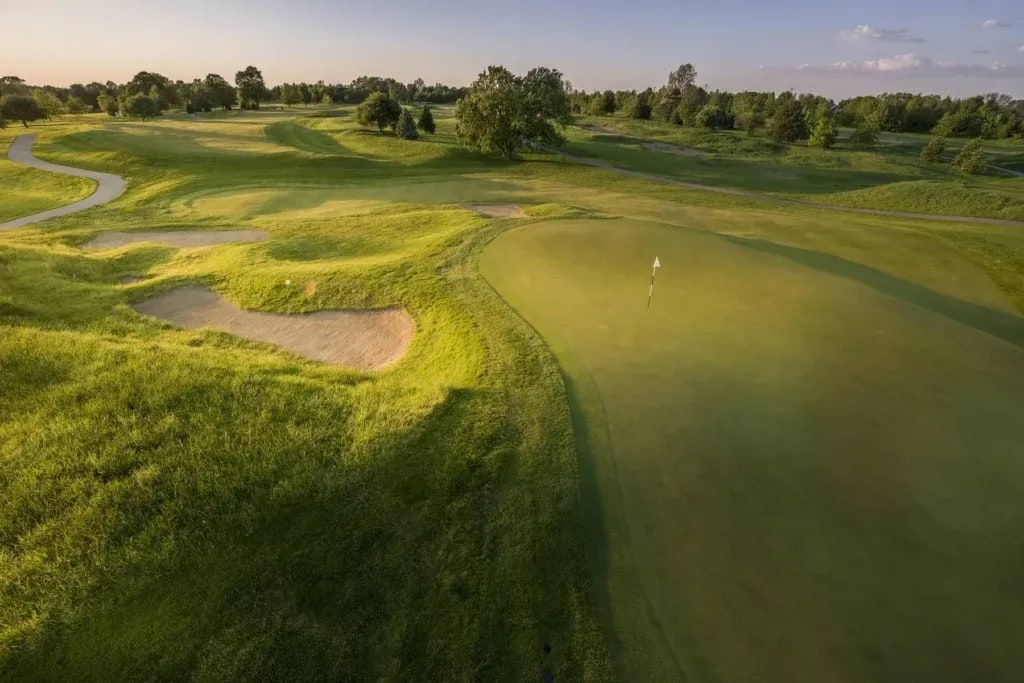
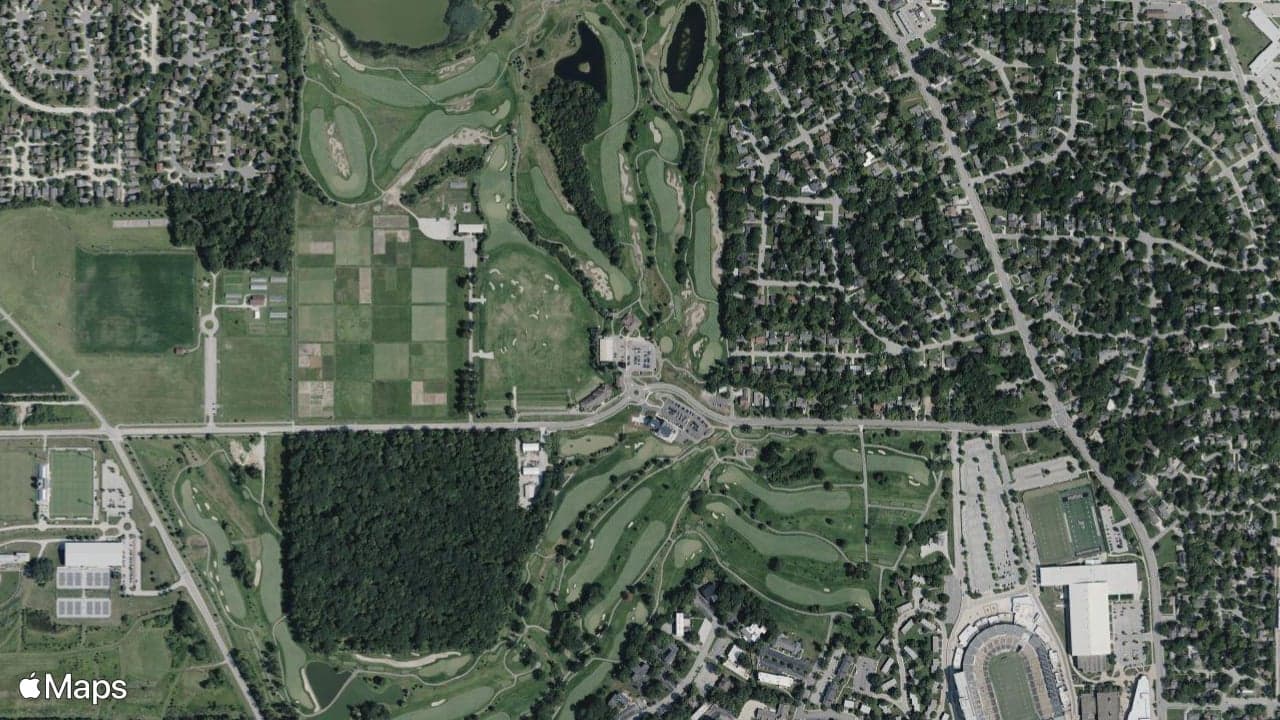
The land at Kampen-Cosler leans. Stand by the clubhouse at Birck Boilermaker Golf Club and the whole property falls away from you, a gradual hillside that sheds about forty feet on its way down to the large lake in the northwest corner. It is not dramatic ground. It is Indiana ground, patient and gently inclined, and what makes the course worth loving is how Pete and Alice Dye gave that slope some life. Before them, there was the old North course, always the weaker of the two eighteens at this 36-hole complex. No date or designer was ever attached to it. It was rudimentary, with almost every hole running parallel to the next, a set of plain corridors laid side by side. When an upcoming road construction project gave Purdue a reason to ask Pete Dye for some improvements, he came back with something else entirely: a whole new course, built to test the best players in college golf. The university agreed and gave Pete and Alice free rein. Purdue was Pete's own school. He had studied turf management and agronomy there in the 1950s without ever graduating, and now he returned to build on its ground. The university had not been looking for an overhaul, so the budget was very small. Pete charged a design fee of one dollar. He recruited thirty-two college students to help with construction, and not one of them had any prior construction experience. They were essential all the same, and the course came to life through their hands. It debuted in 1996, still known as the North, and came to carry the name of Emerson Kampen, a Purdue supporter. What those students helped build looks like a Dye course at full volume. The fairway bunkering is chaotic, vast spreads of exposed sand littered with islands of grass, with manufactured mounds rising around them and railroad ties in the mix. Whistling Straits was being built at the same time, and the resemblance is likely no coincidence. On a modest Midwestern hillside, the sand and the mounding give the land a restlessness it would never have found on its own. The architecture runs on a repeated idea. A large waste area sits along one side of a hole, and the green is angled to accept shots best from a certain side of the fairway, usually the side closer to the hazard. The course keeps asking the same honest question: how close to the sand are you willing to go? At more than 7,400 yards from the tips, it asks that question at length. Lee Williamson of Purdue answered it well enough to win the 2004 Indiana Open here. And yet there is a tension in the place, and it is part of its character. There are many really good and interesting holes, but none that stands out as truly special. The greens are large, but their subtlety is quieter than the bunkers around them promise. It is a course of steady quality rather than a single famous moment, a terrific university course and a vast improvement on what came before. Then there is the stretch at the seventh and eighth holes, where the golf passes a wide open field of turfgrass test plots. This is the William H. Daniel Turfgrass Research and Diagnostic Center, one of the premier turfgrass research facilities in the country, more than twenty acres of different turf types where Purdue students and professors test, research, and learn about the very thing underfoot. It is hard to imagine a more fitting neighbor for a course built by a man who once studied turf on this campus. Across the complex sits Ackerman-Allen, the rolling parkland course that began as Bill Diddel's South in 1934, became Ackerman Hills, and was completely remodeled by Dye in 2016. The two complement each other well, the parkland and the sand. But Kampen-Cosler is the one with the stranger origin story: a former student, a one-dollar fee, and thirty-two beginners turning a rudimentary old course into a must-play for anyone passing through town.
Quick facts
- Location
- West Lafayette, IN, USA
- Access
- Public
- Year built
- 1997
- Holes
- 18
- Designer
- Pete Dye
- Par
- 72
- Length
- 7,465 yards
- Difficulty
- 76.9/146
- Course Vaults score
- 8.2
Getting there
Most visitors to Birck Boilermaker Golf Club arrive through Indianapolis International Airport, roughly an hour's drive northwest into the academic heartland of Indiana. The route follows Interstate 65 through gently rolling farmland before merging onto the outskirts of West Lafayette, where Purdue University's sprawling campus signals your arrival. As you cross the Wabash River and navigate past brick engineering halls and student commons, the transition from Big Ten bustle to the club's serene, purpose-built grounds feels like stepping through a private gate - a championship facility born of university ambition, yet removed enough to exist in its own quiet sphere.
FAQ
Common questions about Kampen at Birck Boilermaker Golf Club
Ratings, design, and course details pulled from Course Vaults.
Kampen at Birck Boilermaker Golf Club has a Course Vaults score of 8.2 out of 10 based on 70 logged golfers.
Kampen was designed by Pete Dye.
Yes. Kampen at Birck Boilermaker Golf Club is listed as welcoming public or guest play on Course Vaults.
Par at Kampen is 72.
Kampen plays 7,465 yards from the back tees on Course Vaults.
The slope rating at Kampen is 146.