

Championship Course
Southern Hills Country Club


About this course
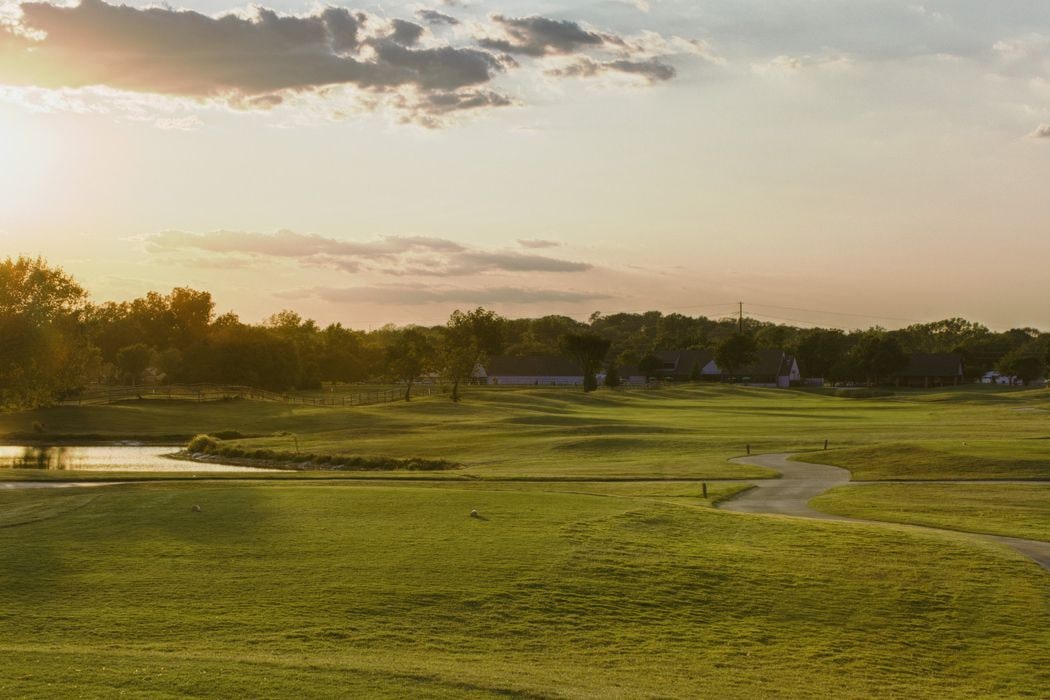
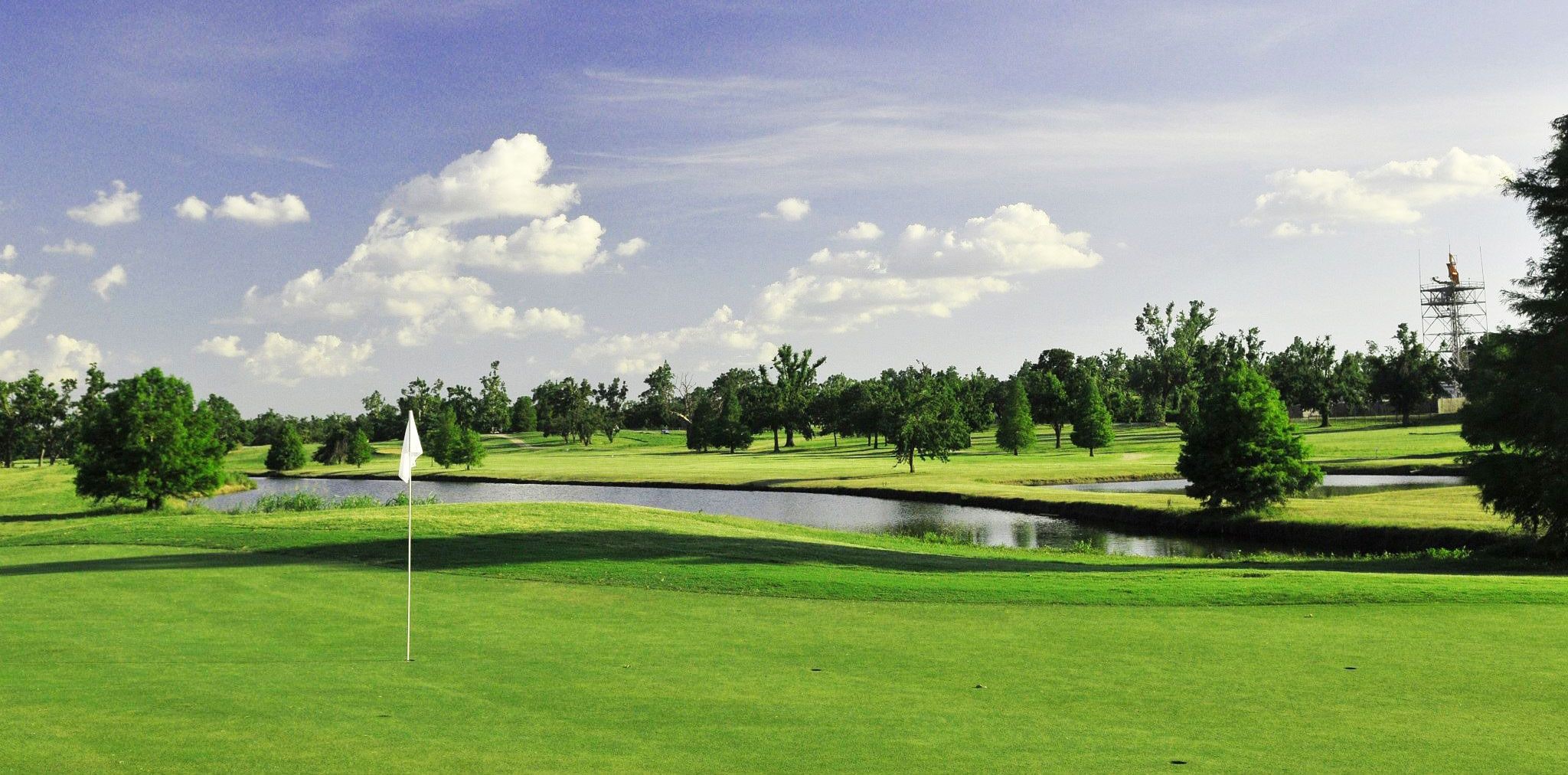
"Twenty-Four Hours from Tulsa" is one of Burt Bacharach's better-known songs, and whatever kept a traveler from Oklahoma that long, the arrival is worth it, especially if a member's friendship opens a tee time at Southern Hills. There is nothing flash here. Mature deciduous trees line many of the Bermuda grass fairways, the rough grows notoriously thick and tangly, and the place carries the quiet of something that has no need to show off. It was an unlikely birth. In the mid-1930s few world-class courses were being built in North America, much less on drought-ravaged prairie. Yet in the depths of the Depression, a group of well-to-do Tulsans, roughly 150 of them, found $1,000 apiece for a new country club. Oil baron Waite Phillips donated a handsome, rolling property, and Perry Maxwell, a local Oklahoman, came to design the course. With his brother-in-law and construction supervisor Dean Woods, and with Works Progress Administration labor, Maxwell built a tournament-worthy course. Oklahoma has always been hard on golf turf, too warm for bent and too cold for Bermuda, and many early courses in the state, including a number of Maxwell's, began with sand greens. Here an irrigation system that was state-of-the-art for the 1930s let the club sow bent from tee to green, a first for the region. The name promises more than the land delivers. The 1st and 10th tees are elevated, and the 9th and 18th greens sit well above their fairways, but the rest of the course is more flattish than not. That modesty is deceptive. Away from the hill by the clubhouse the undulations are superb, and Maxwell capitalized on them all. His routing is full of doglegs well defended by trees, and his greens are tilted, so even the world's best, seldom hitting driver, still face difficult approaches. The ground does not lend itself to breather holes. For championship play the only par fives are the unreachable 655-yard 5th and the 537-yard 13th, with water guarding the front of its green. Apart from the rough and its 7,481 championship yards, Southern Hills can look there for the taking. But not for long. National championships came starting with the 1946 U.S. Women's Amateur, followed by U.S. Opens in 1958, 1977 and 2001 and a succession of PGA Championships. Before that first Open, Robert Trent Jones revised a few holes and warned against going further. "You've got one of the greatest golf courses in the world," he said. "You'd be a fool to let anyone make further changes." The club perhaps did not listen closely enough. Over four decades the trees closed in, the greens lost much of their original character, and the bunkers evolved into deep, saucer-shaped forms. The way back began in the early 2000s, when Keith Foster removed trees, widened fairways and restored greens. Then Gil Hanse led a ten-month restoration of Maxwell's design within a $19 million upgrade that finished in June 2019, a project also tied to preparing for the 2022 PGA Championship. Every green was rebuilt with Pure Distinction bent and an underground hydronic system that cools or heats the surfaces through cold winters and hot summers. The bunkers returned in a more natural style. Drainage creeks that once ran underground were opened up on many holes, and cart paths were tucked from view. On the 2nd, clearing trees on the left revived a split fairway seen in old aerial photographs. At the 7th, the only green Maxwell did not build was moved beside a creek with new waterfalls, the fairway shifting right where trees came down. The course grew by more than 450 yards. Its back-tee rating rose from 76.8 to 78.2 while the slope eased from 144 to 142, making it tougher for the scratch player and slightly more playable for everyone else. The club was also set to stage a second U.S. Women's Amateur. Even its landmarks are humble at heart. The clock tower beside the practice green, famous enough to appear on the 2022 PGA Championship logo, has stood only since the 1990s, replacing a smaller structure that housed a range-ball dispenser. West of the clubhouse lies a nine-hole course Coore & Crenshaw were hired to create in 1992, built in Maxwell's style to resemble the championship course as it stood then. Southern Hills remains simple in appearance and complex to play.
Quick facts
- Location
- Tulsa, OK, USA
- Access
- Private
- Year built
- 1936
- Holes
- 18
- Designer
- Perry Maxwell
- Par
- 71
- Length
- 7,184 yards
- Difficulty
- 72.8/125
- Course Vaults score
- 9.3
Getting there
The journey to Southern Hills Country Club begins at Tulsa International Airport, a compact and efficient gateway just twenty minutes south of the club's storied gates. The drive north along U.S. 169 traces the Arkansas River before turning into the leafy, prosperous neighborhoods of midtown Tulsa, where the landscape shifts from prairie flatness to gently rolling terrain shaded by mature oaks and elms. As you turn onto East 61st Street, the urban grid gives way to the quiet exclusivity of Southern Hills - a hushed enclave where championship pedigree and old-guard elegance have coexisted since 1936, and where arrival feels less like reaching a destination than crossing a threshold into American golf history.

FAQ
Common questions about Championship at Southern Hills Country Club
Ratings, design, and course details pulled from Course Vaults.
Championship at Southern Hills Country Club has a Course Vaults score of 9.3 out of 10 based on 78 logged golfers.
Championship was designed by Perry Maxwell.
Championship at Southern Hills Country Club is listed as private on Course Vaults; guest access is typically restricted.
Par at Championship is 71.
Championship plays 7,184 yards from the back tees on Course Vaults.
The slope rating at Championship is 125.