Championship Course
Nairn Golf Club


Public: #125

Public: #36
Public: #21


About this course
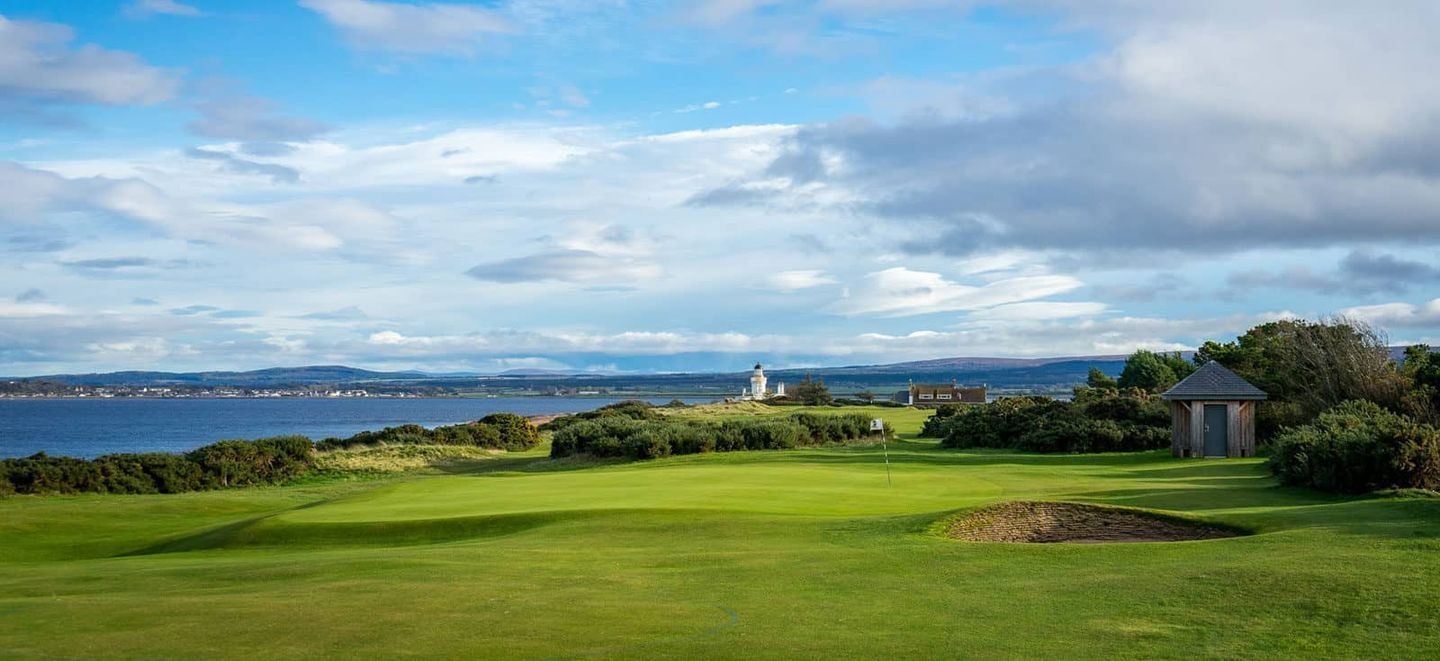
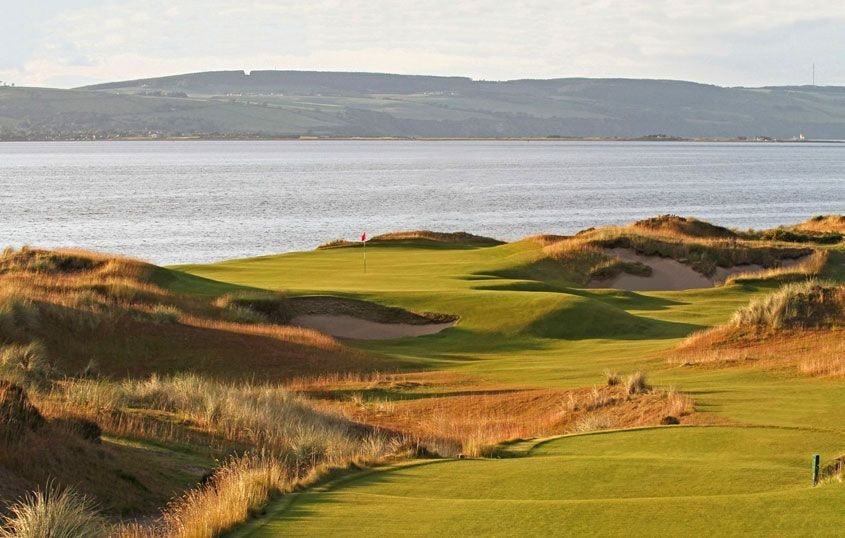
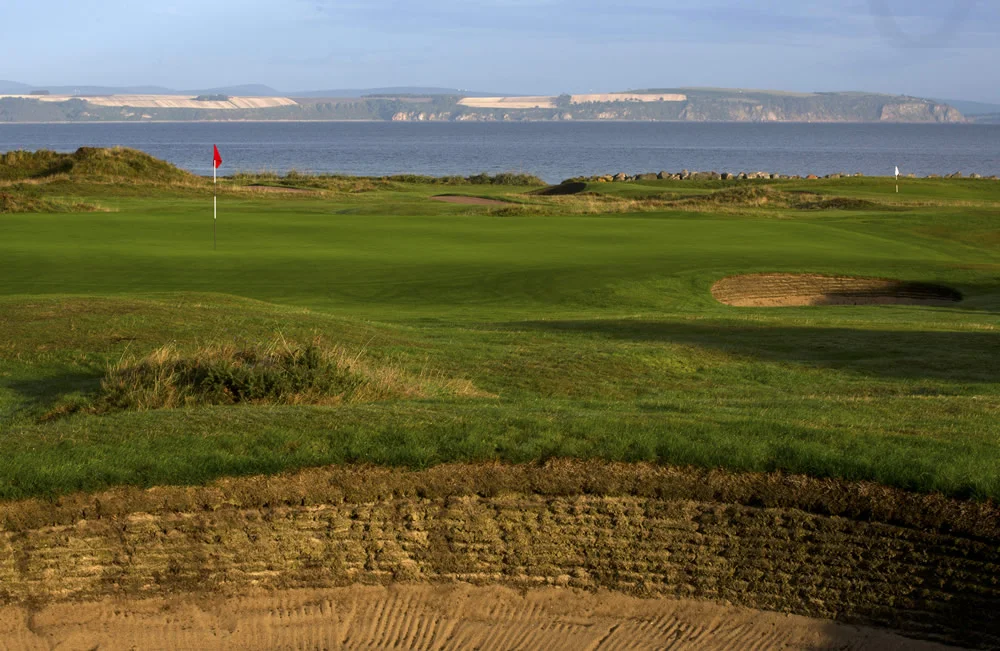
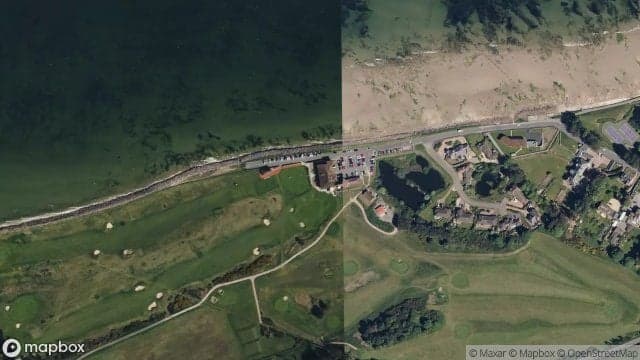
The Moray Firth never leaves you at Nairn. It is visible from every hole, and for the first seven it is more than scenery. The routing heads west beside the beach, and the sea plays as a hazard all along that opening stretch. On the 1st, "Sea," it runs down the right, though only a fairly wild drive will find it. Two bunkers on the left edge of the fairway ask for attention, and then a flat, open green invites you in. It is a gentle handshake before the coast starts to ask harder questions. Robert B Finlay founded the club in 1887, and he would later become Viscount Finlay and Lord Chancellor. Andrew Simpson, head greenkeeper at Royal Aberdeen, laid out the first routing, but it had barely settled before Old Tom Morris pushed it westward along the beach. James Braid came three times in the early twentieth century, altering tees and bunkers and shaping subtly contoured greens, especially in the opening holes of the back nine. In 1901 he became the first man to break 70 here. Ben Sayers added holes at Delnies in 1920, Braid returned to refine his work, and C. K. Cotton made minor adjustments after the Second World War. Then the links rested, largely unchanged, for most of a century. The routing runs out and back, the undulations are human-sized, and the turf is firm. The wind usually arrives from the west, so the course hands you an advantage one way and takes it back the other. The 5th, "Nets," is stroke index 1 at only 390 yards. It wants a straight drive that avoids the beach on the right, then a short approach to a small, elevated green guarded by bunkers and a bank that falls sharply away to the right. The 7th, "Long," a par 5 with a new green, closes the coastal march before the course turns inland. The 8th, "Delnies," holds Old Tom's most intact work, and the members say it is the last of it. It takes its name from the holes Sayers later built nearby. It is a short par 4 with a green perched on a natural knob, running away from you and spilling on all sides into steep, chaotic runoffs. You might drive it. You might also miss it from thirty yards. Between the 9th green and the 10th tee stand two buildings older than the golf, a peak-roofed bothy and a turf-covered icehouse, both from 1877. The bothy once sheltered estate workers, and for decades the pair served the Easter Delnies Fishing Station, with the icehouse keeping Moray Firth salmon. Today the bothy is the halfway house and the icehouse holds the drinks. Inland, the routing makes an unusual turn through the 13th, 14th and 15th. "Crown" climbs as a demanding par 4 to an elevated green at the course's most inland point. Then comes "Kopjes," a 219-yard par 3 from the highest ground on the property. Its Biarritz-style green, split by a gully, came before that template was widely adopted. Four bunkers sit in front, the tee drops toward the green, and crosswinds make the club hard to choose, all with the Black Isle across the water. "Sutors," at 306 yards, offers eagles to longer hitters but punishes careless placement. "Burn" puts water across the front of the 17th green. It can be driven in the right conditions, but it asks for careful judgement. Between 2018 and 2020 Tom Mackenzie, of Mackenzie & Ebert, worked from the club's archive. He built new greens on the 1st and 7th and rebuilt or enlarged the green at the 14th. He also reshaped the surrounds on twelve holes, rebuilt every fairway bunker, and added new tees. To some, the flash-faced bunkers and scooped runoffs feel very much of this era. The old character holds all the same. The champions here include Maureen Madill in 1979 and Lee James in 1994. Paul Casey and Luke Donald led Great Britain & Ireland past a team with Matt Kuchar in the 1999 Walker Cup, 15-9. Charley Hull and Leona Maguire played in the 2012 Curtis Cup, which Great Britain & Ireland won 10.5-9.5. Laird Shepherd came back from seven down to win in 2021, and Paula Martin Sampedro won in 2025. The archive room upstairs keeps their records, and the members gladly share it with visitors.
Quick facts
- Location
- Nairn, The Highlands, Scotland
- Access
- Public
- Year built
- 1887
- Holes
- 18
- Designer(s)
- Old Tom Morris, James Braid, Ben Sayers, C. K. Cotton
- Par
- 72
- Length
- 6,821 yards
- Difficulty
- 77.3/144
- Course Vaults score
- 8.6
Getting there
The journey to Nairn Golf Club begins at Inverness Airport (INV), a compact Highland gateway situated roughly twenty miles southwest of the club, followed by a drive of thirty to forty minutes that traces the Moray Firth coastline northeastward through the Scottish Highlands. The route unfolds with quiet drama - leaving the A96 to descend toward the Nairn seafront, where the North Sea comes into view and the air carries the salt-tinged clarity of the northern coast. Private aviation arrives at Inverness or the smaller Nairn Airfield, both offering discreet access to this remote corner of Scotland. The final approach delivers you to the club's clifftop setting overlooking the Firth, where the austere beauty of the links landscape and the distant mountains of the Great Glen announce your arrival at one of Scotland's most storied and secluded golfing sanctuaries.
FAQ
Common questions about Championship at Nairn Golf Club
Ratings, design, and course details pulled from Course Vaults.
Championship at Nairn Golf Club has a Course Vaults score of 8.6 out of 10 based on 41 logged golfers.
Championship was designed by Old Tom Morris, James Braid, Ben Sayers, and C. K. Cotton.
Yes. Championship at Nairn Golf Club is listed as welcoming public or guest play on Course Vaults.
Par at Championship is 72.
Championship plays 6,821 yards from the back tees on Course Vaults.
The slope rating at Championship is 144.