Brickyard Crossing Course
Brickyard Crossing Golf Club


Public: #399
Public: #259
Public: #6


About this course
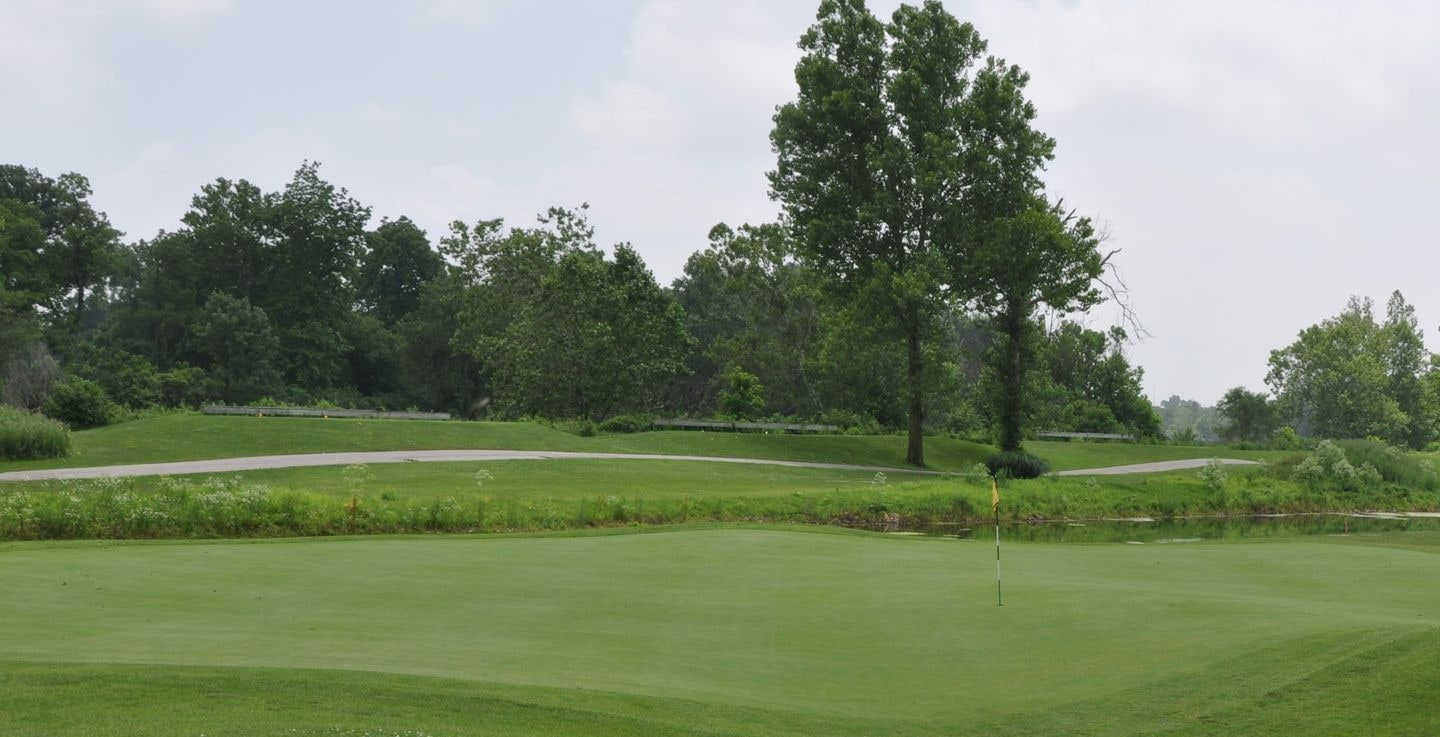
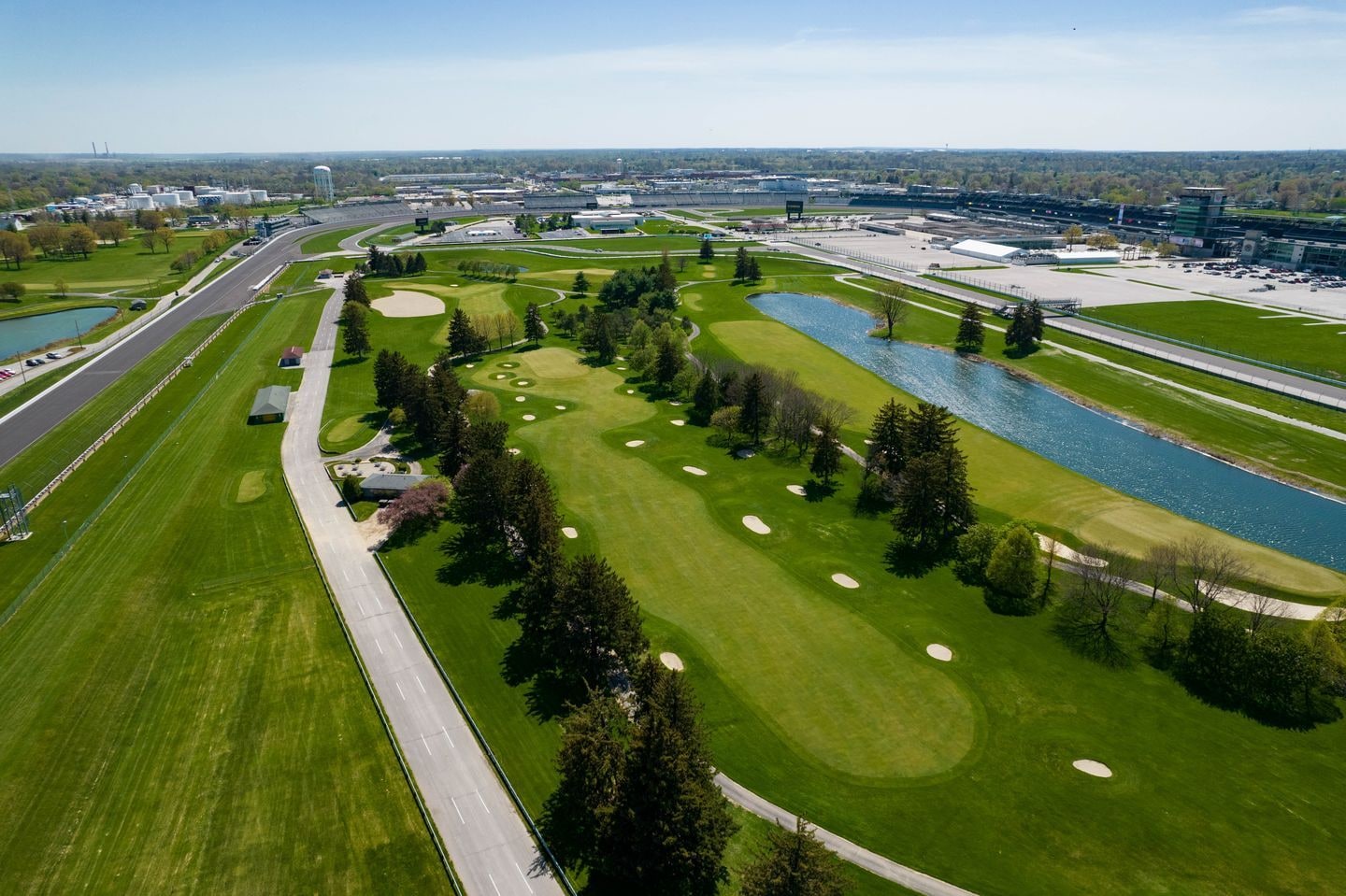
In 1909 the Indianapolis Motor Speedway opened as a racing circuit, and within months its crushed rock and tar surface had been torn up and relaid with 3.2 million bricks. The name stuck long after the bricks disappeared under asphalt in 1961, leaving only a narrow strip to mark the start and finish. Brickyard Crossing carries that name too, and the course has spent nearly a century living inside a place built for something far louder than golf. The golf began with a practical problem. The grounds were busy for one weekend a year, and the owners wanted income through the rest of it. In 1929, roughly twenty years after the track opened, a course arrived with holes on both sides of the oval. Perhaps it was nine inside and nine outside, or perhaps it was already the full twenty-seven, eighteen beyond the track and nine within. Players crossed the racetrack on a wooden bridge, and that bridge was called Brickyard Crossing. There is something lovely in the idea of a round broken by the most famous strip of pavement in motorsport. By 1960 the PGA Tour was stopping here each year for the 500 Festival Open, nine editions in that decade, and a nine-hole addition may have come with it, sparing golfers the walk over the brickyard mid-round. Mickey Wright won the 500 Ladies Classic here in 1968. In 1971 the inner nine lost some of its footprint, and some holes were adjusted. The place also caught one strange, bright moment of pop history. After two shows at the Indiana State Fairgrounds in 1964, the Beatles spent the night at the old Speedway Motel and posed the next morning on the practice green of what was then the Speedway 500 Golf Course. One of those photographs became the cover of a two-track record pairing "Eight Days a Week" with "I'm A Loser." In 1991 Pete Dye was hired to overhaul the course, in hopes of bringing professional golf back and returning the crossing of the track to the middle of the round. The reconstruction took place in 1993, and the course that Pete and Alice Dye shaped took the bridge's old name. Dye converted the old layout to eighteen holes, almost 7,200 yards from the back tees at a par of 72. Fourteen holes sit outside the track. Four, the seventh through the tenth, sit inside beside an infield lake, reached by a tunnel from the sixth that runs beneath the racing surface. The landscape was entirely manufactured. Large earthworks introduced elevation changes, and ponds appeared where none had existed. The holes ask strategic questions and punish wayward answers with water and penal bunkering, as Dye's work so often does. The four infield holes are each sharply different from the others, a self-contained loop inside the speedway. The best detail is buried in a creek. During the redesign, owner Tony George decided to replace the two and a half mile crash wall around the track and asked Pete whether he had any use for the material. He did. Little Eagle Creek is now lined with the large concrete slabs that once saw many historic races and crashes. A golfer hunting a ball along the bank is looking at a piece of Speedway history. The redesigned course held the Comfort Classic on the Champions Tour from 1994 to 2000. Women's professional golf returned in 2017 with the Indy Women in Tech Championship, and for that event the routing is re-sequenced for spectators. The front nine runs from the eleventh through the eighteenth and then the first, and the back nine plays the second through the tenth, so the infield holes become the four finishing holes. That reshuffle sums up the course well. Brickyard Crossing is a Dye design from near the height of his career, and a splendid one even without the sights and sounds of the track. Still, it is at its best when you remember where it is, especially on a day when cars are running time trials or enthusiasts are making high-speed loops while you play.
Quick facts
- Location
- Indianapolis, IN, USA
- Access
- Public
- Year built
- 1993
- Holes
- 18
- Designer
- Pete Dye
- Par
- 72
- Length
- 7,180 yards
- Difficulty
- 75.1/149
- Course Vaults score
- 8.0
Getting there
The journey to Brickyard Crossing Golf Club begins at Indianapolis International Airport, a straightforward fifteen-minute drive northwest into the heart of motor racing history. The approach follows Interstate 465 to the legendary grounds of the Indianapolis Motor Speedway, where the club's distinctive layout unfolds both inside and outside the famed oval. As you pass through the gates of the Speedway complex, the transition is immediate and singular - from urban Indianapolis to the hallowed asphalt and infield terrain where four holes play within the track itself, offering an arrival experience unlike any other in American golf.

FAQ
Common questions about Brickyard Crossing
Ratings, design, and course details pulled from Course Vaults.
Brickyard Crossing has a Course Vaults score of 8.0 out of 10 based on 64 logged golfers.
Brickyard Crossing was designed by Pete Dye.
Yes. Brickyard Crossing is listed as welcoming public or guest play on Course Vaults.
Par at Brickyard Crossing is 72.
Brickyard Crossing plays 7,180 yards from the back tees on Course Vaults.
The slope rating at Brickyard Crossing is 149.