

Bel Air Course
Bel Air Country Club


About this course
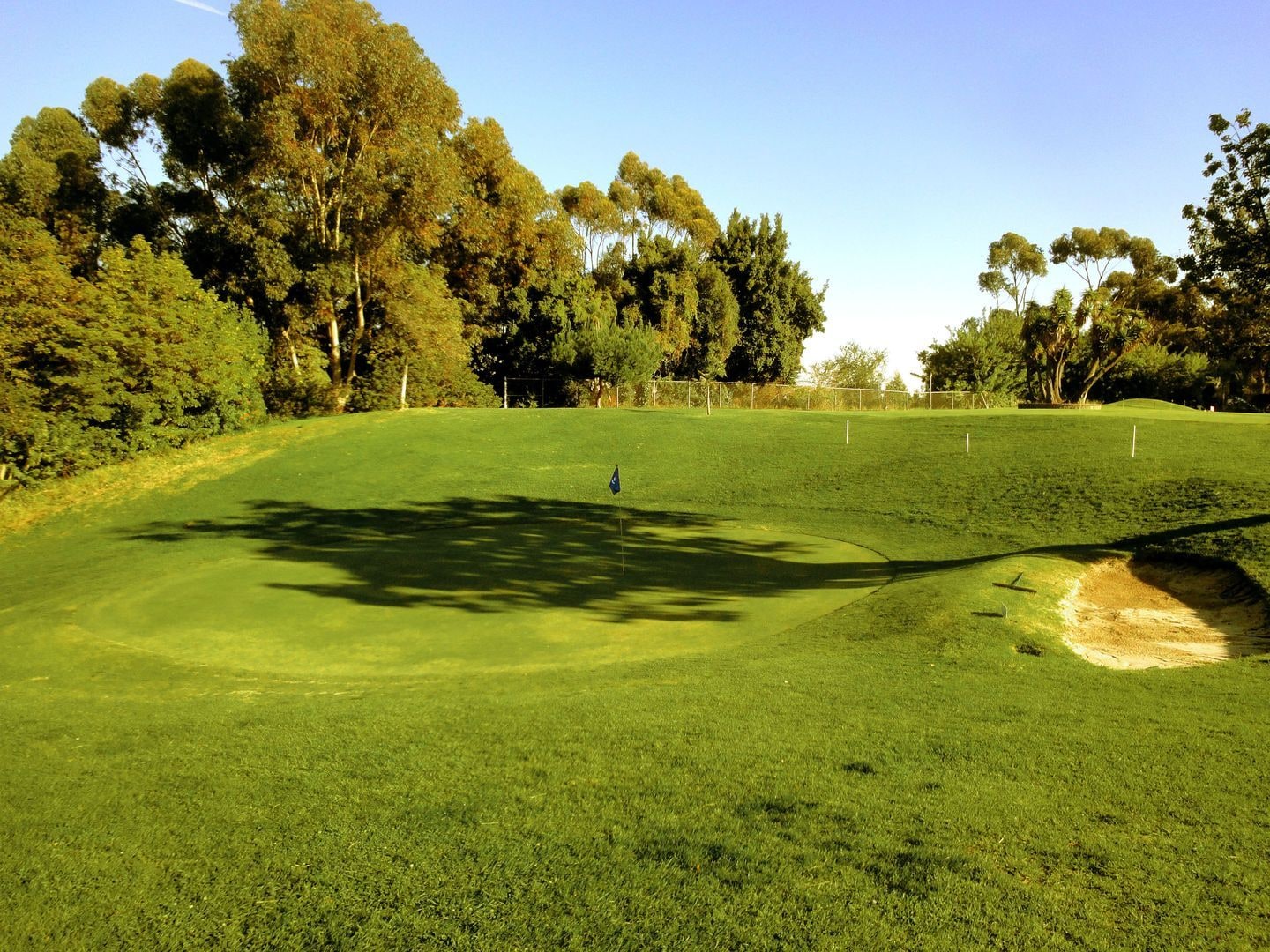
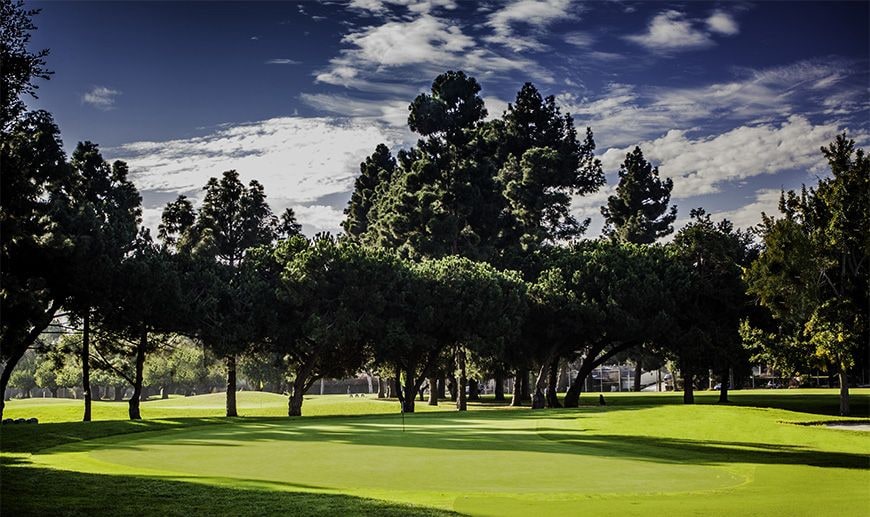
Bel Air is a golf course that should not exist, and that is the first thing to love about it. In the mid-1920s the oil magnate Alphonzo Bell founded the club as part of Bel Air Estates, an upscale residential community for the film industry's elite, set in the canyons above the UCLA campus. Real estate was the reason. The land was the problem. These are severe Los Angeles canyons, the kind of tortuous ground that seems to refuse a golf course. Bell hired George C. Thomas anyway. Thomas, with his associates Billy Bell (no relation to Alphonzo) and Jack Neville, routed the fairways around the canyons and made them part of the adventure. What they built to get golfers around the property still reads like a dare. A little tunnel comes before the 6th, another before the 11th. After the 9th you walk into a tunnel and ride an elevator from within it. After playing from the 10th tee you cross a white swinging suspension bridge, as if the course wants you to remember how unlikely all this is. The club was formed in 1924, and the course opened in 1927. It was Thomas's first Los Angeles masterpiece, soon joined by Riviera, also in 1927, and by his renovated North Course at Los Angeles Country Club in 1928. Three great courses in one city from one hand, and Bel Air was the boldest feat of construction among them. Hollywood came, as it was meant to. Katharine Hepburn lived just off the course, and Howard Hughes once landed his airplane on the 14th fairway to impress her while she was taking a lesson from one of the club professionals. Hughes, it is said, climbed out and joined them for some practice. It is the perfect Bel Air image: glamour landing on a fairway already coaxed out of impossible terrain. The trouble with a place like this is that people keep changing it. Over the years Dick Wilson and Robert Trent Jones made revisions, and so did a Fazio - George, or perhaps Tom. By the time anyone looked closely, there were 76 bunkers and two ponds, and many of the greens were no longer Thomas's. The course kept its tunnels and its bridge, but the golf between them had drifted away from the man who drew it. Tom Doak saw this more clearly than most. He thought Thomas's plan for Bel Air might be "the most spectacular routing ever conceived." Asked in 2015 which courses would most benefit from restoration, a question he usually sidesteps, he named Bel Air out loud. Word reached the green committee, and the committee invited him in. The course, he said, "was further from George Thomas's design than most people realize." His Renaissance Golf Design team began at the end of 2017, and the restoration came in 2018. They cut the bunkers from 76 to 42 originals, removed two ponds, and changed half the greens. The most touching part is how they found what they were looking for. In places they simply dug, and there, under the newer work, was old bunker sand that revealed the dimensions of several bunkers. Midcentury crews had sometimes built right on top of Thomas and Bell's features instead of stripping them away. Their shortcuts became an archive, and pieces of the original course had been waiting underground all along. Bel Air hosted the 50th USGA Senior Championship in 2004, marking the club's eightieth year, and the U.S. Women's Amateur was set for August 2023. But the championships are not what stays with you. What stays is the walk: into the tunnels, through the elevator, across the white bridge, and onto holes that once again look like the dare Thomas first made with these canyons.
Quick facts
- Location
- Los Angeles, CA, USA
- Access
- Private
- Year built
- 1926
- Holes
- 18
- Designer(s)
- George C. Thomas, William Park Bell Sr., Jack Neville, Tom Doak
- Par
- 70
- Length
- 6,482 yards
- Difficulty
- 74.7/134
- Course Vaults score
- 8.8
Getting there
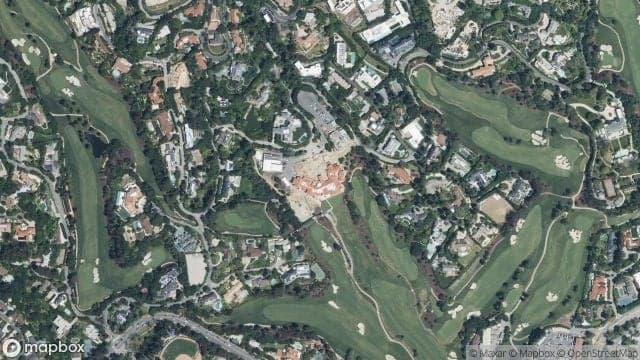
Los Angeles International Airport serves as the primary gateway, though the private terminals at Van Nuys and Burbank offer a more discreet arrival for those who prefer it. From LAX, the drive north through West Los Angeles and into the foothills above Bel Air takes roughly forty minutes, depending on the city's famously unpredictable traffic. The route climbs steadily from the coastal plain into the exclusive enclaves tucked against the Santa Monica Mountains, where manicured gates and towering hedges signal arrival in one of Southern California's most rarefied neighborhoods - and at Bel Air Country Club, a storied sanctuary that has quietly hosted Hollywood royalty and captains of industry since 1927.
FAQ
Common questions about Bel Air
Ratings, design, and course details pulled from Course Vaults.
Bel Air has a Course Vaults score of 8.8 out of 10 based on 82 logged golfers.
Bel Air was designed by George C. Thomas, William Park Bell Sr., Jack Neville, and Tom Doak.
Bel Air is listed as private on Course Vaults; guest access is typically restricted.
Par at Bel Air is 70.
Bel Air plays 6,482 yards from the back tees on Course Vaults.
The slope rating at Bel Air is 134.