

Ballyneal Course
Ballyneal Golf Club


About this course
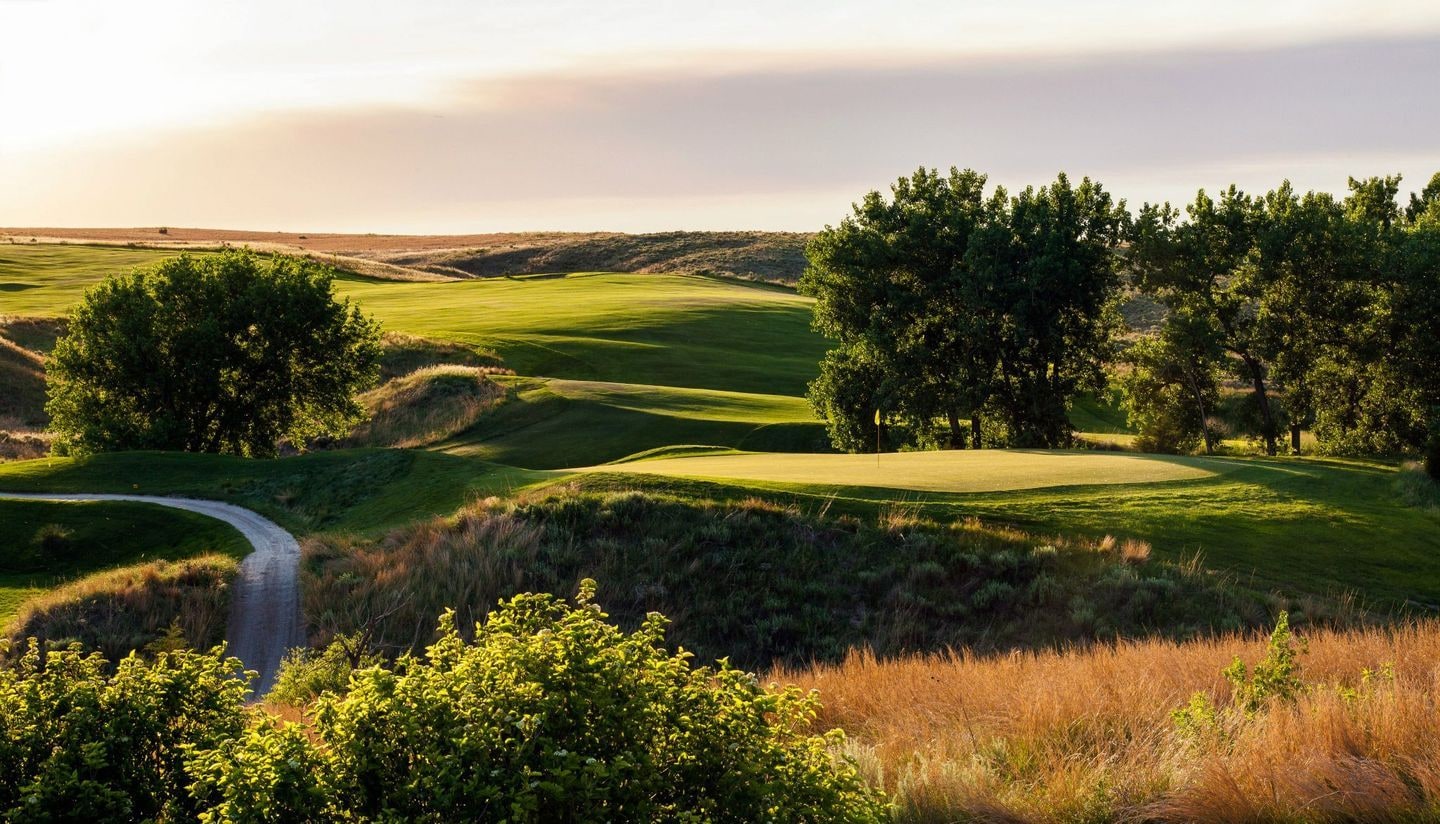
The high plains of eastern Colorado do not announce themselves. They roll out in long, gentle swells, laced with rural roads that link small farming and ranching towns, many of which grew from railroad expansion a century ago. Holyoke is one of them, a place of about 2,400 people sitting at 3,736 feet, a few miles short of the Nebraska line. Drive south from town down miles of dirt road, and the land does something it has no business doing. It breaks. Sharp ridges and hollows rise in the distance, a tangle of sand the locals call the Chop Hills. They cover less than five square miles, and their sudden changes in elevation make them useless for crops or livestock, in complete contrast to the soft country reaching away in every direction. Brothers Jim and Rupert O'Neal grew up in a farming family and came to know those steep dunes well. By 2001, Jim was a golf professional and Rupert had built a successful hunting club near Holyoke. After watching that year's Open together, they wandered out into the Chop Hills looking for holes like the ones they had seen on television. Jim quickly picked out a handful of fantastic natural sites for fairways and greens, and right then he knew they had a chance to build something special. The name that grew from that dream sounds Irish, fitting for what would become an inland links. The brothers had heard of Tom Doak, who had just finished Pacific Dunes. His senior associate Jim Urbina came first, in November 2001, a lifelong Coloradan who had no idea his home state held dunes to rival the great links of the world. Doak followed the next spring and recognized a character in the land worthy of any conversation about great American golf. Bruce Hepner, the lead associate, mowed the entire course corridor to six inches in a single weekend, driving a tractor with a high centre of gravity across slopes so steep that he claims he was nearly killed half a dozen times before shaping had even begun. The course was basically built in 21 weeks from a one-page construction plan, with no detailed blueprints, an irrigation crew of locals, and an abundance of talent: the whole Renaissance roster, hands usually tied to the firms of Pete Dye and of Coore and Crenshaw, and the architect Kye Goalby. Doak likened it to his first job, working for Dye at Long Cove. "Ballyneal was just a dozen guys having a great time," he said. The aim, on a thousand acres of dunes, was to take the land as it was found, so that the course would be a product of the ground rather than forced upon it. The edges blur from fairway to rough to native landscape, meant to look as though people had little to do with it. The greens are where that idea grows most daring. Doak has said he knows no other course where large natural undulations shape the green complexes and the strategy so much, and that this simply evolved during construction. Most of those swells were modified from their original form so the ball would come to rest in certain places, because some of them were that steep. Still, the natural contours dictated nearly every green. Find the right bowl and you are rewarded. Miss it and you are punished severely. Because every finished contour ties into the slopes outside, a player can still use the land itself to bring an approach into position. Ballyneal was built for matches, not scorecards. There are no tee markers, and whoever won the last hole picks from several spots for the next. It is walking only, which lets the fine fescue play as firm and fast as it can. Turtles roam the property, improbably, so watch your step. A few cats make their homes around the clubhouse, and the famous Bunker turns up on the merchandise in the pro shop. For the whole picture, take the cart path at the back of the parking lot up to the entrance of the hunt club. From there the Chop Hills spread out beneath you, the full property laid open in a single view.
Quick facts
- Location
- Holyoke, CO, USA
- Access
- Private
- Year built
- 2006
- Holes
- 18
- Designer
- Tom Doak
- Par
- 71
- Length
- 7,147 yards
- Difficulty
- 74.1/126
- Course Vaults score
- 9.2
Getting there
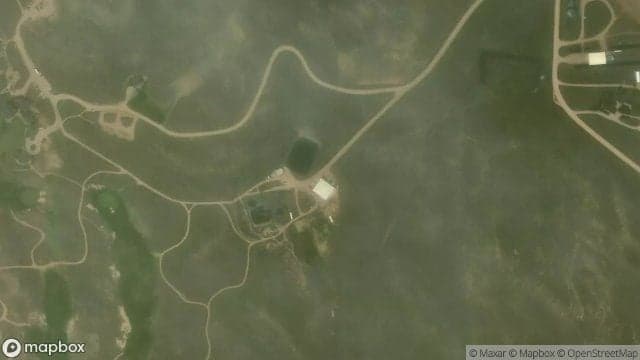
The journey to Ballyneal Golf Club unfolds across the high plains of northeastern Colorado, most readily accessed via Denver International Airport (DEN), roughly two hours and forty minutes to the southeast by car. From DEN, the drive transitions swiftly from the Front Range corridor onto I-76 and then eastward across the vast, windswept prairie—a landscape of big sky and sparse settlement that grows progressively more remote and elemental as you approach Phillips County. The final thirty minutes dissolve into quiet county roads that cut through native grassland, where the only structures are the occasional ranch and the distant grain elevator, before the understated entrance to Ballyneal appears: a clubhouse of deliberate modesty set against an ocean of undulating dunes that feels utterly removed from the world, yet entirely of it.
FAQ
Common questions about Ballyneal
Ratings, design, and course details pulled from Course Vaults.
Ballyneal has a Course Vaults score of 9.2 out of 10 based on 76 logged golfers.
Ballyneal was designed by Tom Doak.
Ballyneal is listed as private on Course Vaults; guest access is typically restricted.
Par at Ballyneal is 71.
Ballyneal plays 7,147 yards from the back tees on Course Vaults.
The slope rating at Ballyneal is 126.