Start your course passport
Download Course Vaults on iOS and log the next course you play.
Download Course Vaults on iOS and log the next course you play.
Tamarisk Course


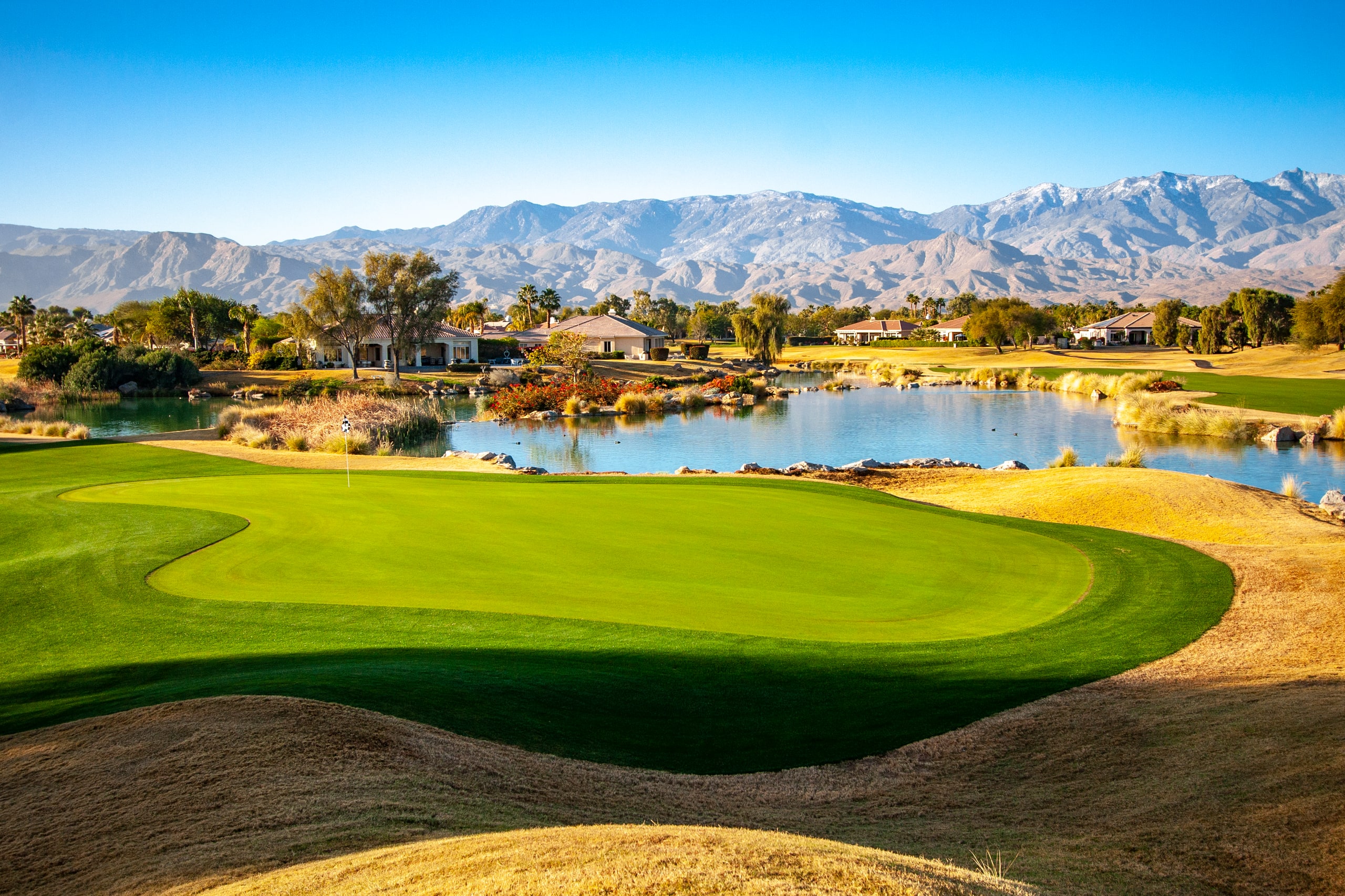
Tamarisk Country Club sits in Rancho Mirage, part of the Coachella Valley golf corridor east of Palm Springs. The course was designed by William F. Bell and his son William P. Bell, with later modifications by John Harbottle III. The Bells were prolific Southern California architects who shaped numerous desert courses during the region's mid-century development boom, and Tamarisk reflects their approach to routing golf through the valley's natural terrain and imported landscaping. The layout occupies relatively flat desert ground typical of the area, with fairways framed by mature trees, palms, and flowering vegetation that provide definition and shade. Water features appear on several holes, and bunkers are positioned to challenge approach shots and protect greens. The course plays through a traditional country club setting where residential development and manicured grounds create a parkland character distinct from the surrounding desert landscape. Tamarisk has served as a private club with a membership drawn from seasonal residents and year-round locals. The club has maintained a presence in the Coachella Valley golf community for decades, offering a classic desert country club experience. While not a tournament venue of national prominence, the course represents the style of golf architecture that helped establish the region as a winter golf destination during California's post-war expansion.

FAQ
Ratings, design, and course details pulled from Course Vaults.
Tamarisk was designed by William F., William Francis Bell, and John Harbottle III.
Tamarisk is listed as private on Course Vaults; guest access is typically restricted.
Par at Tamarisk is 72.
Tamarisk plays 7,003 yards from the back tees on Course Vaults.
The slope rating at Tamarisk is 123.
Tamarisk is a 18-hole course.
Tamarisk Course
Tamarisk Country Club sits in Rancho Mirage, part of the Coachella Valley golf corridor east of Palm Springs. The course was designed by William F. Bell and his son William P. Bell, with later modifications by John Harbottle III. The Bells were prolific Southern California architects who shaped numerous desert courses during the region's mid-century development boom, and Tamarisk reflects their approach to routing golf through the valley's natural terrain and imported landscaping. The layout occupies relatively flat desert ground typical of the area, with fairways framed by mature trees, palms, and flowering vegetation that provide definition and shade. Water features appear on several holes, and bunkers are positioned to challenge approach shots and protect greens. The course plays through a traditional country club setting where residential development and manicured grounds create a parkland character distinct from the surrounding desert landscape. Tamarisk has served as a private club with a membership drawn from seasonal residents and year-round locals. The club has maintained a presence in the Coachella Valley golf community for decades, offering a classic desert country club experience. While not a tournament venue of national prominence, the course represents the style of golf architecture that helped establish the region as a winter golf destination during California's post-war expansion.
FAQ
Ratings, design, and course details pulled from Course Vaults.
Tamarisk was designed by William F., William Francis Bell, and John Harbottle III.
Tamarisk is listed as private on Course Vaults; guest access is typically restricted.
Par at Tamarisk is 72.
Tamarisk plays 7,003 yards from the back tees on Course Vaults.
The slope rating at Tamarisk is 123.
Tamarisk is a 18-hole course.