


St. Louis Course
St. Louis Country Club


About this course
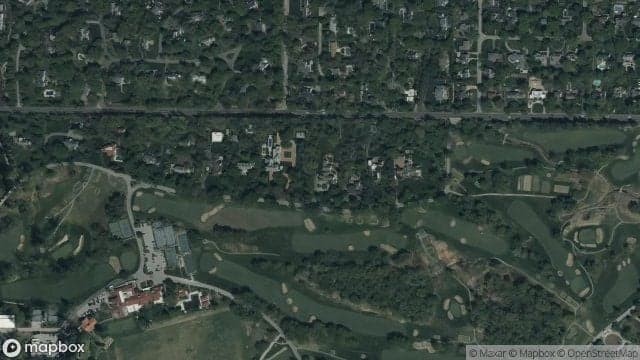
There is a particular kind of courage in a golf course that refuses to grow. St. Louis Country Club sits on a tight parcel in Ladue, ten miles west of the city, with houses pressing in at the edges and little room to go anywhere. At roughly 6,500 yards it will never chase the monsters that stretch past 7,000, and it has no need to. Its holes owe nothing to length and everything to strategy. The club came here in 1914, leaving its old home in Clayton. To build the new course it called on Charles Blair Macdonald. He was Chicago-born, a founding member of the USGA, the first U.S. Amateur champion, and the man generally recognised as the father of American golf course architecture. With him came Seth Raynor, who had first worked alongside him in 1907 on the National Golf Links of America. Together they would go on to collaborate on around a dozen courses of the first rank, Piping Rock and Yale among them. Macdonald supplied the flair and Raynor the engineering skill, and both are found in many of the holes at St. Louis. What gives the place its romance is the distance it represents. This is Macdonald's westernmost design, the farthest his ideas travelled from their source. Those ideas came from Scotland, from holes he had discovered on a trip there and carried home: the blind approach of Prestwick's 17th, North Berwick's famous Redan, the 11th on the Old Course at St Andrews. To find so many of those concepts reborn on Missouri ground, a long way from any sea, is to feel how portable a great idea can be when someone believes in it enough. The course has been tested at the highest level. It has hosted a U.S. Amateur, and in 1947 it held the U.S. Open, won by Lew Worsham. That this strategic layout could stand up to the national championship says a good deal about what Macdonald and Raynor built. It remains largely unchanged, though it has not stood entirely still. In 1952 Robert Trent Jones made alterations, and among the holes he changed was the fifth. Later Brian Silva was brought in to reintroduce Macdonald's features and refine the design, in 1989 or perhaps not until 2000, when he had just restored a Raynor course at Lookout Mountain in Georgia. In his research he found an old photograph showing a Principal's Nose bunker complex in the fifth fairway. That single image led him further back, to the discovery that the hole had once featured a punchbowl green. Silva restored it to its original form. There is something lovely in that sequence: a lost hazard surfacing in a print, and the photograph pulling a forgotten green back into the light. Silva did not do it alone. The modern course owes much to Jack Litvay, the club's greenkeeper from 1977 to 2005, who tended this ground for nearly three decades. Between the man who kept the turf and the man who reread its history, the course found its way home. The turf itself is a small act of defiance. St. Louis sits in what agronomists call the Transition Zone, the middle band of the country where neither bentgrass nor Bermuda is strongly preferred. This is the only course in its area to keep bentgrass fairways. In spring and autumn they make a wonderful surface to play from, while summer asks for more water and leaves the ground softer. The club lives inside a close little world of its own. Nearby are the Bogey Club and the Log Cabin Club, and a large share of the members here belong to one of them as well. Those two clubs keep side-by-side nine-hole courses and join them into a single eighteen: two memberships, two clubhouses, two first holes, one course. It is a fitting neighbourhood for a course this particular, and the farthest-flung of Macdonald's designs still feels like it is exactly where it belongs.
Quick facts
- Location
- St. Louis, MO, USA
- Access
- Private
- Year built
- 1914
- Holes
- 18
- Designer
- Charles Macdonald
- Par
- 71
- Length
- 6,469 yards
- Difficulty
- 71.6/139
- Course Vaults score
- 8.8
Getting there
Lambert-St. Louis International Airport lies just twenty minutes north of St. Louis Country Club, making arrival straightforward for members and guests traveling from across the country. The drive south traces the western edge of the city before slipping into the manicured calm of Clayton and Ladue, where tree-lined boulevards and understated estates signal entry into one of the Midwest's most established enclaves. The club itself sits tucked behind discreet gates on Warson Road, its rolling parkland and stately clubhouse visible only to those who belong - a quiet citadel of tradition in the heart of St. Louis's old-guard corridor.
FAQ
Common questions about St. Louis
Ratings, design, and course details pulled from Course Vaults.
St. Louis has a Course Vaults score of 8.8 out of 10 based on 40 logged golfers.
St. Louis was designed by Charles Macdonald.
St. Louis is listed as private on Course Vaults; guest access is typically restricted.
Par at St. Louis is 71.
St. Louis plays 6,469 yards from the back tees on Course Vaults.
The slope rating at St. Louis is 139.