

Riviera Course
Riviera Country Club


About this course
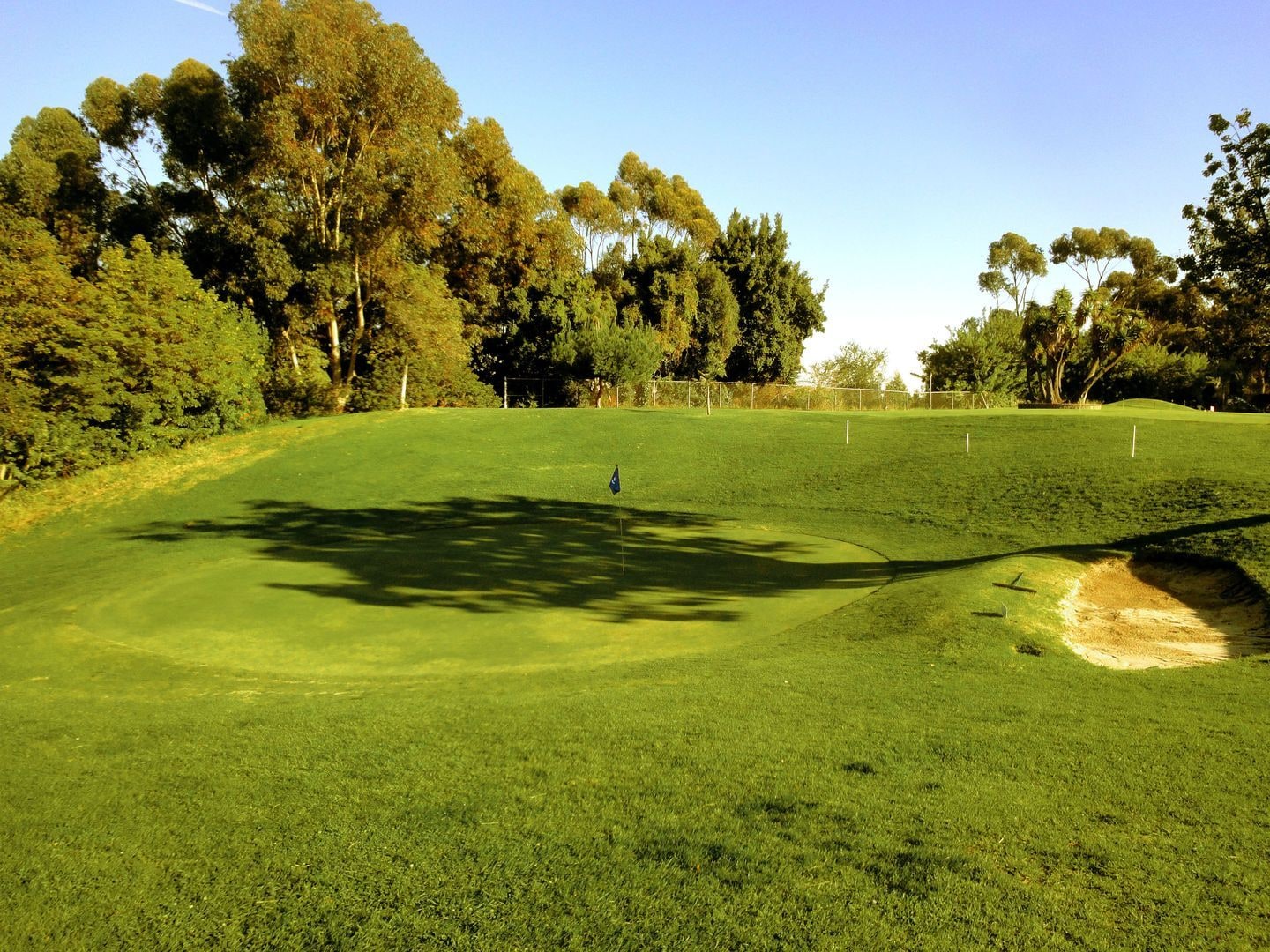
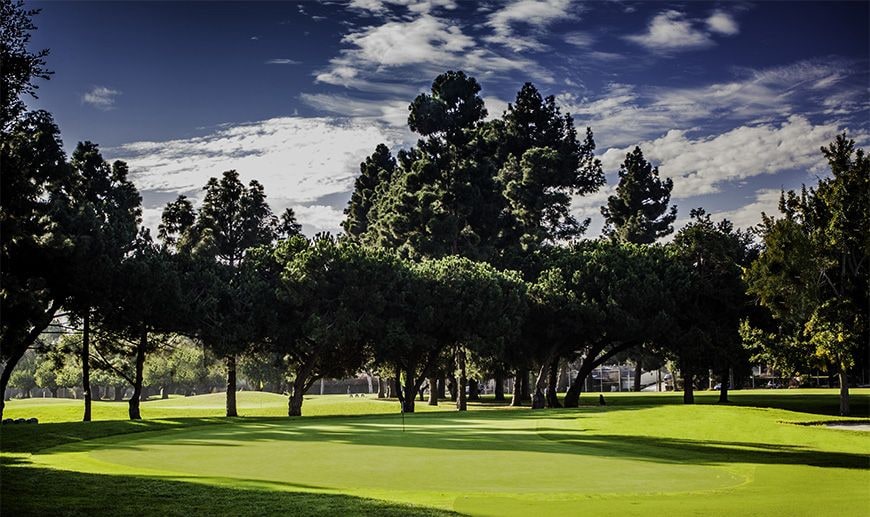
Riviera begins in a canyon, and the canyon never quite lets you forget it. In 1925 the Los Angeles Athletic Club wanted a first-rate course on what was then the edge of the city, and it struck a deal with the oil baron Alphonzo Bell for 290 acres in and around Santa Monica Canyon. The club hired a local architect, George C. Thomas Jr., and Thomas insisted that his associate Billy Bell come on as construction superintendent. Beginning in January 1926, the two men went to work on a flattish canyon floor walled in by sheer sides. It was not obviously golfing ground. What they made of it was something closer to manufacture than discovery. Thomas and Bell kept what the land offered them, a scattering of sycamores and a dry wash that would deepen over the years into a barranca, and then spared no expense building the rest: fairways, greens, hazards. The budget came to $243,827.63, an immense sum for the time. Riviera was one of the first courses where the earth was truly moved, and Thomas routed it across terrain that was far from ideal. There are few layouts with no weaknesses, but Riviera might be one. The place has not stayed as they left it. The flood of 1938 did its damage, and kikuyu, the sticky, spongy grass that now covers the fairways, roughs and green surrounds, most likely arrived afterward, brought in by the staff to stabilize the wounded ground. It held, and it has never let go. Eucalyptus was over-planted, and many of the small architectural nuances were neglected. Thomas may have been the most underrated architect of his time, and much of his work here has been lost. Yet some holes still play in the strategic spirit he intended, where the bold line pays and the timid one costs. Thomas and Bell also built a Mashie Course, nine pitch holes from 40 to 100 yards, heavily bunkered, on the ground that is now the driving range. Thomas wrote that great skill would be needed to average 3 a hole. Alister MacKenzie, who played it, called it dull, a monotonous pitch to a small green surrounded by bunkers, impossible for the average golfer. The little course was abandoned in 1943 to cut costs during the war. Its earthworks lingered until the range was graded flat at the PGA Tour's request, a little over ten years ago. The big course, meanwhile, became one of Ben Hogan's favorites. He set his Open record of 276 here, and he made his comeback at Riviera after the car crash of 1950. People call it Hogan's Alley, and nobody can quite say whether the name honors the record, the return, or the tight driving lines he favored. He called the 4th, a Redan, the greatest par 3 in America. In 1987 he chose it as the place to film his club company's commercials, the only time his swing appeared in them. A plaque says so. The Los Angeles Open first came here in 1929 and has been played here nearly every year since 1973, stepping aside only in 1983 for the PGA Championship and in 1988 for the U.S. Senior Open. Jack Nicklaus earned his first professional check here in 1962, $33 for 50th place, and never won at Riviera. Some courses simply decline certain people. Hollywood found it too. Glen Campbell, Dean Martin and Gregory Peck all belonged. But the best seat belongs to anyone willing to stand by the 16th green, where the attractive, exacting par-3 16th, the great par 4s at 5 and 7, and the donut-green sixth all play out within sight. From there the canyon walls rise, the kikuyu clutches every ball, and Thomas's gamble still holds.
Quick facts
- Location
- Pacific Palisades, CA, USA
- Access
- Private
- Year built
- 1927
- Holes
- 18
- Designer(s)
- George C. Thomas, Ron Forse
- Par
- 71
- Length
- 7,040 yards
- Difficulty
- 74.6/135
- Course Vaults score
- 9.1
Getting there
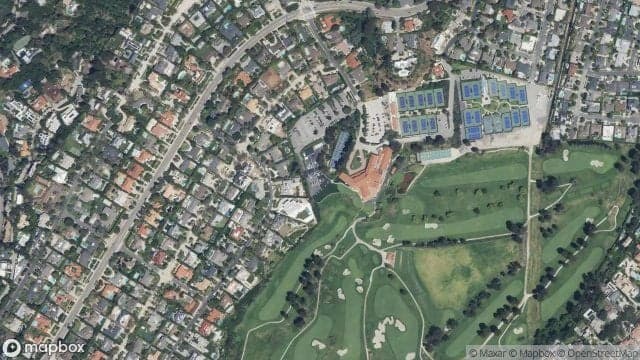
Los Angeles International Airport serves as the primary gateway, positioned roughly twenty miles southeast of the club, while Van Nuys and Santa Monica airports cater to private arrivals with considerably shorter ground transfers. The drive from LAX traces the coastline north along the Pacific Coast Highway before turning inland through the verdant canyon corridors of Pacific Palisades, where the urban sprawl softens into eucalyptus-shaded residential streets. Riviera Country Club reveals itself quietly at the end of a palm-lined approach, its understated entrance belying the storied championship ground that has hosted legends since 1926 - a fitting arrival for one of Southern California's most revered and exclusive sporting sanctuaries.
FAQ
Common questions about Riviera
Ratings, design, and course details pulled from Course Vaults.
Riviera has a Course Vaults score of 9.1 out of 10 based on 144 logged golfers.
Riviera was designed by George C. Thomas and Ron Forse.
Riviera is listed as private on Course Vaults; guest access is typically restricted.
Par at Riviera is 71.
Riviera plays 7,040 yards from the back tees on Course Vaults.
The slope rating at Riviera is 135.