Start your course passport
Download Course Vaults on iOS and log the next course you play.
Download Course Vaults on iOS and log the next course you play.
Hidden Trails Course


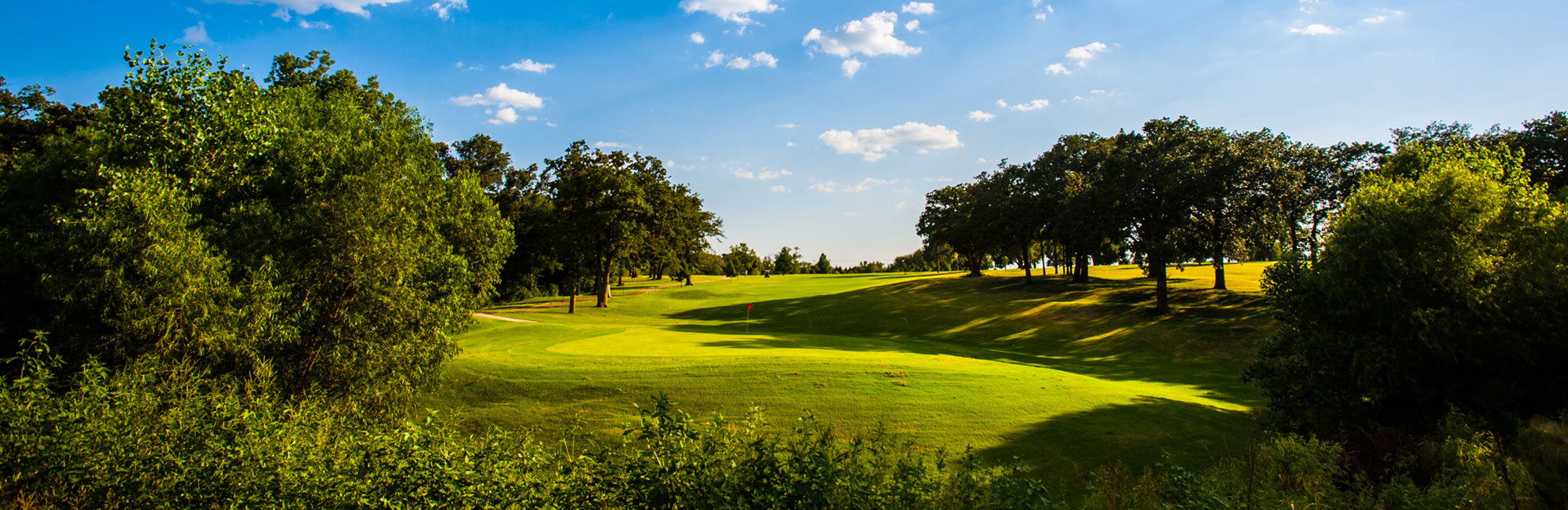
Hidden Trails Country Club sits in Oklahoma City, designed by Floyd Farley, a regional architect who worked primarily across Oklahoma and neighboring states during the mid-to-late twentieth century. Farley's designs typically emphasize playability for a range of skill levels while working within the natural topography of the site, characteristics that define many private clubs established during the post-war expansion of American golf. The course occupies land characteristic of central Oklahoma, where gently rolling terrain and native grasses frame the layout. Oklahoma City's climate—hot summers, moderate winters, and variable spring weather—influences course conditioning and the types of grasses used on fairways and greens. The routing likely takes advantage of natural elevation changes to create variety in hole character and strategic options, a common approach in Farley's work. Hidden Trails serves as a traditional private country club for the Oklahoma City community, offering members a familiar setting for recreational golf and social activities. The club operates within the broader network of private clubs in the metro area, providing a home course for local golfers seeking consistent playing conditions and club amenities. Like many clubs of its era and type, Hidden Trails balances golf with dining and family-oriented programming that reflects the social fabric of its membership.

FAQ
Ratings, design, and course details pulled from Course Vaults.
Hidden Trails was designed by Floyd Farley.
Hidden Trails is listed as private on Course Vaults; guest access is typically restricted.
Par at Hidden Trails is 72.
Hidden Trails plays 6,450 yards from the back tees on Course Vaults.
The slope rating at Hidden Trails is 126.
Hidden Trails is a 18-hole course.
Hidden Trails Course
Hidden Trails Country Club sits in Oklahoma City, designed by Floyd Farley, a regional architect who worked primarily across Oklahoma and neighboring states during the mid-to-late twentieth century. Farley's designs typically emphasize playability for a range of skill levels while working within the natural topography of the site, characteristics that define many private clubs established during the post-war expansion of American golf. The course occupies land characteristic of central Oklahoma, where gently rolling terrain and native grasses frame the layout. Oklahoma City's climate—hot summers, moderate winters, and variable spring weather—influences course conditioning and the types of grasses used on fairways and greens. The routing likely takes advantage of natural elevation changes to create variety in hole character and strategic options, a common approach in Farley's work. Hidden Trails serves as a traditional private country club for the Oklahoma City community, offering members a familiar setting for recreational golf and social activities. The club operates within the broader network of private clubs in the metro area, providing a home course for local golfers seeking consistent playing conditions and club amenities. Like many clubs of its era and type, Hidden Trails balances golf with dining and family-oriented programming that reflects the social fabric of its membership.
Public courses closest to Hidden Trails.
FAQ
Ratings, design, and course details pulled from Course Vaults.
Hidden Trails was designed by Floyd Farley.
Hidden Trails is listed as private on Course Vaults; guest access is typically restricted.
Par at Hidden Trails is 72.
Hidden Trails plays 6,450 yards from the back tees on Course Vaults.
The slope rating at Hidden Trails is 126.
Hidden Trails is a 18-hole course.