Start your course passport
Download Course Vaults on iOS and log the next course you play.
Download Course Vaults on iOS and log the next course you play.
Eagle Course

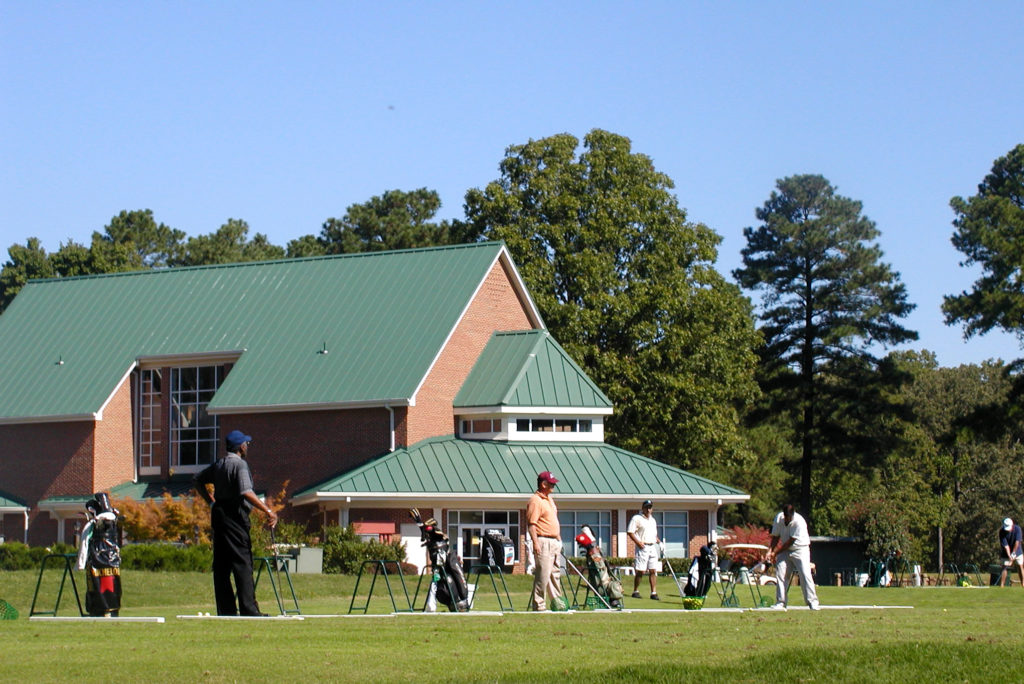
Eaglewood Golf Club's Eagle Course serves the military community at Langley Air Force Base in Hampton, Virginia, along the lower Chesapeake Bay. Designed by Lester George and Ed Ault, the course reflects the collaborative work of two architects active in military and municipal golf development during the latter decades of the twentieth century. The layout occupies relatively flat coastal terrain characteristic of the Virginia Tidewater region, where sandy soils and stands of pine and hardwood frame the playing corridors. The course operates within the base's recreational facilities, providing golf for active-duty personnel, retirees, and their families. As with many military courses, Eaglewood emphasizes playability and accessibility while maintaining competitive standards for regular club events and inter-service tournaments. The routing takes advantage of the natural drainage and vegetation patterns common to the area, with water features and strategic bunkering defining key holes. Langley Air Force Base has a long history dating to World War I, and its golf facilities have evolved alongside the installation's growth. The Eagle Course represents a significant recreational amenity for the base community, offering a traditional parkland experience in a setting shaped by both natural landscape and military heritage. The course remains an active part of military golf in the Mid-Atlantic region, hosting local competitions and serving as a gathering place for the Langley community.

FAQ
Ratings, design, and course details pulled from Course Vaults.
Eagle was designed by Lester George and Ed Ault.
Yes. Eagle is listed as welcoming public or guest play on Course Vaults.
Par at Eagle is 72.
Eagle plays 6,284 yards from the back tees on Course Vaults.
The slope rating at Eagle is 123.
Eagle is a 18-hole course.
Eagle Course
Eaglewood Golf Club's Eagle Course serves the military community at Langley Air Force Base in Hampton, Virginia, along the lower Chesapeake Bay. Designed by Lester George and Ed Ault, the course reflects the collaborative work of two architects active in military and municipal golf development during the latter decades of the twentieth century. The layout occupies relatively flat coastal terrain characteristic of the Virginia Tidewater region, where sandy soils and stands of pine and hardwood frame the playing corridors. The course operates within the base's recreational facilities, providing golf for active-duty personnel, retirees, and their families. As with many military courses, Eaglewood emphasizes playability and accessibility while maintaining competitive standards for regular club events and inter-service tournaments. The routing takes advantage of the natural drainage and vegetation patterns common to the area, with water features and strategic bunkering defining key holes. Langley Air Force Base has a long history dating to World War I, and its golf facilities have evolved alongside the installation's growth. The Eagle Course represents a significant recreational amenity for the base community, offering a traditional parkland experience in a setting shaped by both natural landscape and military heritage. The course remains an active part of military golf in the Mid-Atlantic region, hosting local competitions and serving as a gathering place for the Langley community.
FAQ
Ratings, design, and course details pulled from Course Vaults.
Eagle was designed by Lester George and Ed Ault.
Yes. Eagle is listed as welcoming public or guest play on Course Vaults.
Par at Eagle is 72.
Eagle plays 6,284 yards from the back tees on Course Vaults.
The slope rating at Eagle is 123.
Eagle is a 18-hole course.