Start your course passport
Download Course Vaults on iOS and log the next course you play.
Download Course Vaults on iOS and log the next course you play.
Dye Course

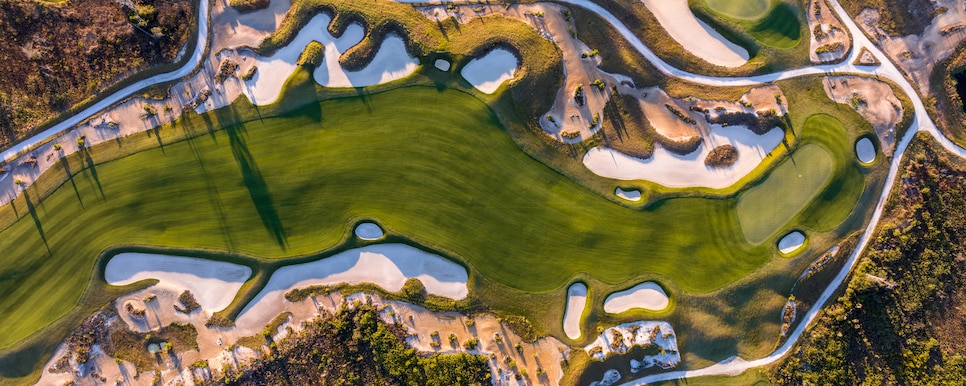
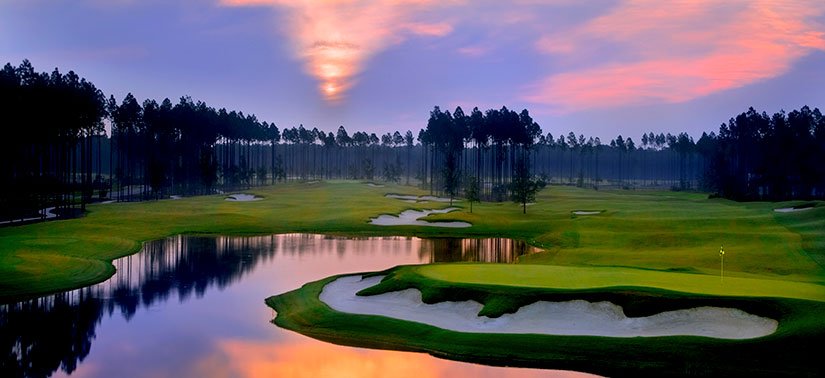
The Dye Course at White Oak in Yulee, Florida, was designed by Steve Melnyk, a former PGA Tour player who transitioned to golf course architecture. Located in northeast Florida near Jacksonville, the course occupies land characteristic of the region's coastal plain, where sandy soils and natural wetlands shape the routing and playing corridors. Melnyk's design work often reflects his playing experience, emphasizing strategic shot values and course management over pure length. The layout at White Oak navigates through native vegetation and preserves natural water features that are common to this part of Florida. The course incorporates elevation changes that are modest but meaningful in an otherwise relatively flat landscape, creating visual interest and varied lies. Fairway corridors are defined by stands of pines and oaks, with waste areas and natural grasses framing many holes in keeping with regional design aesthetics that emerged in Florida golf during the late twentieth century. White Oak operates as part of a residential community, and the Dye Course serves as one of the primary golf amenities for members and residents. The facility reflects the broader development pattern in northeast Florida, where golf courses anchor planned communities and provide recreational focus for the surrounding neighborhoods. The course offers a playing experience suited to a range of skill levels while maintaining enough challenge to engage accomplished players familiar with Florida's sandy, wind-influenced conditions.

FAQ
Ratings, design, and course details pulled from Course Vaults.
Dye was designed by Steve Melnyk.
Dye is listed as private on Course Vaults; guest access is typically restricted.
Par at Dye is 36.
Dye plays 3,512 yards from the back tees on Course Vaults.
The slope rating at Dye is 123.
Dye is a 9-hole course.
Dye Course
The Dye Course at White Oak in Yulee, Florida, was designed by Steve Melnyk, a former PGA Tour player who transitioned to golf course architecture. Located in northeast Florida near Jacksonville, the course occupies land characteristic of the region's coastal plain, where sandy soils and natural wetlands shape the routing and playing corridors. Melnyk's design work often reflects his playing experience, emphasizing strategic shot values and course management over pure length. The layout at White Oak navigates through native vegetation and preserves natural water features that are common to this part of Florida. The course incorporates elevation changes that are modest but meaningful in an otherwise relatively flat landscape, creating visual interest and varied lies. Fairway corridors are defined by stands of pines and oaks, with waste areas and natural grasses framing many holes in keeping with regional design aesthetics that emerged in Florida golf during the late twentieth century. White Oak operates as part of a residential community, and the Dye Course serves as one of the primary golf amenities for members and residents. The facility reflects the broader development pattern in northeast Florida, where golf courses anchor planned communities and provide recreational focus for the surrounding neighborhoods. The course offers a playing experience suited to a range of skill levels while maintaining enough challenge to engage accomplished players familiar with Florida's sandy, wind-influenced conditions.
FAQ
Ratings, design, and course details pulled from Course Vaults.
Dye was designed by Steve Melnyk.
Dye is listed as private on Course Vaults; guest access is typically restricted.
Par at Dye is 36.
Dye plays 3,512 yards from the back tees on Course Vaults.
The slope rating at Dye is 123.
Dye is a 9-hole course.