Start your course passport
Download Course Vaults on iOS and log the next course you play.
Download Course Vaults on iOS and log the next course you play.
Duck Woods Course




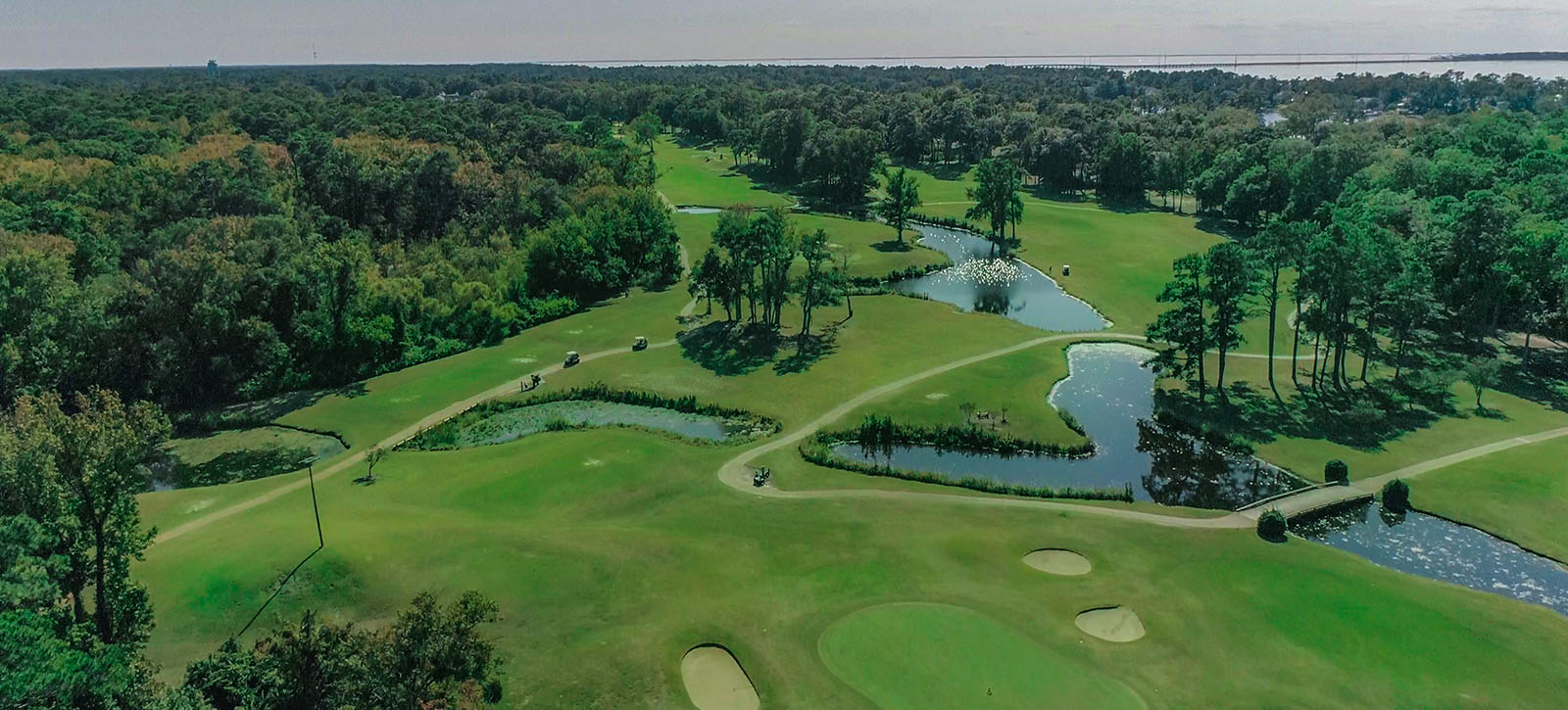
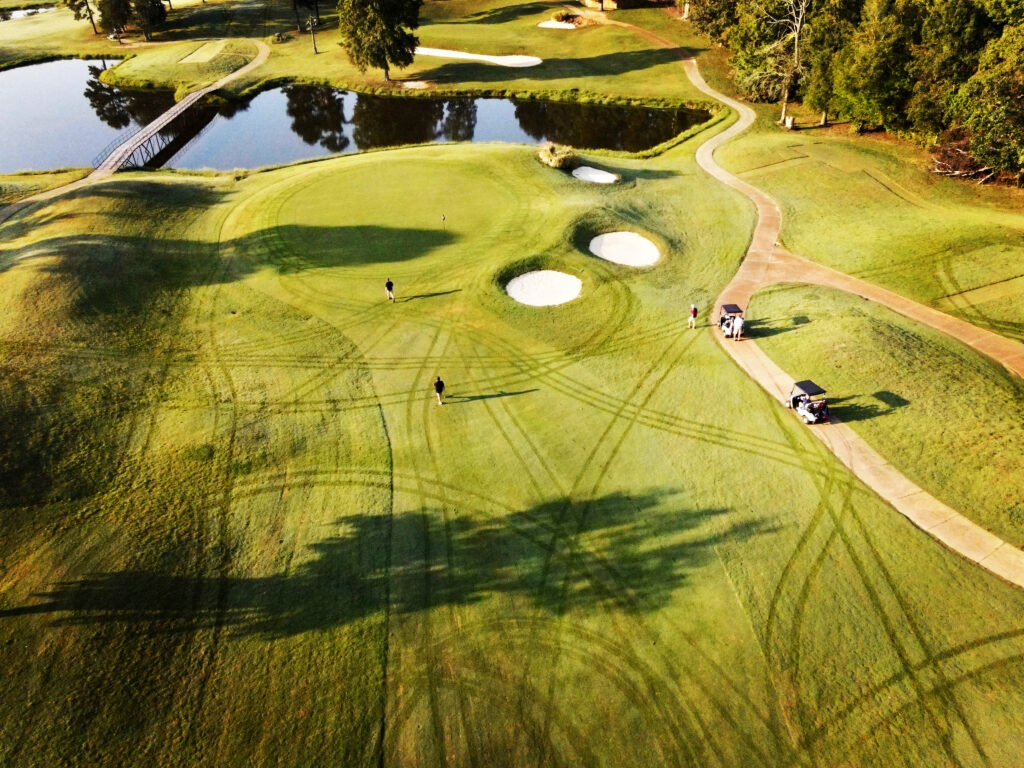
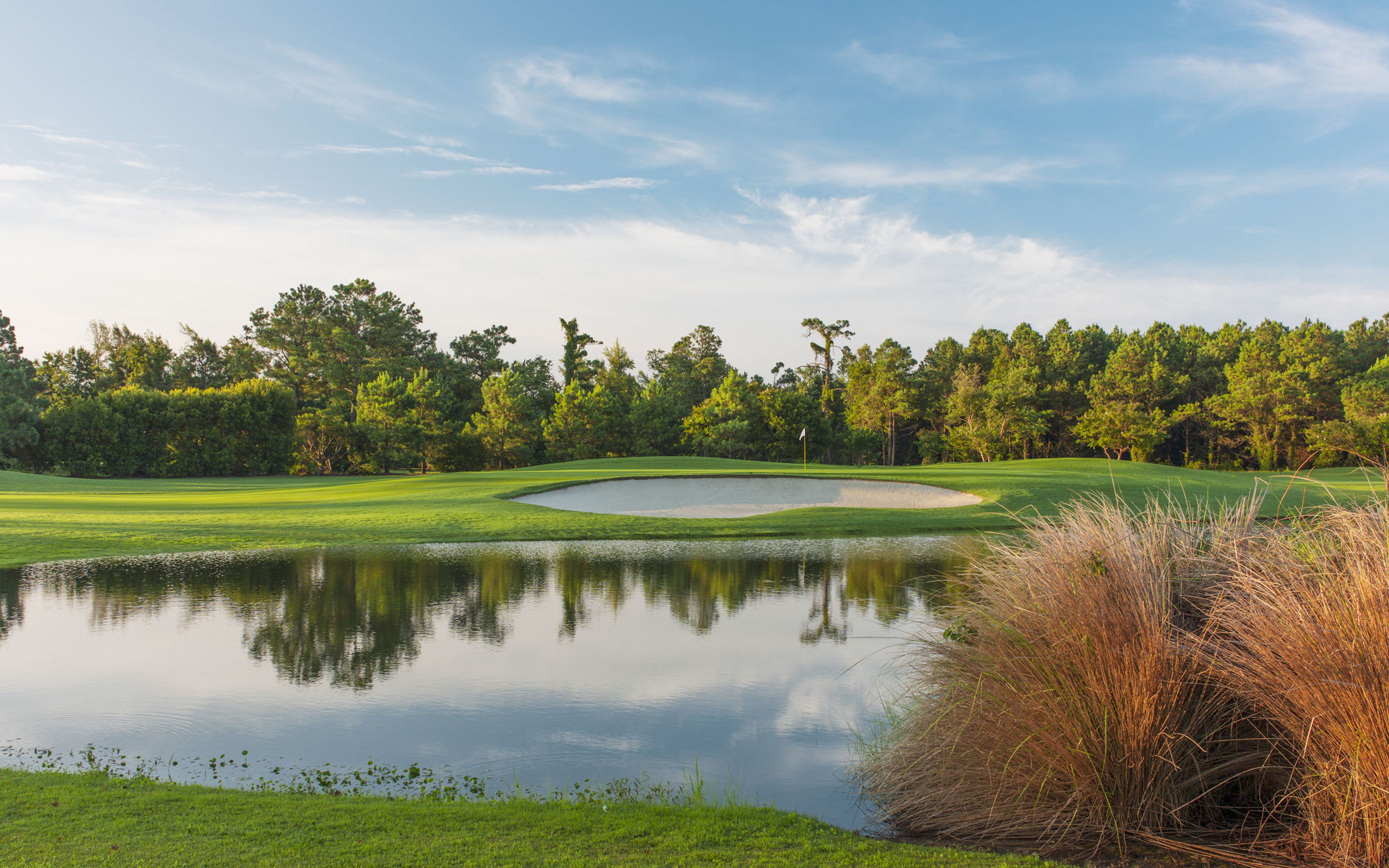
Duck Woods Country Club occupies a distinctive setting on North Carolina's Outer Banks, where the narrow barrier islands present unique challenges and opportunities for golf course design. The course was designed by Ellis Maples and Ed Seay, two architects with deep roots in North Carolina golf. Maples, who worked extensively throughout the Carolinas in the mid-twentieth century, brought his understanding of coastal terrain to the project, while Seay contributed his experience from working with Arnold Palmer's design firm on courses across diverse landscapes. The layout navigates the characteristic topography of the Outer Banks, where maritime forests of live oak, pine, and wax myrtle create natural corridors and frame playing areas. The relatively flat terrain typical of barrier island geography is punctuated by the native vegetation, which defines holes and provides both strategic interest and protection from coastal winds. Water features and the sandy soil common to the region influence both the playing characteristics and maintenance of the course. Duck Woods serves a residential community in Southern Shores, situated between the Atlantic Ocean and the Currituck Sound. The club functions as a neighborhood amenity in an area where golf course development has been limited by the narrow geography and environmental sensitivities of the Outer Banks. The course offers a retreat from the beach-focused tourism that dominates much of the surrounding area, providing a more traditional country club experience within this coastal resort environment.
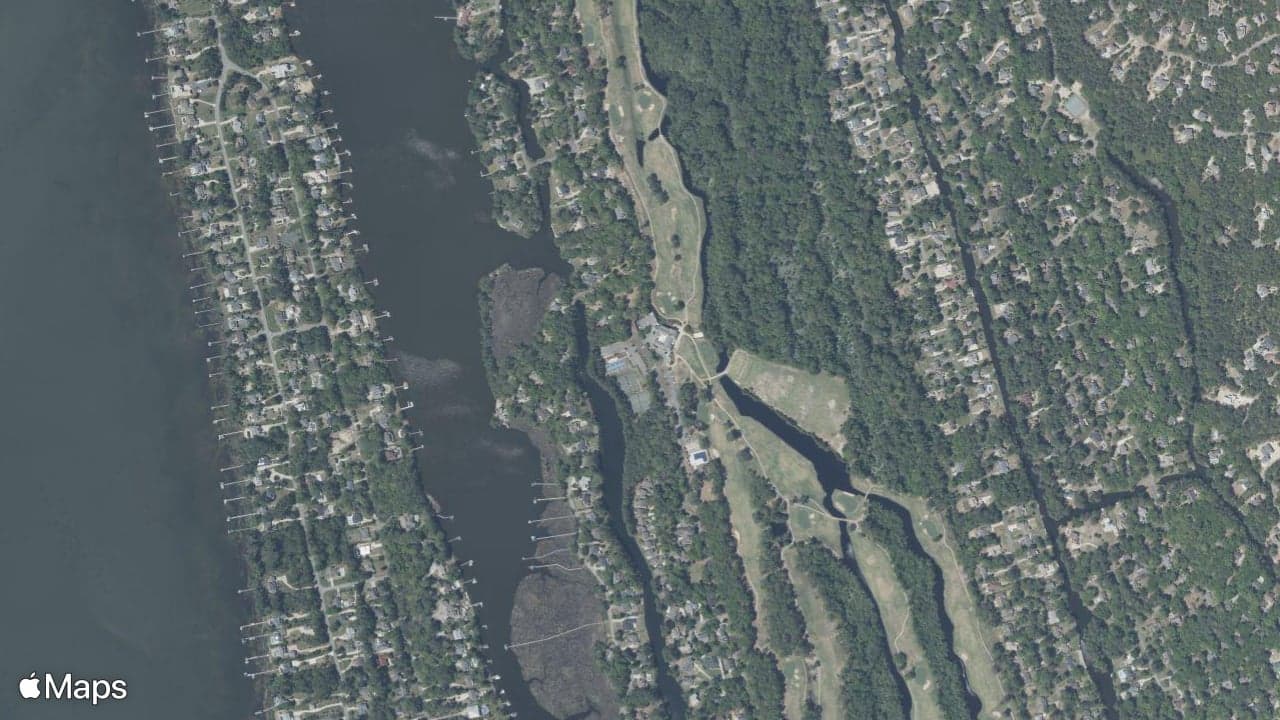
Duck Woods Country Club sits on the Outer Banks of North Carolina, accessible via Norfolk International Airport (ORF) in Virginia, roughly ninety minutes to the north, or the closer regional option of Coastal Carolina Regional Airport (ECP) in New Bern, a drive of approximately one hour and fifteen minutes westward through the flat, maritime landscape of eastern North Carolina. The final leg of the journey transitions from US Highway 158 onto the quieter roads that thread through Southern Shores, a tucked-away coastal enclave where maritime pines give way to glimpses of the Albemarle Sound and the Atlantic beyond. Private aviation services favor the regional strips nearby, though the approach to Duck Woods itself carries the unhurried character of the Outer Banks - a place where the modern world recedes and the rhythm of tidal waters and coastal fairways becomes the dominant pulse. The club's arrival, framed by native vegetation and the salt-tinged air, marks the threshold into one of the region's most discreetly situated golfing sanctuaries.
FAQ
Ratings, design, and course details pulled from Course Vaults.
Duck Woods has a Course Vaults score of 7.9 out of 10 based on 13 logged golfers.
Duck Woods was designed by Ellis Maples and Ed Seay.
Duck Woods is listed as private on Course Vaults; guest access is typically restricted.
Par at Duck Woods is 72.
Duck Woods plays 6,650 yards from the back tees on Course Vaults.
The slope rating at Duck Woods is 136.
Duck Woods Course
Duck Woods Country Club occupies a distinctive setting on North Carolina's Outer Banks, where the narrow barrier islands present unique challenges and opportunities for golf course design. The course was designed by Ellis Maples and Ed Seay, two architects with deep roots in North Carolina golf. Maples, who worked extensively throughout the Carolinas in the mid-twentieth century, brought his understanding of coastal terrain to the project, while Seay contributed his experience from working with Arnold Palmer's design firm on courses across diverse landscapes. The layout navigates the characteristic topography of the Outer Banks, where maritime forests of live oak, pine, and wax myrtle create natural corridors and frame playing areas. The relatively flat terrain typical of barrier island geography is punctuated by the native vegetation, which defines holes and provides both strategic interest and protection from coastal winds. Water features and the sandy soil common to the region influence both the playing characteristics and maintenance of the course. Duck Woods serves a residential community in Southern Shores, situated between the Atlantic Ocean and the Currituck Sound. The club functions as a neighborhood amenity in an area where golf course development has been limited by the narrow geography and environmental sensitivities of the Outer Banks. The course offers a retreat from the beach-focused tourism that dominates much of the surrounding area, providing a more traditional country club experience within this coastal resort environment.
Public courses closest to Duck Woods.
Duck Woods Country Club sits on the Outer Banks of North Carolina, accessible via Norfolk International Airport (ORF) in Virginia, roughly ninety minutes to the north, or the closer regional option of Coastal Carolina Regional Airport (ECP) in New Bern, a drive of approximately one hour and fifteen minutes westward through the flat, maritime landscape of eastern North Carolina. The final leg of the journey transitions from US Highway 158 onto the quieter roads that thread through Southern Shores, a tucked-away coastal enclave where maritime pines give way to glimpses of the Albemarle Sound and the Atlantic beyond. Private aviation services favor the regional strips nearby, though the approach to Duck Woods itself carries the unhurried character of the Outer Banks - a place where the modern world recedes and the rhythm of tidal waters and coastal fairways becomes the dominant pulse. The club's arrival, framed by native vegetation and the salt-tinged air, marks the threshold into one of the region's most discreetly situated golfing sanctuaries.
FAQ
Ratings, design, and course details pulled from Course Vaults.
Duck Woods has a Course Vaults score of 7.9 out of 10 based on 13 logged golfers.
Duck Woods was designed by Ellis Maples and Ed Seay.
Duck Woods is listed as private on Course Vaults; guest access is typically restricted.
Par at Duck Woods is 72.
Duck Woods plays 6,650 yards from the back tees on Course Vaults.
The slope rating at Duck Woods is 136.