Start your course passport
Download Course Vaults on iOS and log the next course you play.
Download Course Vaults on iOS and log the next course you play.
Card Sound Course

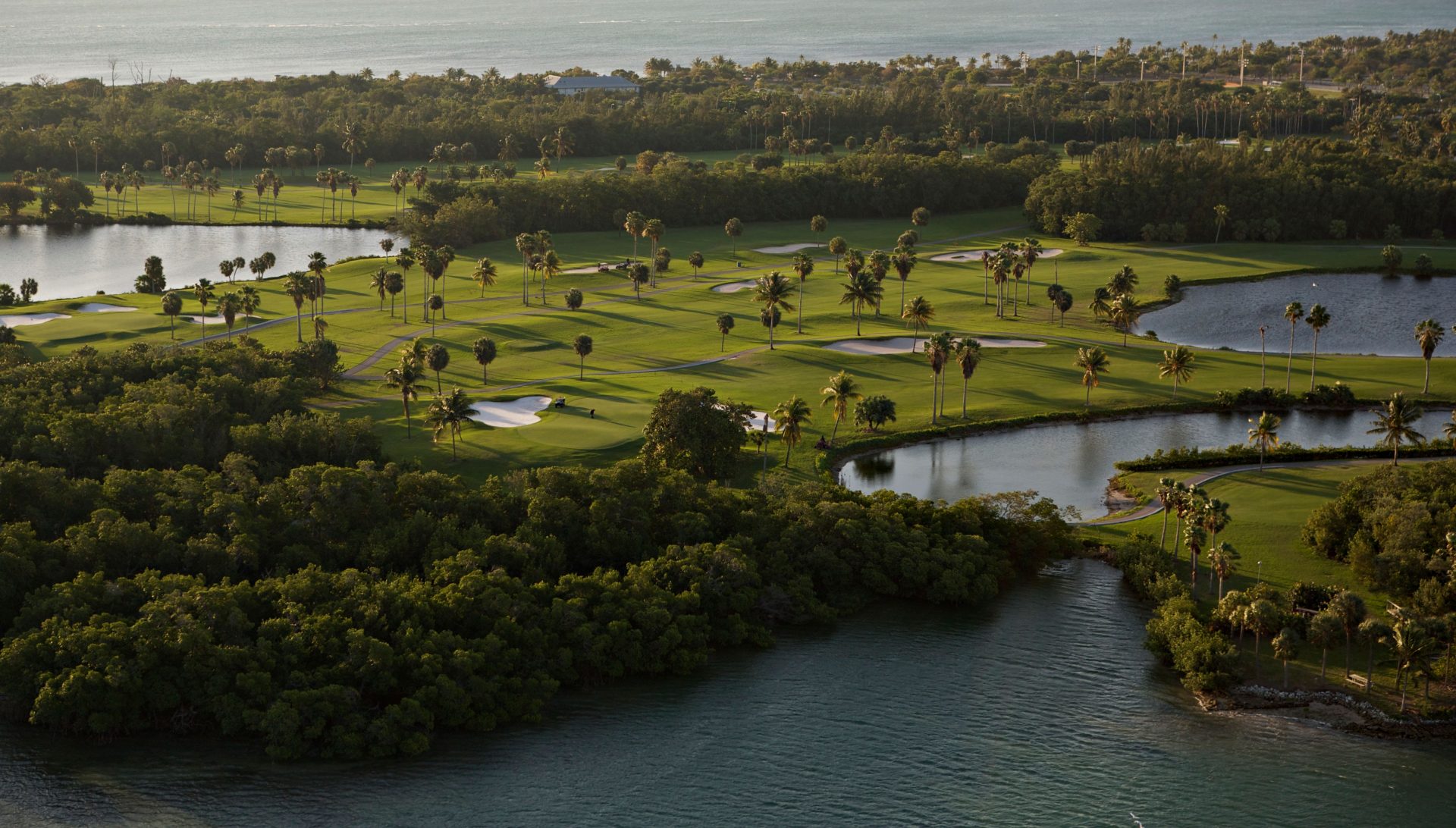
Card Sound Golf Club occupies a distinctive setting in Key Largo, positioned where the Florida Keys begin their arc into the Atlantic. Designed by Bruce Devlin and Robert von Hagge, the course reflects the architectural partnership's characteristic approach to tropical and subtropical sites during their active period from the 1960s through the 1980s. The design works within the flat, sea-level terrain typical of the Keys, where elevation change is minimal and the surrounding landscape consists of mangroves, tidal areas, and native vegetation adapted to salt air and occasional storm surge. The routing navigates the constraints of building golf in this environment, where water management and environmental sensitivity shape the layout. Devlin and von Hagge, who collaborated on numerous Florida courses, typically incorporated strategic bunkering and water features to create definition and challenge on relatively level ground. The course serves the local community and visitors to the Upper Keys, offering golf in a region where development is limited by geography and regulation. Card Sound takes its name from the nearby Card Sound Road and Card Sound Bridge, an alternative route connecting the mainland to Key Largo. The club operates in a market defined by resort and daily-fee golf rather than traditional private membership, reflecting the tourism-driven economy of the Keys. Playing conditions are influenced by tropical weather patterns, persistent wind, and the salt environment that affects turf management and maintenance practices throughout the island chain.
FAQ
Ratings, design, and course details pulled from Course Vaults.
Card Sound was designed by Bruce Devlin and Robert von Hagge.
Card Sound is listed as private on Course Vaults; guest access is typically restricted.
Par at Card Sound is 71.
Card Sound plays 6,578 yards from the back tees on Course Vaults.
The slope rating at Card Sound is 140.
Card Sound is a 18-hole course.
Card Sound Course
Card Sound Golf Club occupies a distinctive setting in Key Largo, positioned where the Florida Keys begin their arc into the Atlantic. Designed by Bruce Devlin and Robert von Hagge, the course reflects the architectural partnership's characteristic approach to tropical and subtropical sites during their active period from the 1960s through the 1980s. The design works within the flat, sea-level terrain typical of the Keys, where elevation change is minimal and the surrounding landscape consists of mangroves, tidal areas, and native vegetation adapted to salt air and occasional storm surge. The routing navigates the constraints of building golf in this environment, where water management and environmental sensitivity shape the layout. Devlin and von Hagge, who collaborated on numerous Florida courses, typically incorporated strategic bunkering and water features to create definition and challenge on relatively level ground. The course serves the local community and visitors to the Upper Keys, offering golf in a region where development is limited by geography and regulation. Card Sound takes its name from the nearby Card Sound Road and Card Sound Bridge, an alternative route connecting the mainland to Key Largo. The club operates in a market defined by resort and daily-fee golf rather than traditional private membership, reflecting the tourism-driven economy of the Keys. Playing conditions are influenced by tropical weather patterns, persistent wind, and the salt environment that affects turf management and maintenance practices throughout the island chain.
Public courses closest to Card Sound.
FAQ
Ratings, design, and course details pulled from Course Vaults.
Card Sound was designed by Bruce Devlin and Robert von Hagge.
Card Sound is listed as private on Course Vaults; guest access is typically restricted.
Par at Card Sound is 71.
Card Sound plays 6,578 yards from the back tees on Course Vaults.
The slope rating at Card Sound is 140.
Card Sound is a 18-hole course.