

Augusta National Course
Augusta National Golf Club


About this course
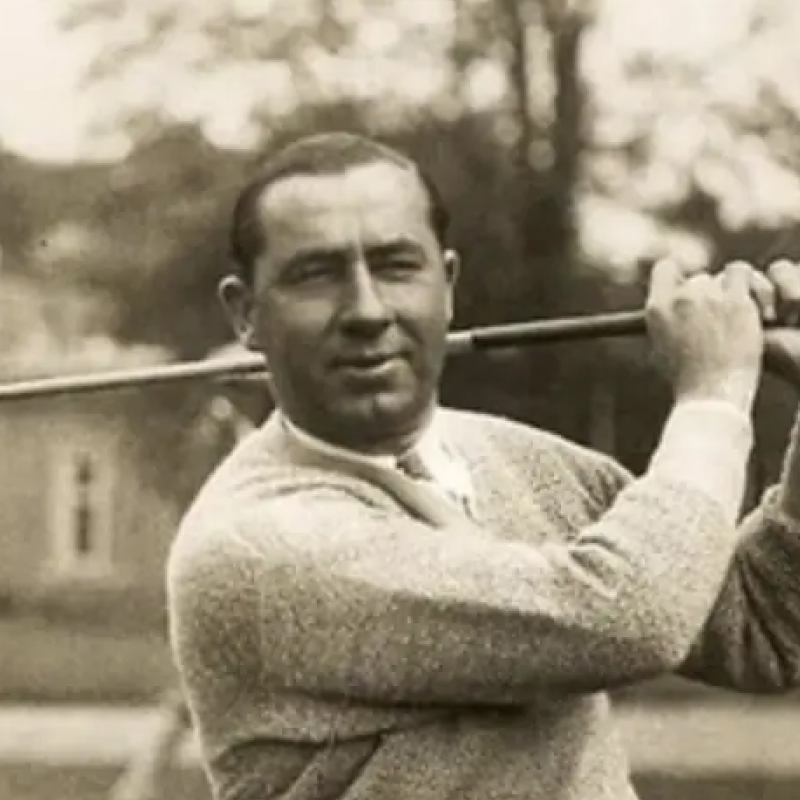
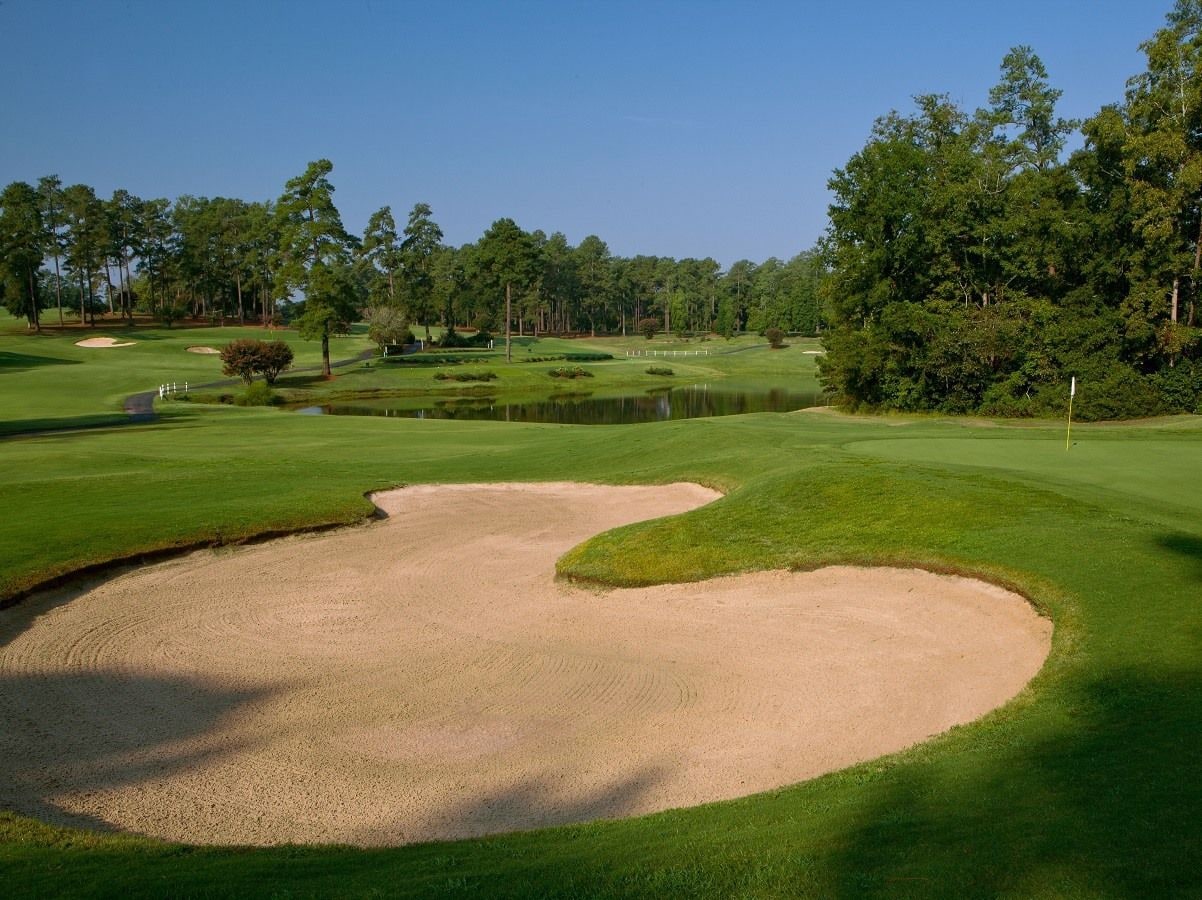
Before it was a golf course, it was Fruitland Nurseries, 365 acres of growing things near the line between Georgia and South Carolina. That past never quite leaves the place. Every hole carries the name of a plant found somewhere on the property, so a round begins at Tee Olive and ends, after the climb up the right-bending 18th, at Holly. Among the flower beds and pine straw and tended ponds, Augusta National feels less built than cultivated, shaped season after season by hands that cannot stop changing it. Bobby Jones, the Georgian who had retired from competition in 1930, founded the club with Clifford Roberts. MacKenzie's work at Cypress Point and Pasatiempo had made a deep impression on him, and together Jones and MacKenzie reached back to the Old Course to build an inland links. They wanted width, fairways running wall to wall without rough, and preferred lines that were not always obvious but rewarded the golfer who found them. Miss the angle and you could still recover, but the price rose and the trouble compounded. Jones put it plainly: "We want to make bogeys easy if frankly sought, pars readily obtainable by standard good play, and birdies - except on par 5s - dearly bought." The design showed restraint with only 22 bunkers and let the ground do the rest. MacKenzie's greens were the real theater, so bold that historian Bob Crosby called them "strategic golf course architecture on LSD." The routing laid the course across one great hill falling from the clubhouse toward the far reaches of Amen Corner, the 11th, 12th and 13th, while smaller rises and hollows within it hand the golfer uneven lies: the climb to the eighth, the drop to the 15th. MacKenzie loved a meeting point, and the hill holding the second, seventh and 17th greens, with the 18th, eighth and third tees close by, gathers the course around itself. From the scoreboard behind the seventh green you can reach almost anywhere quickly. Only a few spots, the fifth tee perhaps, feel truly removed. Heartbreak sits inside the founding. Built during the Depression and opened in January 1933, the club struggled for money and never paid MacKenzie his full fee. He died in 1934, a few months before the first tournament, without seeing the finished course. His plan for a reversible short course was never built. What followed was a long conversation with the ground. The nines were flipped for a time around that first tournament, and the order played today remains the one the course opened with. Perry Maxwell moved the seventh and 10th greens from low ground up onto ridges and rebuilt others. Robert Trent Jones built a new 16th and lengthened the 11th. George Cobb, Joe Finger, John LaFoy, Bob Cupp, Jay Morrish and Tom Fazio each left marks, Fazio rebuilding greens and adding length and back tees. Since the early 1970s the bunkers have held white quartz, and since the mid-1990s a SubAir system has helped keep the greens fast and hard. Charles Price called it not the most revolutionary course in America but "the most evolutionary," and some critics suggest even calling it a MacKenzie design is misleading. The hardest stretch came early in the new century, when trees were added and rough appeared more often, narrowing the angles MacKenzie and Jones had opened. Tiger Woods, a five-time champion here, wrote that it "eroded strategic values that Bobby Jones and Alister MacKenzie had created as the course's essential feature." Lately the club has reclaimed some width at the 11th and taken out some of the second cut. Yet the member tees still sit at 6,300 yards, and the course remains a pleasure to play. That was always the point. "The first purpose of any golf course should be to give pleasure," Jones wrote, "and that to the greatest possible number of players, without respect to their abilities."
Quick facts
- Location
- Augusta, GA, USA
- Access
- Private
- Year built
- 1933
- Holes
- 18
- Designer(s)
- Bobby Jones, Alister Mackenzie
- Par
- 72
- Length
- 7,545 yards
- Difficulty
- 76.2/148
- Course Vaults score
- 9.8
Getting there
The pilgrimage to Augusta National Golf Club begins at Augusta Regional Airport, a modest facility just minutes from Magnolia Lane, or for most, Hartsfield-Jackson Atlanta International roughly two hours northwest. Private arrivals favor Daniel Field or the regional terminal, both discreetly positioned within the city limits. The final approach follows Washington Road through suburban sprawl that yields, without fanfare, to the most famous entrance in golf - a narrow, tree-canopied lane where the outside world falls away and the only destination that matters reveals itself in hushed, manicured perfection.

FAQ
Common questions about Augusta National
Ratings, design, and course details pulled from Course Vaults.
Augusta National has a Course Vaults score of 9.8 out of 10 based on 54 logged golfers.
Augusta National was designed by Bobby Jones and Alister Mackenzie.
Augusta National is listed as private on Course Vaults; guest access is typically restricted.
Par at Augusta National is 72.
Augusta National plays 7,545 yards from the back tees on Course Vaults.
The slope rating at Augusta National is 148.