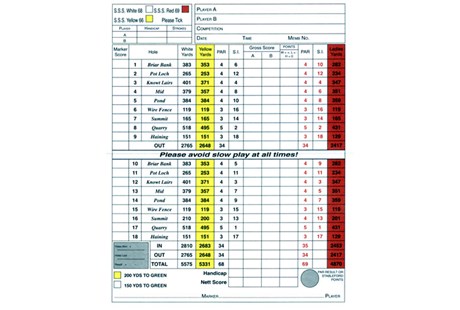
SELKIRK GOLF CLUB
🏴 Selkirk, The Scottish Borders, Scotland
Designed by Willie Park
Selkirk Golf Club sits in the Scottish Borders town of Selkirk, occupying elevated ground that overlooks the surrounding countryside. The course was designed by Willie Park, a significant figure in early golf architecture who won the first Open Championship in 1860 and later established himself as a prolific course designer across Britain and beyond. Park's work typically emphasized strategic bunkering and natural contours, principles evident in courses from this era.
The layout makes use of the hillside terrain, with holes that move across slopes and offer views over the Borders landscape. The routing incorporates the natural undulations of the land, creating variety in stance and shot-making requirements. As with many Scottish courses from this period, the design relies on the existing topography rather than extensive earthmoving, resulting in a layout that feels integrated with its setting.
The "Alternate Tees" designation indicates that the course can be played from different teeing grounds, a common feature at clubs where the same nine holes are played twice from varied positions to create an eighteen-hole round, or where multiple tee placements add length and challenge variation. This approach was typical of many Scottish courses established in the late nineteenth and early twentieth centuries, particularly in smaller towns where land constraints influenced routing options. The club serves the local community in Selkirk, maintaining the traditions of Scottish golf in the Borders region.
Reviews
No reviews yet. Be the first to log a round in the app.
Free on iPhone
Track where you've played, rate courses, and share lists with friends — the way golfers with logos on the bag keep score.

FAQ
Ratings, design, and course details pulled from Course Vaults.
Selkirk (Alternate Tees) was designed by Willie Park.
Yes. Selkirk (Alternate Tees) at Selkirk Golf Club is listed as welcoming public or guest play on Course Vaults.
Par at Selkirk (Alternate Tees) is 68.
Selkirk (Alternate Tees) plays 5,575 yards from the back tees on Course Vaults.
The slope rating at Selkirk (Alternate Tees) is 115.
Selkirk (Alternate Tees) is a 18-hole course.