Start your course passport
Download Course Vaults on iOS and log the next course you play.
Download Course Vaults on iOS and log the next course you play.
Rocky Bayou Course


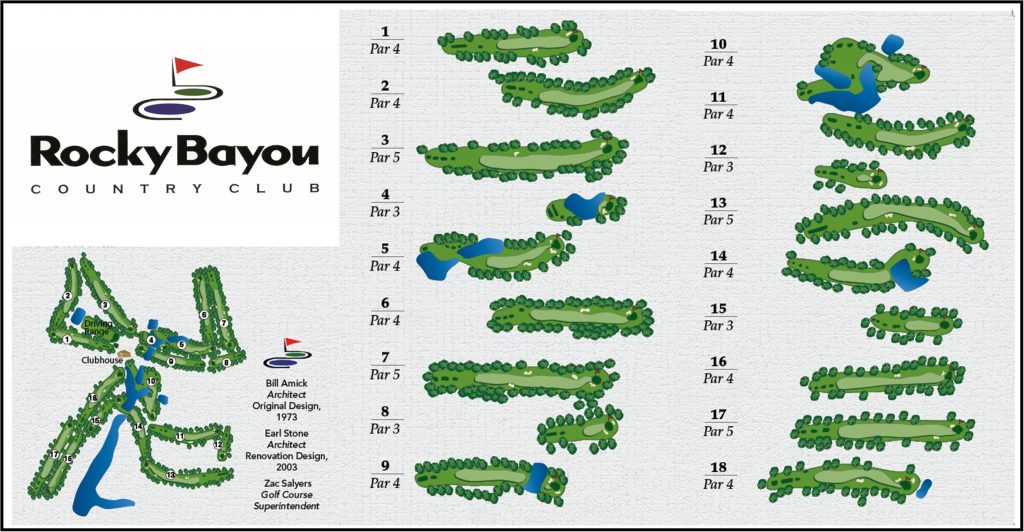
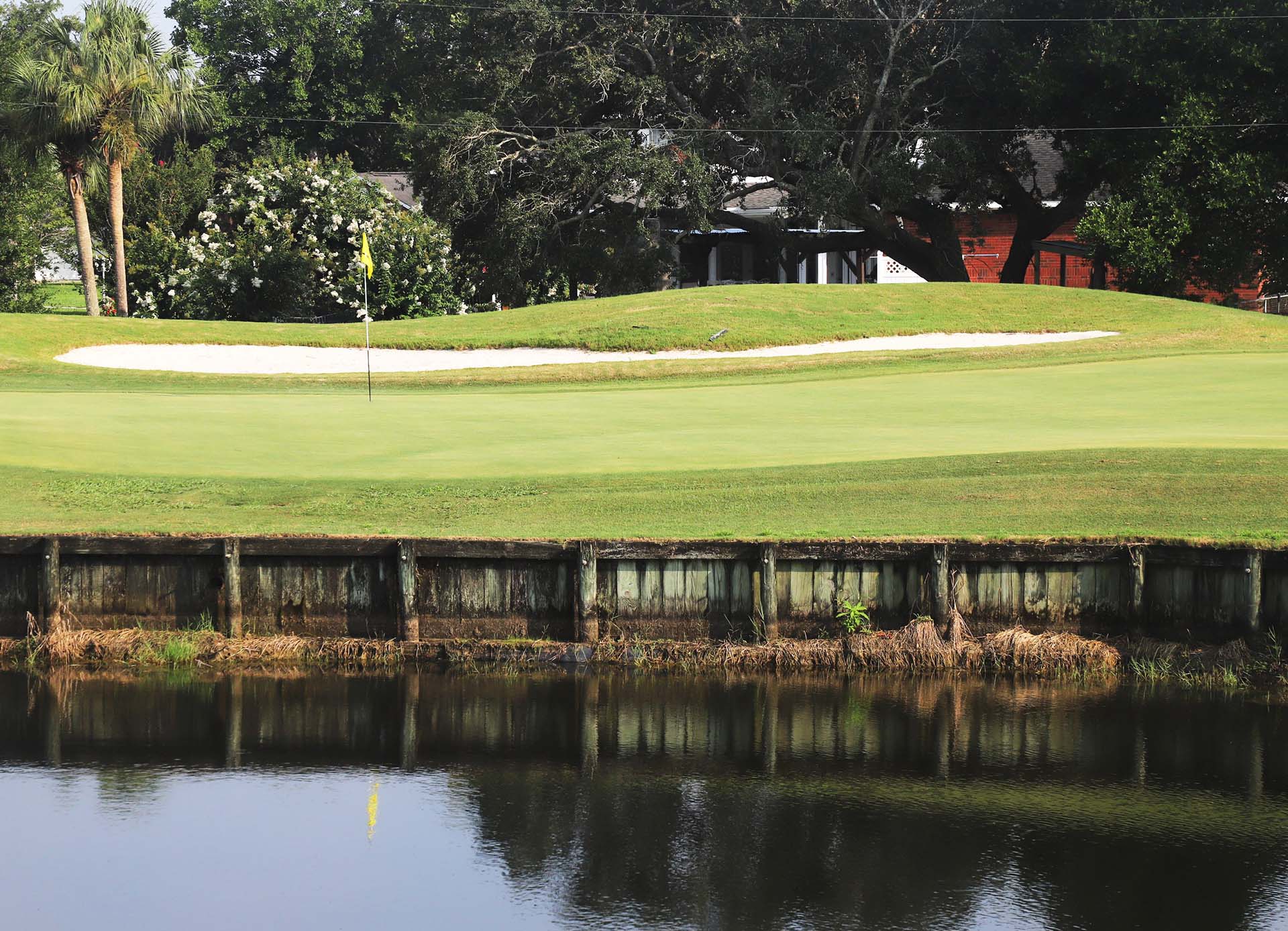
Rocky Bayou Country Club occupies a wooded setting in Niceville, a small city on the northern shore of Choctawhatchee Bay in Florida's Panhandle. The course was designed by Bill Amick and Earl Stone, both regional architects active in the Southeast during the latter half of the twentieth century. Amick, based in South Carolina, designed numerous courses across the Carolinas and into Florida, while Stone contributed to several layouts in the region during the same era. The collaboration reflects the period's approach to golf development in emerging residential communities along the Gulf Coast. The routing takes advantage of the area's natural pine forests and modest elevation changes, characteristics typical of courses built in this part of northwest Florida. Water features and native vegetation frame many holes, and the layout incorporates the rolling terrain that distinguishes this section of the Panhandle from the flatter coastal zones farther south. The course serves a membership drawn largely from the local military and civilian communities, given Niceville's proximity to Eglin Air Force Base and Hurlburt Field. Rocky Bayou functions as a traditional member-owned facility with a focus on recreational play and family-oriented club life. The course provides a straightforward test suited to a range of skill levels, emphasizing accuracy over length in keeping with its tree-lined character. It remains a fixture in the Niceville area's golf landscape, offering a quiet alternative to the resort-heavy developments that dominate much of the Florida Panhandle's coastline.
The journey to Rocky Bayou Country Club begins at Destin-Fort Walton Beach Airport (VPS), a compact regional gateway serving Florida's Emerald Coast, just twenty minutes west along Highway 20. The drive traces the northern rim of Choctawhatchee Bay, where glimpses of sun-dappled water appear between stands of slash pine and live oak, before turning into the quiet residential enclave of Niceville. The final approach feels decidedly unhurried - a transition from beachfront bustle to the sheltered calm of a club tucked along the wooded shores of Rocky Bayou, where the Gulf's proximity lingers in the salt-tinged air.
FAQ
Ratings, design, and course details pulled from Course Vaults.
Rocky Bayou has a Course Vaults score of 6.4 out of 10 based on 8 logged golfers.
Rocky Bayou was designed by Bill Amick and Earl Stone.
Rocky Bayou is listed as private on Course Vaults; guest access is typically restricted.
Par at Rocky Bayou is 72.
Rocky Bayou plays 6,901 yards from the back tees on Course Vaults.
The slope rating at Rocky Bayou is 131.
Rocky Bayou Course
Rocky Bayou Country Club occupies a wooded setting in Niceville, a small city on the northern shore of Choctawhatchee Bay in Florida's Panhandle. The course was designed by Bill Amick and Earl Stone, both regional architects active in the Southeast during the latter half of the twentieth century. Amick, based in South Carolina, designed numerous courses across the Carolinas and into Florida, while Stone contributed to several layouts in the region during the same era. The collaboration reflects the period's approach to golf development in emerging residential communities along the Gulf Coast. The routing takes advantage of the area's natural pine forests and modest elevation changes, characteristics typical of courses built in this part of northwest Florida. Water features and native vegetation frame many holes, and the layout incorporates the rolling terrain that distinguishes this section of the Panhandle from the flatter coastal zones farther south. The course serves a membership drawn largely from the local military and civilian communities, given Niceville's proximity to Eglin Air Force Base and Hurlburt Field. Rocky Bayou functions as a traditional member-owned facility with a focus on recreational play and family-oriented club life. The course provides a straightforward test suited to a range of skill levels, emphasizing accuracy over length in keeping with its tree-lined character. It remains a fixture in the Niceville area's golf landscape, offering a quiet alternative to the resort-heavy developments that dominate much of the Florida Panhandle's coastline.
Public courses closest to Rocky Bayou.
The journey to Rocky Bayou Country Club begins at Destin-Fort Walton Beach Airport (VPS), a compact regional gateway serving Florida's Emerald Coast, just twenty minutes west along Highway 20. The drive traces the northern rim of Choctawhatchee Bay, where glimpses of sun-dappled water appear between stands of slash pine and live oak, before turning into the quiet residential enclave of Niceville. The final approach feels decidedly unhurried - a transition from beachfront bustle to the sheltered calm of a club tucked along the wooded shores of Rocky Bayou, where the Gulf's proximity lingers in the salt-tinged air.
FAQ
Ratings, design, and course details pulled from Course Vaults.
Rocky Bayou has a Course Vaults score of 6.4 out of 10 based on 8 logged golfers.
Rocky Bayou was designed by Bill Amick and Earl Stone.
Rocky Bayou is listed as private on Course Vaults; guest access is typically restricted.
Par at Rocky Bayou is 72.
Rocky Bayou plays 6,901 yards from the back tees on Course Vaults.
The slope rating at Rocky Bayou is 131.