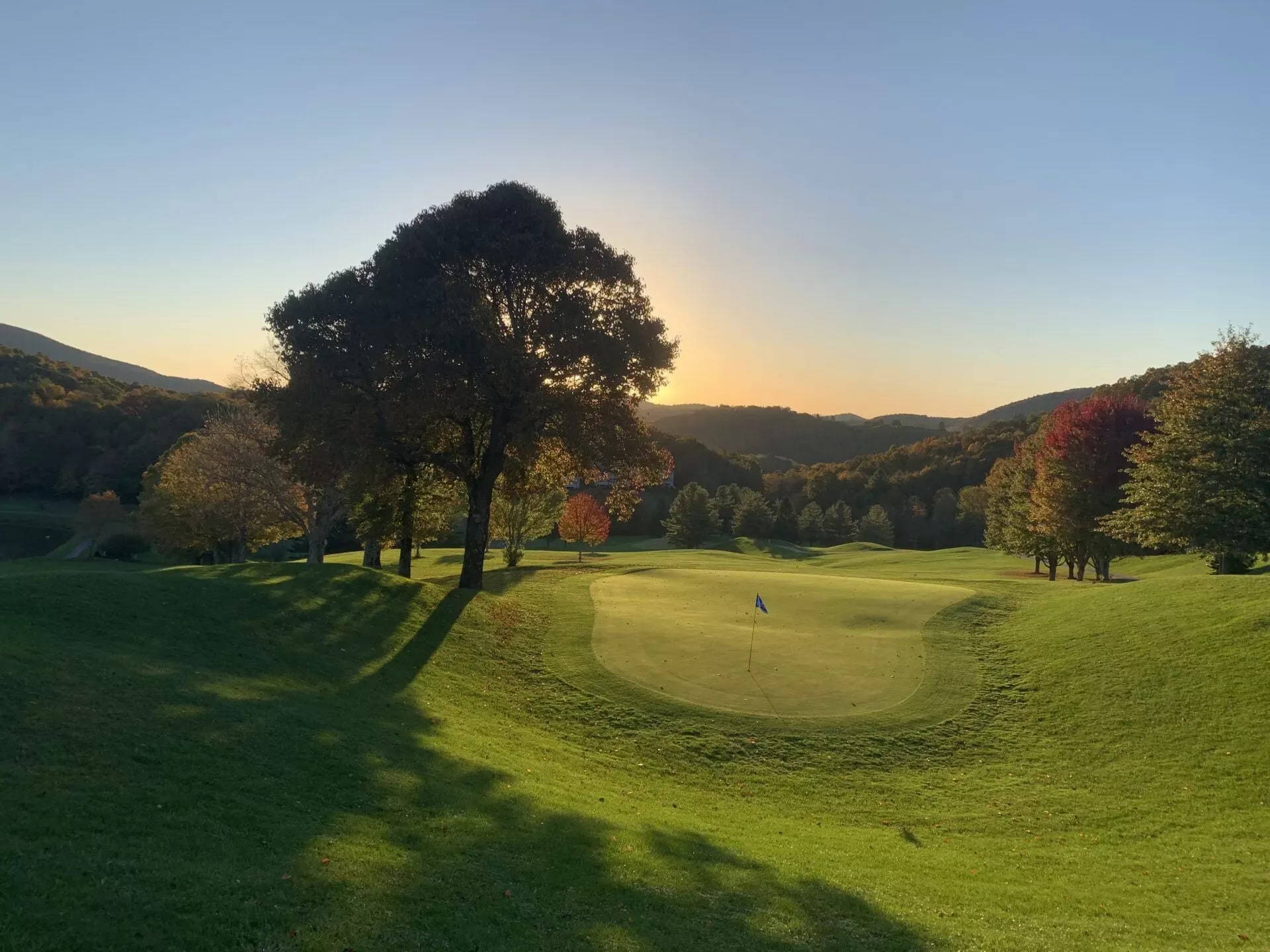

Roaring Gap Course
Roaring Gap Golf Club




About this course
You may need directions to find Roaring Gap, because the club is largely unmarked. That reticence suits a place built as an escape. About 3,500 feet up in the Blue Ridge, at the edge of the escarpment, the air cools and the views run far out over the country below. Here, in 1926, Leonard Tufts of Pinehurst, Hugh Chatham, and a circle of Winston-Salem business families made a summer refuge for the months when Pinehurst was too hot to draw its guests, and when golfers in the state tended to flee north. Tufts treated it as a mountain counterpart to his resort. He ran it himself at first and staffed it with Pinehurst employees. The 65-room Graystone Inn was meant as the summer partner to the Carolina Hotel, and the club came to be called "the Pinehurst of the Hills," while the course soon became known as "the finest mountain golf course in America." The nickname honors the lineage but says little about the ground. Donald Ross did not build a Sandhills course in the clouds. He built something that rambles up and down a mountainside, climbs over big knolls, and walks right out to the lip of a cliff, all in barely more than 6,000 yards. The Graystone still towers behind the fourth hole and still serves as the clubhouse, as it has from the beginning. It was such a gathering place that for the course's first fifteen years Tufts let members begin on today's downhill fifth and end by climbing the fourth, so the round finished beside the inn. That detail says a lot about the club. Here the golf arranged itself around the house on the hill. The holes go on to earn their reputation. The sixth green sits up like a small volcano. The seventh and eleventh are par fives with no bunkers at all. The thirteenth, fifteenth, and eighteenth roll through tiered greens. The sixteenth drops into a dell, where the punchbowl green waits blind below. Then comes the seventeenth, a skyline green with views that run fifty miles. For a long time those greens told a false story about themselves. They had swelled into crowned, upside-down saucers, which looked like the Ross greens people expect to see. Soil tests showed something else. Topdressing and turf growth had raised the middles several inches above the edges, and the crowns were the work of time and maintenance rather than design. Dunlop White III, a member who began corresponding with the North Carolina architect Kris Spence in 2002 and later chaired the restoration, was the strongest voice in the membership for bringing the course back. Spence, for his part, encouraged the members to restore the authentic contours rather than cling to the familiar idea of a Ross green. In the 2010s he restored the size, shape, and dimensions of every green, and the club preserved the evolved turf blend on the putting surfaces. He also refurbished the bunkers, began a tree management program, and added new back tees. The course that once measured under 6,200 yards now plays at roughly 6,400, stretching to about 6,455 from the back. So the course carries a gentle contradiction. It has been lengthened, yet it is still short, and the way Ross meant its slopes and rises to play comes into focus for a golfer who finds a 220-yard carry a real challenge. A big hitter might try older clubs and an older ball, work through the slopes the way the course was built to be played, and find the mountain answering back. You would have to look hard to find a layout more engaging or more fun. Roaring Gap still feels like a hidden summer: an inn at the top of the hill, greens returned to their honest shapes, and a seventeenth that ends on the edge of the sky.
Quick facts
- Location
- Roaring Gap, NC, USA
- Access
- Private
- Year built
- 1925
- Holes
- 18
- Designer(s)
- Donald Ross, Kris Spence
- Par
- 72
- Length
- 6,455 yards
- Difficulty
- 75.7/138
- Course Vaults score
- 8.9
Getting there
The journey to Roaring Gap Golf Club begins at Charlotte Douglas International Airport, roughly ninety minutes to the south, though Piedmont Triad International in Greensboro offers an alternative gateway from the east. Private arrivals often favor the intimate Wilkes County Airport, a short hop from the mountain's base. The drive climbs steadily from the piedmont into the Blue Ridge foothills, trading interstate for two-lane blacktop that winds through hardwood hollows and past stone-gated estates, until the road crests into Roaring Gap itself - a hushed, century-old summer colony where the clubhouse awaits at 3,500 feet, cool and removed from the world below.
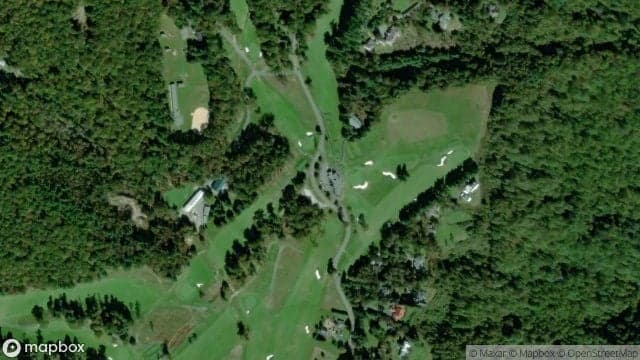
FAQ
Common questions about Roaring Gap
Ratings, design, and course details pulled from Course Vaults.
Roaring Gap has a Course Vaults score of 8.9 out of 10 based on 16 logged golfers.
Roaring Gap was designed by Donald Ross and Kris Spence.
Roaring Gap is listed as private on Course Vaults; guest access is typically restricted.
Par at Roaring Gap is 72.
Roaring Gap plays 6,455 yards from the back tees on Course Vaults.
The slope rating at Roaring Gap is 138.