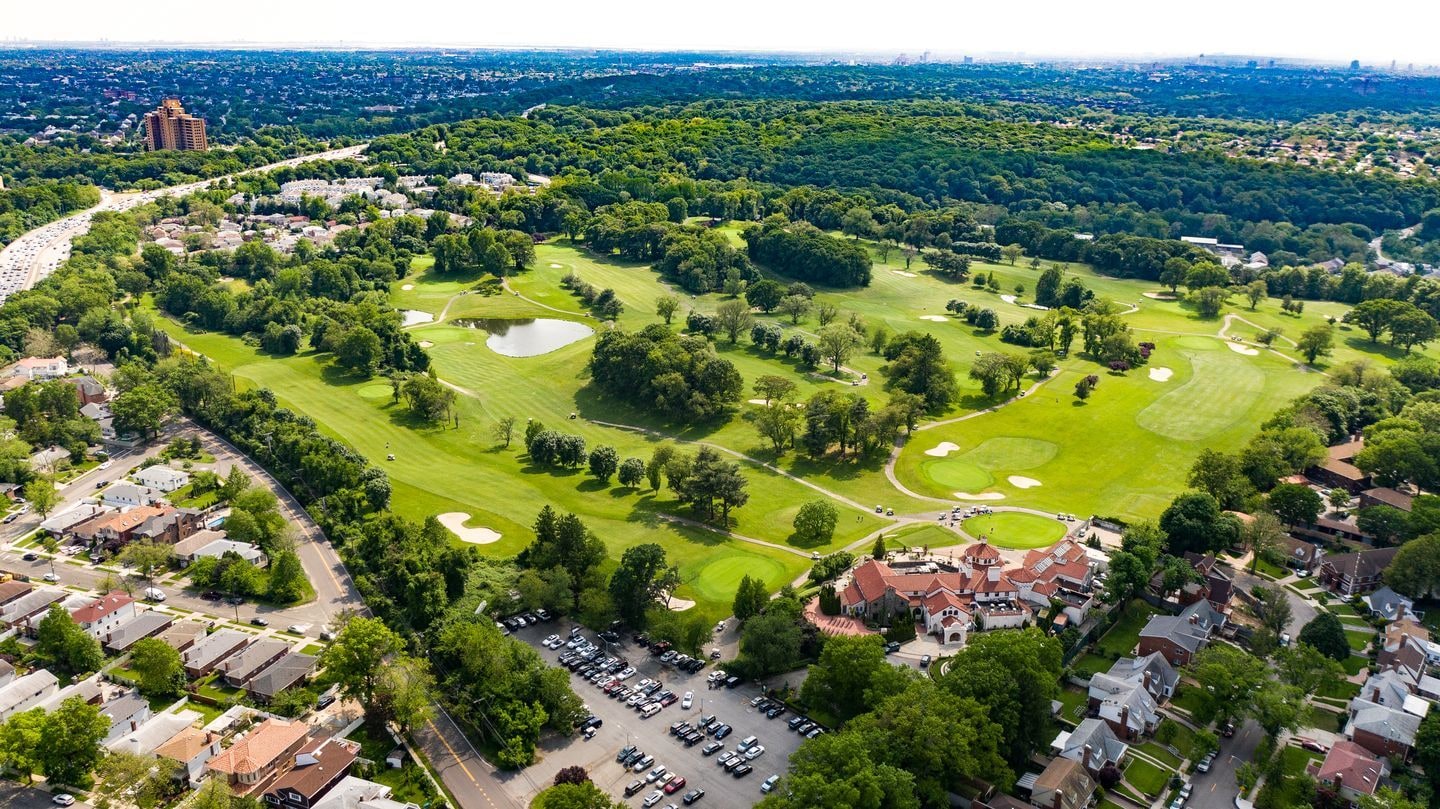


Piping Rock Course
Piping Rock Club




About this course
On Long Island's north shore, in a quiet corner of Locust Valley, there is a golf course that was never meant to be the main attraction. When Piping Rock Club was founded in 1911, it was a social club and a sporting venue built around horses, and polo was the sport of the day. Golf arrived as a kind of guest. The members had watched the National Golf Links of America rise to prominence, and many of them were friends of Charles Blair Macdonald, who became the club's first Golf Chair. So the club wanted a course, and Macdonald gave them one. But he had to give it to them on the polo fields' terms. That compromise is the first thing to understand about Piping Rock, and perhaps the most romantic. Macdonald, America's first official golf champion and one of its great architects, could not route his holes wherever the ground pleased him. The polo fields came first, and the course had to bend around them. The routing begins on the flattest land and travels counter-clockwise around what was once a polo field and is now the driving range. The layout is perhaps less fluent than Macdonald would have liked. Yet again and again the holes make out-and-back excursions toward more undulating ground, and those excursions are where the course comes alive. The 3rd and 4th, the 12th and 13th, the 15th and 16th all reach for that land and find their character there. Macdonald routed and designed, and Seth Raynor built, carrying out the construction and much of the detail work. As they would in nearly all their designs, they arranged the course around the par threes. At National, Macdonald had built only three short holes, a Short, an Eden, and a Redan, chiefly because he lacked a suitable site for a fourth he had long admired. At Piping Rock he found room. Alongside variations of those three came a Biarritz at the 9th, built here for the first time, and the set of one-shotters gained significant balance. The 13th was a first as well, the original Knoll. Both remain among the finest examples of their types. Not everything here is borrowed from the template book. On the 15th, a snaky ridge runs across the green, a novel touch among the familiar Macdonald and Raynor features. At the par five 6th, the green has a top tier that changes everything, and a hole location up there can move the scoring average by half a shot. Tom Doak knows the place better than most. As Pete Dye's young apprentice, he took part in the sympathetic renovation of the 1980s that added several hundred yards with room to spare. Later he returned as consulting architect, and then the mantle passed to his former associate Bruce Hepner. Hepner's work in 2015 was the most transformational. He took out overgrown trees, reinstated cross-bunkers that had been lost, returned the greens to their original sizes, and expanded the short grass across fairways and surrounds. None of it set out to alter the design. The aim was to breathe forgotten life back into the course and bring it closer to its 1912 self. The result plays extremely firm and fast, with strategic bunkering, a spectacular set of greens, and turf presentation that is among the best in the country, all while keeping an old-school appearance and ambience. Piping Rock rewards careful study, and it is maybe less well understood than it deserves. The club takes its name from a large stone beside an ancient trail between Glen Cove and Oyster Bay. That feels right for a course that is itself a kind of landmark along the road of American golf. It holds some of the best-preserved original Macdonald and Raynor holes anywhere and plays almost like a museum. The polo fields may have dictated where it could go, but they could not dictate what it would become.
Quick facts
- Location
- Locust Valley, NY, USA
- Access
- Private
- Year built
- 1912
- Holes
- 18
- Designer
- Charles Macdonald
- Par
- 71
- Length
- 6,743 yards
- Difficulty
- 73/134
- Course Vaults score
- 8.8
Getting there
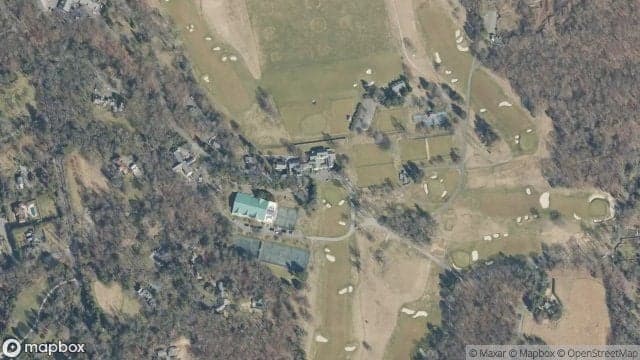
Most arrivals to Piping Rock Club touch down at one of the New York metro area's three major gateways - JFK, LaGuardia, or Newark Liberty - though the club's North Shore setting makes LaGuardia the most efficient choice, typically forty-five minutes by car when traffic cooperates. Private aviation guests often favor Republic Airport in Farmingdale or the East Hampton Airport for a more discreet approach to Long Island's Gold Coast. The drive itself traces a subtle arc from the city's density into the leafy, gated quiet of Locust Valley, where stone walls and hedgerows signal entry into one of America's most storied enclaves of old money and older golf.
FAQ
Common questions about Piping Rock
Ratings, design, and course details pulled from Course Vaults.
Piping Rock has a Course Vaults score of 8.8 out of 10 based on 119 logged golfers.
Piping Rock was designed by Charles Macdonald.
Piping Rock is listed as private on Course Vaults; guest access is typically restricted.
Par at Piping Rock is 71.
Piping Rock plays 6,743 yards from the back tees on Course Vaults.
The slope rating at Piping Rock is 134.