Matsuyama Golf Club sits in Touon, a city in Ehime Prefecture on the island of Shikoku, Japan's smallest main island. The course was designed by Osamu Ueda, a Japanese architect whose work reflects the mid-to-late twentieth-century development of golf in Japan, when designers adapted traditional routing principles to the country's mountainous terrain and limited flat land. The club represents the regional golf culture of Shikoku, where courses often occupy hillside sites with elevation changes and views of the surrounding landscape.
The routing at Matsuyama likely incorporates the natural topography of the area, which is characterized by rolling to hilly terrain typical of inland Shikoku. Japanese courses from this era generally feature narrow fairways bordered by trees, strategic bunkering that emphasizes position over distance, and greens that require careful approach play. Water features and elevation changes create variety in shot requirements across the eighteen holes.
Matsuyama Golf Club serves the local golfing community in Ehime Prefecture, where Matsuyama city—the prefectural capital located nearby—anchors the region's economic and cultural life. The club operates within the Japanese tradition of private membership, where golf remains a social and business institution. Courses in this part of Japan tend to emphasize meticulous conditioning and traditional hospitality, reflecting broader cultural values that shape the experience beyond the golf itself.
Reviews
No reviews yet. Be the first to log a round in the app.
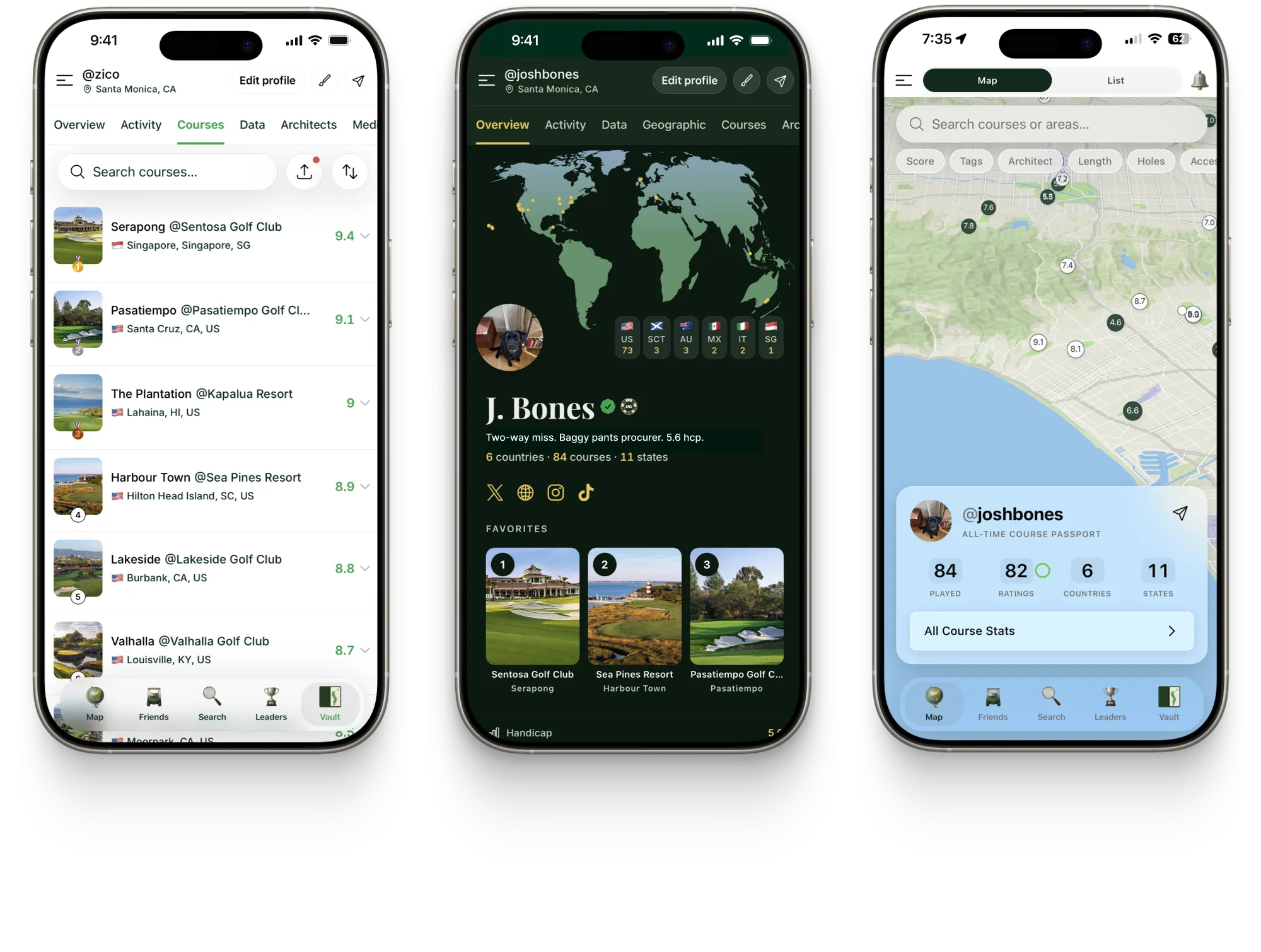
Free on iPhone
Track where you've played, rate courses, and share lists with friends — the way golfers with logos on the bag keep score.

FAQ
Ratings, design, and course details pulled from Course Vaults.
Matsuyama was designed by Osamu Ueda.
Yes. Matsuyama at Matsuyama Golf Club is listed as welcoming public or guest play on Course Vaults.
Par at Matsuyama is 72.
Matsuyama is a 18-hole course.