
Blue Mound Course
Blue Mound Golf & Country Club


About this course
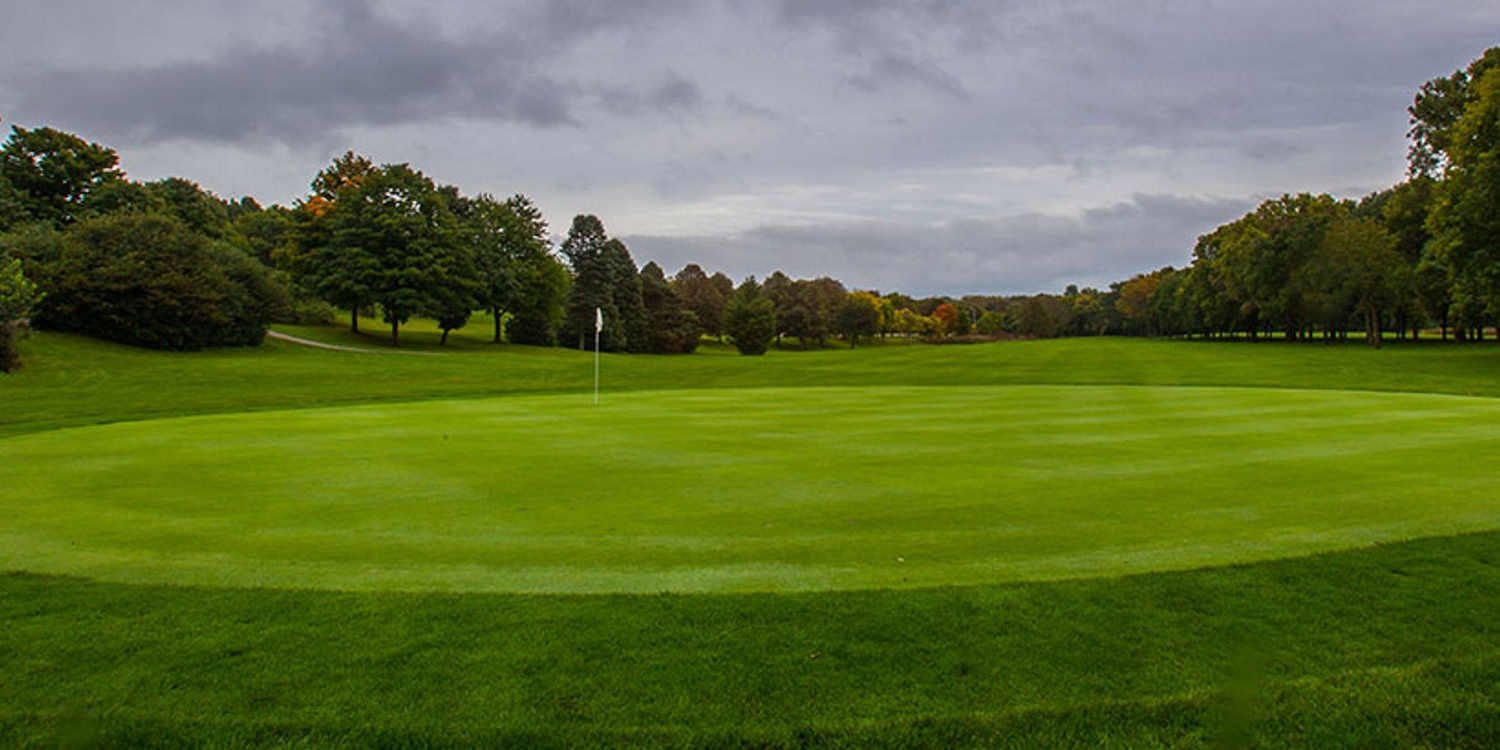
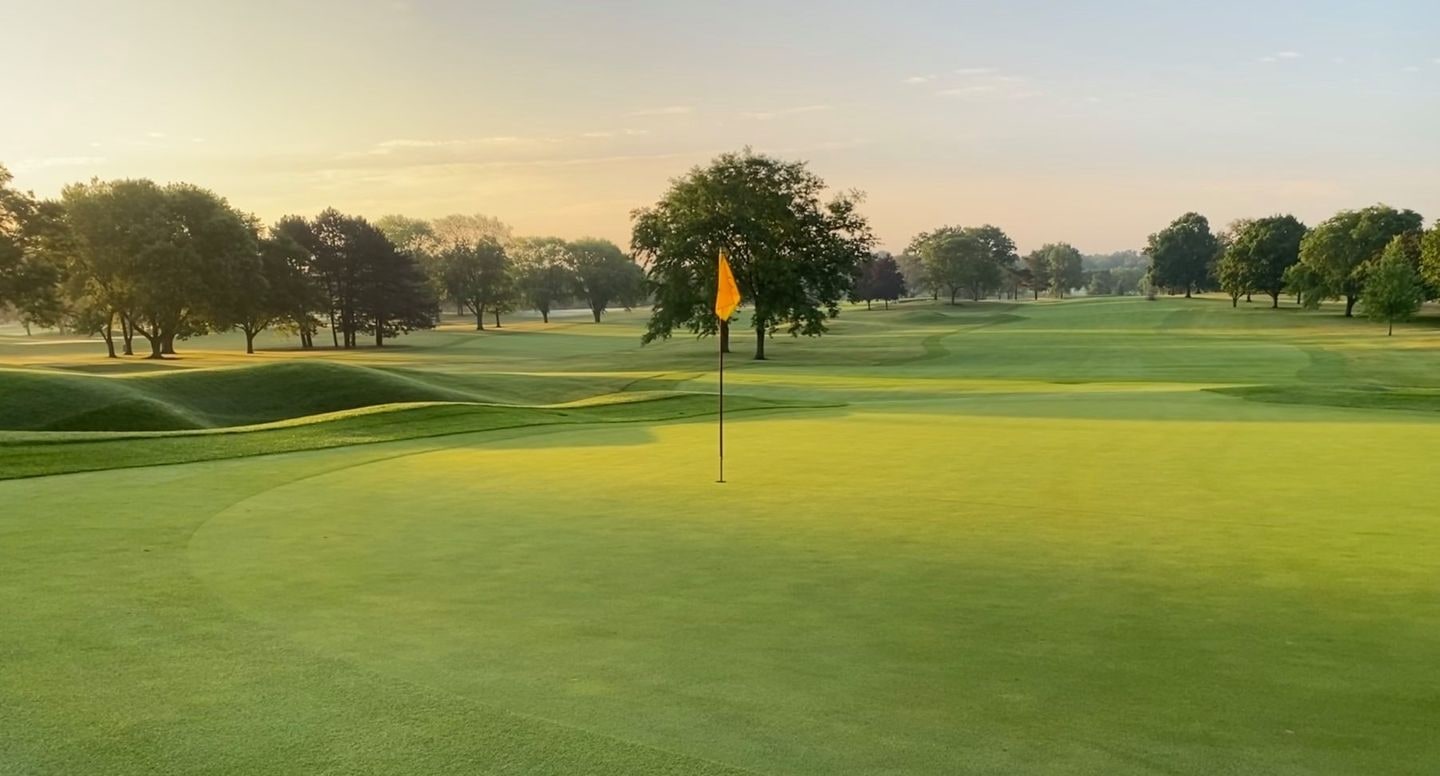
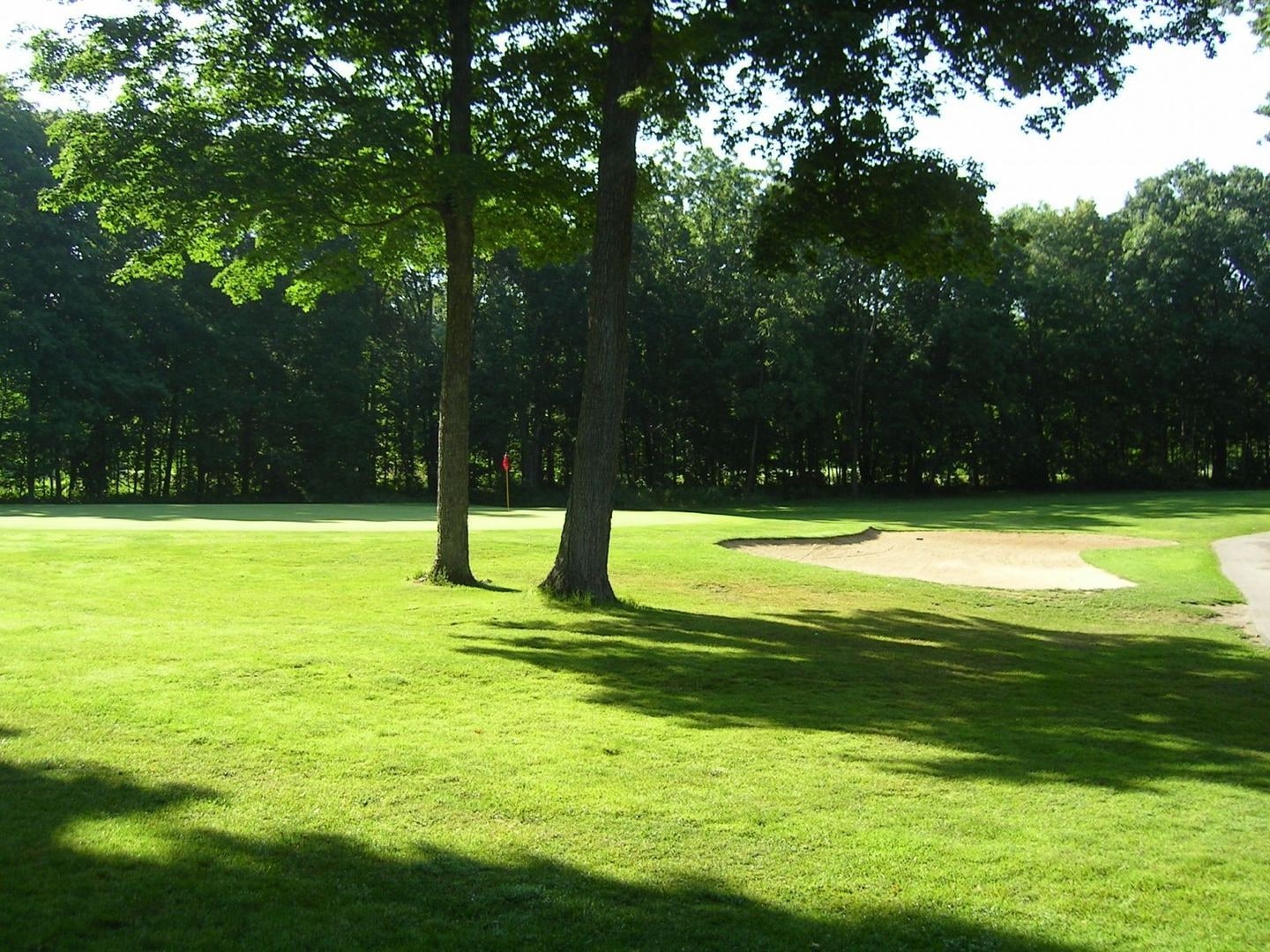
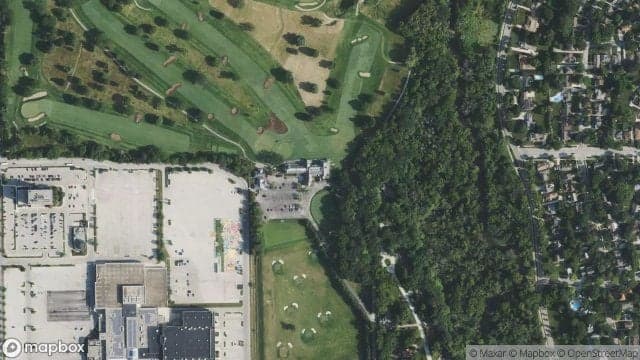
You find Blue Mound almost by accident. The entrance off North Avenue slips between two houses and is reachable only if you are traveling westbound, so don't be surprised if you need to swing around in a U-turn to find it. Behind a neighborhood and a shopping center, a few miles west of downtown Milwaukee, the club keeps its secret quietly. That modesty suits a place whose drama lives almost entirely in the ground beneath your feet. The land itself offers little. It is flat, so flat that you could easily look across the property and see nearly every hole. Only in the northeast corner does the earth fall away. There the par three 7th, called Short, dives downhill, and the par four 8th, Punchbowl, climbs back up the slope on a diagonal. Everywhere else, Seth Raynor had to manufacture his excitement, and he did it with a kind of fearlessness. His 1924 plan still rests in the club's archives with his hole-by-hole descriptions, and the course built to it opened in 1926. You would be hard-pressed to find a set of Raynor greens more dramatic than the ones he left here. The opening four holes sit on the flatter part of the property, and they might have been mediocre without what Raynor placed at their ends: a Redan, a Double Plateau, a Biarritz and an Alps. The Double Plateau at the 2nd is the starkest of them. Its back-right and front-left tiers sit well above a flat front-right section, so the green becomes a landscape all its own. Then comes the Road hole at the 5th, and later the Punchbowl, each carrying slopes that seem almost defiant against the level fields around them. After that the back nine wanders into, around and out of a central valley, until the sturdy par five 18th, named Long, carries you home to the clubhouse. The course was not finished exactly as it was drawn. An aerial from 1927 shows that not all of Raynor's bunkers had been built, and that fall the club brought in Charles Banks to help complete the bunkering plan and make necessary improvements. His hand-drawn hole plans, dated 1927, show recommendations for new bunkers, and a Banks drawing can be seen in the Raynor Room inside the clubhouse. So the routing and the design belong to Raynor, while the bunkering carries a touch of Banks. In 1933 Blue Mound became the first club in Wisconsin to host a major championship, the PGA Championship. The nines were played then in the reverse of the order golfers have known since the 1960s. It is a strange thought, that the round which feels so natural now, flat holes giving way to the hill and then the valley, once began somewhere else entirely. Time was not kind to the course. Tree lines crept in and the greens shrank to about two thirds of their old size. Tom Doak called it "a hot mess the first time I saw it," yet he credited Bruce Hepner of Renaissance Golf Design for helping the club clear out a forest of nursery trees and bring back greens he called some of the wildest he had seen in the Raynor and Macdonald collection. Hepner was first called in during the late 1980s and has worked with the club for more than two decades. Superintendent Alex Beson-Crone and his predecessor Tim Venes helped carry out Hepner's changes and made improvements of their own. A recent bunker renovation, along with expanded greens and fairways, has left the course as good as it has ever been. Before you tee off, look to the left of the first tee. A bronze Seth Raynor stands there, a reminder of the man who built what lies before you. On land that gave him almost nothing, he raised greens that heave and tilt like weather. Blue Mound is proof that imagination can outdo topography, and that a flat field in the Milwaukee suburbs can hold some of the boldest slopes Raynor ever shaped.
Quick facts
- Location
- Wauwatosa, WI, USA
- Access
- Private
- Year built
- 1924
- Holes
- 18
- Designer
- Seth Raynor
- Par
- 70
- Length
- 6,365 yards
- Difficulty
- 73.6/127
- Course Vaults score
- 8.8
Getting there
Most visitors to Blue Mound Golf & Country Club arrive through Milwaukee Mitchell International Airport, a straightforward twenty-minute drive to the west into Wauwatosa's leafy residential fabric. The route follows the interstate briefly before peeling off into tree-lined boulevards where the city's suburban grace takes hold - wide lawns, mature oaks, and the quiet hum of an established neighborhood. Blue Mound itself sits tucked into this serene enclave, its entrance discreet and understated, a portal into one of Wisconsin's most storied private clubs where the game has been played with quiet reverence since the early twentieth century.
FAQ
Common questions about Blue Mound
Ratings, design, and course details pulled from Course Vaults.
Blue Mound has a Course Vaults score of 8.8 out of 10 based on 52 logged golfers.
Blue Mound was designed by Seth Raynor.
Blue Mound is listed as private on Course Vaults; guest access is typically restricted.
Par at Blue Mound is 70.
Blue Mound plays 6,365 yards from the back tees on Course Vaults.
The slope rating at Blue Mound is 127.